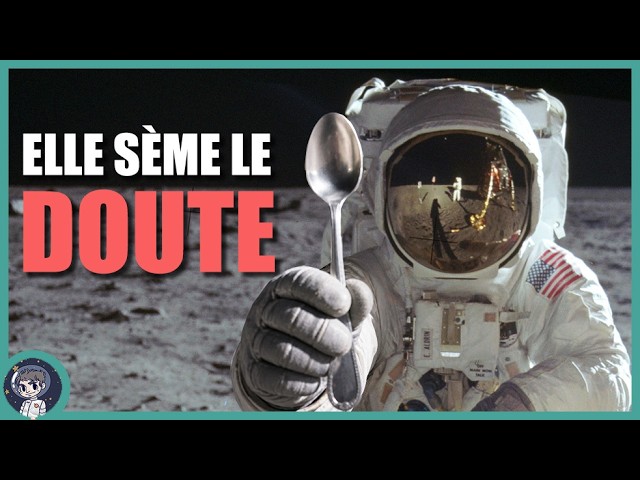
APOLLO remis en cause par...une CUILLÈRE - On Se l'Demande #196 - Le JDE
Keywords
Summary
148 words
Critical Evaluation
The video provides a comprehensive and engaging overview of the history and science of space food, effectively debunking the spoon conspiracy theory. The presenter, Quentin Leicht, demonstrates a strong command of the subject, citing historical documents and explaining complex concepts such as lyophilization and surface tension in an accessible manner. The argumentation is solid: by explaining how surface tension and viscosity allow food to adhere to a spoon in microgravity, the video directly addresses the core of the conspiracy claim. The use of archival footage and quotes from astronauts adds credibility. The video also highlights the practical challenges of eating in space, such as crumb management and water rehydration, which further supports the authenticity of the Apollo missions. The sources cited, including a military document on space food, lend authority to the content. The video’s structure is logical, progressing from early space food to the Apollo era and the scientific explanation. The only minor weakness is that the video could have delved deeper into the specific physics of eating with a spoon in microgravity, but it provides sufficient evidence to counter the conspiracy theory. Overall, the video is a valuable resource for science communication, combining entertainment with rigorous scientific explanation.
200 words
Title / Content Match
The title is catchy and accurately reflects the content, which addresses the spoon conspiracy and explains the science behind eating in space.
Quality & Reliability
8/10
The video is well-researched, citing historical documents and providing accurate scientific explanations of food processing and eating in microgravity. The presenter uses a critical approach to debunk conspiracy theories, grounding arguments in physics and historical records.
Chapters
- Le mystère d'Apollo 11 : une cuillère en apesanteur ?
- Pourquoi cet objet sème-t-il le doute ?
- Les débuts : le pâté en tube de Youri Gagarine
- Mercury & Gemini : manger devient une corvée
- Recette spatiale : comment fabriquer un lyophilisé
- Apollo : l'arrivée du luxe (et de l'eau chaude)
- Le secret scientifique de la petite cuillère
- De la dinde aux œufs brouillés : le festin lunaire
- Maîtriser la balistique du gâteau spatial
Cited Sources
- OShaughnessy_02-13-20.pdf — Military document cited in the video, likely related to space food or Apollo program.
Concurring Sources
- NASA Space Food History — NASA's official page on space food history, supporting the video's claims about early space food.
External References
Contribution & Novelties
The video provides a fresh perspective on the Apollo spoon conspiracy by explaining the physics of eating in microgravity, specifically the role of surface tension and viscosity. It also offers a detailed historical account of space food development, from Gagarin’s tubes to Apollo’s rehydratable meals.
Pour aller plus loin :
- Surface tension — Explains the physical principle that allows liquids to stick to surfaces, relevant to the spoon behavior.
- Lyophilization — The process used to prepare space food, reducing weight and preserving nutrients.
- Apollo program — Provides context on the missions and their objectives, including the challenges of long-duration spaceflight.
100 words
Radar Profile
The radar profile shows high scores in information quantity and quality, with a slightly lower technical level, indicating a well-balanced video that is both informative and accessible. The reliability score is strong, reflecting the use of credible sources and scientific explanations.
💬 Très positif : Sur les 30 commentaires analysés, le public exprime un enthousiasme marqué pour le sujet, avec des jeux de mots sur la cuillère et des demandes de vidéos sur la digestion, reflétant un intérêt scientifique et humoristique.