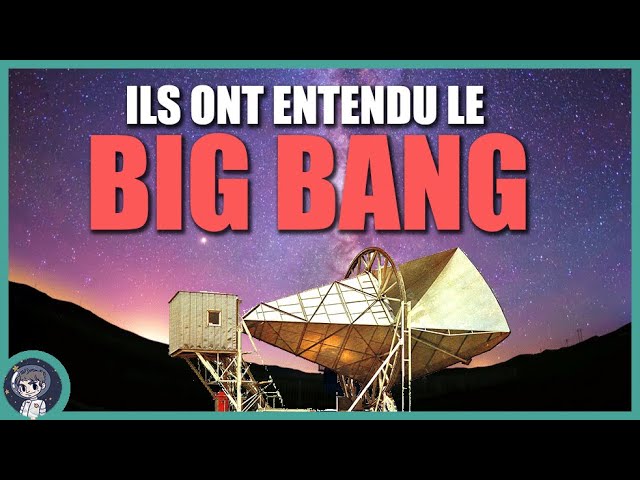
Et la LUMIÈRE FUT (vraiment) ! - On Se l'Demande #43 - Le JDE
Keywords
Summary
179 words
Critical Evaluation
Value of the Information & Strength of the Argument
The video provides a compelling narrative that effectively combines historical storytelling with scientific explanation. It clearly explains the significance of the CMB as evidence for the Big Bang, and the argumentation is solid, tracing the logical steps from the initial anomaly to its interpretation. The use of analogies (e.g., the horn antenna compared to a phonograph horn) aids understanding. The explanation of the Big Bang model and the transition to a transparent universe is accurate and well-illustrated. The video also emphasizes the importance of experimental confirmation of theoretical predictions, which is a key aspect of the scientific method.
Scientific Rigor, Source Quality, Title Accuracy
The video demonstrates scientific rigor by accurately presenting the historical facts and the physics involved. It mentions the key scientists and missions (COBE, WMAP, Planck) and the description provides links to credible sources like NASA and ESA. The title is appropriate and engaging, though slightly sensationalized. The content matches the title well, as it indeed explains the origin of light in the universe. The video also includes a correction in the comments regarding a minor name error, showing attention to accuracy.
194 words
Title / Content Match
The title is catchy and relevant, as the video indeed explains the origin of light in the universe, linking it to the discovery of the CMB.
Quality & Reliability
8/10
The video presents a well-structured historical account of the discovery of the cosmic microwave background, accurately explaining the scientific context, the role of Penzias and Wilson, and the confirmation of the Big Bang theory. The narrative is consistent with established scientific knowledge, and the video includes references to credible sources (NASA, ESA, etc.) in its description. Minor imprecision in naming (corrected in comments) does not affect the overall reliability.
Chapters
- Introduction, des fientes de pigeons au Prix Nobel
- Une antenne Cornet
- Des tests qui ne se passent pas comme prévu
- D'où vient ce signal parasite ?
- Un problème de pigeons !
- Le Big Bang, une théorie clé
- Mais au fait, c'est quoi déjà le Big Bang ?
- La lumière n'existait pas encore au moment du Big Bang
- Confirmer la théorie du Big Bang avec l'antenne à Cornet: Un prix Nobel !
- Le fond diffus cosmologique
- Les défis des prochains instruments technologiques
Cited Sources
- Sound Lapse — Music used in the video (credited in description).
- Utho Riley — Music used in the video (credited in description).
- Le Journal de l'Espace (Tipeee) — Support page for the channel.
- Forum de la conquête spatiale — General source mentioned in description.
- Jamendo - Inspire Galactic — Music used in the video (credited in description).
- Le Journal de l'Espace (Blog) — Channel's blog.
- Scott Buckley — Music used in the video (credited in description).
- LabPadre (YouTube) — Source of some images/animations (credited in description).
- Bensound - Evolution — Music used in the video (credited in description).
- Sound Lapse - City Walk — Music used in the video (credited in description).
Concurring Sources
- NASA - Cosmic Microwave Background — NASA's overview of the CMB and its role in cosmology.
- ESA - Planck mission — ESA's official page for the Planck mission, which mapped the CMB.
Contribution & Novelties
The video offers a fresh and engaging retelling of a classic scientific discovery, emphasizing the human and serendipitous aspects while maintaining scientific accuracy. It effectively bridges the gap between the historical narrative and the underlying physics, making the CMB accessible to a broad audience. The visual aids and clear explanations enhance understanding.
Pour aller plus loin :
- Cosmic microwave background - Wikipedia — Comprehensive overview of the CMB, its discovery, and its significance.
- Big Bang - Wikipedia — Detailed explanation of the Big Bang model and its evidence.
- Nucleosynthesis - Wikipedia — Explains the formation of light elements in the early universe.
- Planck (spacecraft) - Wikipedia — Details on the ESA mission that mapped the CMB with high precision.
- COBE - Wikipedia — Information on the satellite that first measured the CMB’s spectrum and anisotropies.
135 words
Radar Profile
The radar profile shows high scores in information quantity and quality, with a slightly lower but still solid technical level. This indicates a well-balanced video that is both informative and accessible, with a strong emphasis on accurate scientific content.
💬 Très positif. Sur les 30 commentaires analysés, l'accueil est extrêmement favorable, avec des éloges pour la qualité pédagogique, la narration et le choix du sujet, et une appréciation particulière pour la vulgarisation de concepts complexes.