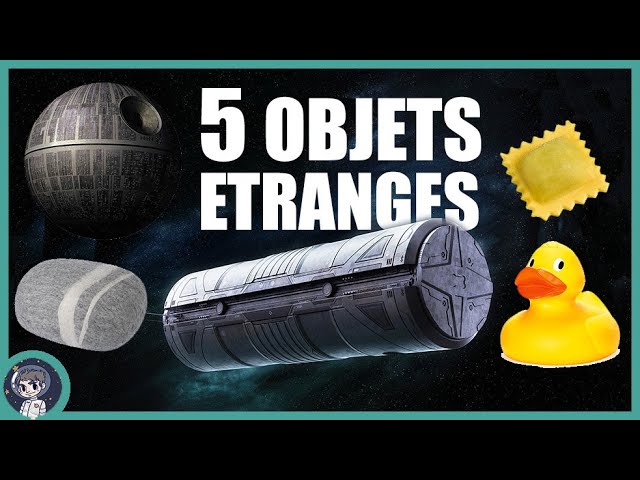
COMMENT sont-ils apparus dans notre Système Solaire ? - On Se le Demande #14 - Journal de l'Espace
Keywords
Summary
158 words
Critical Evaluation
Value of the Information & Strength of the Argument
The video provides valuable information about lesser-known Solar System objects, presenting current scientific hypotheses and evidence. The argumentation is solid, referencing specific missions (Cassini, Rosetta) and studies (e.g., 2015 Rosetta team study, 2020 Nature Astronomy paper). The explanations are logical and well-structured, guiding the viewer through each object’s characteristics and formation theories. The video also acknowledges uncertainties, such as the unresolved mystery of Mimas’s libration, which adds to its credibility.
Scientific Rigor, Source Quality, Title Accuracy
The video demonstrates scientific rigor by citing specific missions and studies, and by crediting sources in the description. The title accurately reflects the content, which focuses on the formation of these objects. The video does not overstate claims and clearly distinguishes between established facts and hypotheses. The inclusion of multiple theories for phenomena like Oumuamua’s acceleration shows a balanced approach. The description provides links to the channel’s blog and social media, but not directly to the cited studies, which are mentioned verbally.
167 words
Title / Content Match
The title accurately reflects the content, which explores the formation and characteristics of five unusual Solar System objects.
Quality & Reliability
8/10
The video presents scientifically accurate information about five peculiar Solar System objects, referencing studies and missions (Cassini, Rosetta, Nature Astronomy 2020). The explanations are clear and well-illustrated, though some simplifications are made for a general audience.
Chapters
Cited Sources
- Le Journal de l'Espace - Blog — Official blog of the channel, providing additional articles and resources.
- LabPadre YouTube Channel — Referenced as a source for space-related content and live streams.
- NasaSpaceFlight YouTube Channel — Referenced as a source for spaceflight coverage.
- Forum de la conquête spatiale — French space exploration forum, used as a general source.
Concurring Sources
- NASA - Pan — NASA's page on Pan, confirming its role as a shepherd moon and its formation from ring particles.
- ESA - Rosetta — ESA's Rosetta mission page, providing details on the comet 67P and its shape.
Dissenting Sources
- Alternative hypothesis for Oumuamua's acceleration — Some researchers have proposed that Oumuamua could be a hydrogen iceberg or even an alien artifact, which contrasts with the tidal fragmentation theory presented in the video.
External References
Contribution & Novelties
The video offers a fresh perspective by focusing on unusual Solar System objects, which are often overshadowed by planets and major moons. It synthesizes current research and presents it in an accessible format, highlighting the ongoing mysteries and the dynamic nature of our cosmic neighborhood.
Pour aller plus loin :
- Pan (moon) — Detailed article on Pan, including its discovery and characteristics.
- 67P/Churyumov-Gerasimenko — Comprehensive overview of the comet and the Rosetta mission.
- Haumea — Wikipedia page on the dwarf planet, its rotation, and shape.
- Mimas — Information on Mimas, including its Herschel crater and libration studies.
- Oumuamua — Detailed article on the first interstellar object and the various hypotheses about its nature.
113 words
Radar Profile
The radar profile shows high scores in information quantity and quality, with a moderate technical level. This indicates a well-balanced video that is both informative and accessible, with a strong foundation in scientific facts.
💬 Très positif : Sur les 30 commentaires analysés, les spectateurs expriment un enthousiasme marqué pour ce format, saluant la diversité des sujets et la qualité de la vulgarisation, avec des demandes récurrentes pour plus de vidéos de ce type.