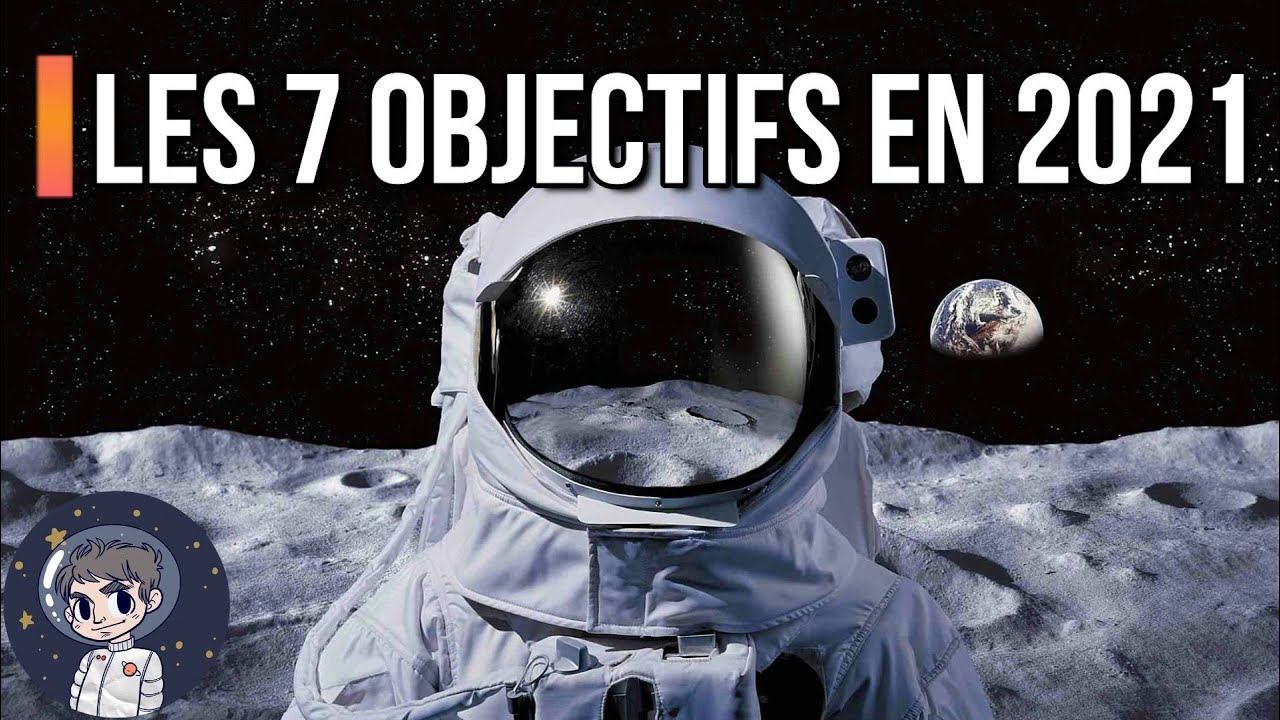
2021: LES MISSIONS CLÉS - Le Journal de l'espace #67
Keywords
Summary
185 words
Critical Evaluation
Value of the Information & Strength of the Argument
The video provides a comprehensive and well-structured overview of the year’s space agenda, making it valuable for enthusiasts seeking a quick update. The argumentation is clear and logical, presenting each mission with its objectives and significance. However, the analysis is not deep, and the presenter often relies on general knowledge without citing specific sources, which limits the critical evaluation of the information.
Scientific Rigor, Source Quality, Title Accuracy
The video demonstrates a good level of scientific rigor, with accurate descriptions of missions and their timelines. The sources mentioned in the description are mostly for animations and music, not for the factual content, which is a weakness. The title accurately reflects the content, and the video stays on topic throughout. The lack of explicit citations for the mission details reduces the overall source quality.
142 words
Title / Content Match
The title accurately reflects the content, which focuses on key space missions for 2021.
Quality & Reliability
7/10
The video provides a broad overview of upcoming space missions in 2021, with accurate details on missions like Perseverance, Tianwen-1, and Artemis. The information is consistent with known facts, but the presentation is concise and lacks in-depth analysis or citations to primary sources.
Key Moments
Markers derived by PSI from the transcript: the creator did not define chapters.
- Introduction to the seven key space missions of 2021.
- Overview of lunar missions: Chandrayaan-3, Luna-25, and Artemis I.
- Mars missions: Perseverance, Tianwen-1, and Hope orbiter.
- Asteroid missions: DART and Lucy.
- Human spaceflight: Crew Dragon, Starliner, and Chinese space station.
- New rockets: Starship, SLS, New Glenn, and Vulcan Centaur.
- James Webb Space Telescope launch details.
- Space tourism: Virgin Galactic, Blue Origin, and Axiom Space.
- Elon Musk's plan to catch Super Heavy with the launch tower.
- Space news briefs: satellite census, CNES budget, static fire, Virgin Orbit, Arecibo.
Cited Sources
- Hazegrayart - Super Heavy animation — Animation of Super Heavy booster used in the video.
- C-bass Productions - Super Heavy landing animation — Animation of Super Heavy landing.
- LabPadre YouTube channel — Source for SpaceX activities.
- NasaSpaceFlight YouTube channel — Source for spaceflight news.
- Le Journal de l'Espace blog — Official blog of the channel.
- Forum de la conquête spatiale — Community forum for space enthusiasts.
Concurring Sources
- NASA - Artemis — Official NASA page for the Artemis program.
- ESA - Mars missions — ESA overview of Mars exploration missions.
External References
Contribution & Novelties
The video offers a concise and accessible summary of the major space missions of 2021, making it a useful starting point for those new to space news. It highlights the diversity of missions, from lunar and Mars exploration to asteroid studies and commercial spaceflight. The segment on SpaceX’s Super Heavy catching mechanism provides an interesting insight into innovative engineering approaches.
Pour aller plus loin :
- Artemis program — Overview of NASA’s lunar exploration program.
- Perseverance rover — Detailed information on the Mars rover mission.
- James Webb Space Telescope — Comprehensive article on the telescope’s objectives and status.
97 words
Radar Profile
The radar profile shows a balanced performance across all dimensions, with slightly higher scores in information quantity and reliability, and lower in technical depth. This indicates a video that is informative and reliable but not highly technical, suitable for a general audience.
💬 Très positif : Sur les 30 commentaires analysés, l'ensemble exprime des vœux pour la nouvelle année et des remerciements pour la qualité de la vidéo, sans aucune critique négative.