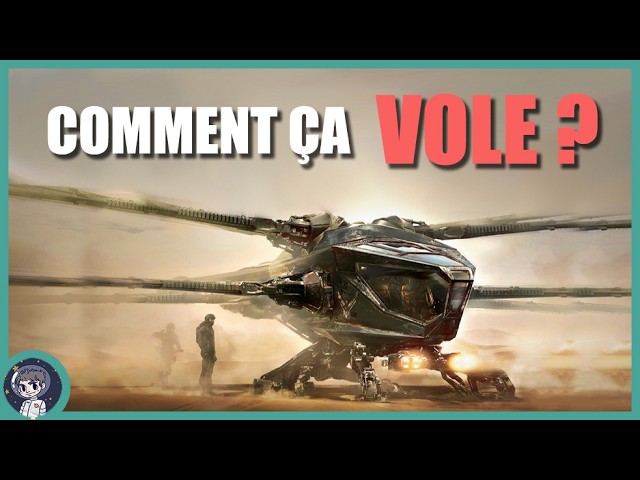
ORNITHOPTÈRES de DUNE: est-ce que ça vole VRAIMENT ? - On Se l'Demande #113 - Le JDE
Keywords
Summary
147 words
Critical Evaluation
Value of the Information & Strength of the Argument
The video provides valuable information by synthesizing historical facts and technical principles in an engaging narrative. It effectively argues that flapping-wing flight is physically possible but was historically impractical due to material and control challenges. The argumentation is solid, supported by specific examples (Lilienthal, Riout, University of Toronto) and clear explanations of aerodynamic concepts. The distinction between ornithopters and entomopters adds nuance. The presentation is well-structured, building from myth to modern engineering, and the reasoning is logical and accessible.
Scientific Rigor, Source Quality, Title Accuracy
The video demonstrates scientific rigor by referencing historical figures and projects accurately, and by explaining technical limitations (e.g., wing deformation, material constraints). It does not cite specific academic papers but relies on well-known historical facts and documented projects. The title accurately reflects the content, which directly addresses the question of whether Dune-style ornithopters can fly. The video is well-researched and presents information in a balanced manner, acknowledging uncertainties. The comments are overwhelmingly positive, praising the video’s quality, clarity, and the discovery of René Riout’s work.
179 words
Title / Content Match
The title accurately reflects the content, which directly addresses the feasibility of Dune-style ornithopters and provides a comprehensive historical and technical context.
Quality & Reliability
8/10
The video provides a well-researched historical and technical overview of ornithopters, referencing specific historical figures (Lilienthal, Riout) and modern projects (University of Toronto). It clearly distinguishes between ornithopters and entomopters, and explains physical principles. The information is accurate and well-contextualized, though it is a popular science presentation rather than a peer-reviewed source.
Chapters
Cited Sources
- Le Journal de l'Espace (official website) — Channel's official blog and additional content.
- Forum de la conquête spatiale — French space exploration forum referenced as a general source.
- Scott Buckley (music) — Music used in the video.
- Utho Riley (music) — Music used in the video.
- Sound Lapse - City Walk — Music used in the video.
- Bensound - Evolution — Music used in the video.
- Carvine - Inspire Galactic — Music used in the video (licensed).
Concurring Sources
- Ornithopter (Wikipedia) — General information on ornithopters, consistent with the video's historical and technical claims.
- Otto Lilienthal (Wikipedia) — Biographical details of Lilienthal, matching the video's account of his glider experiments.
External References
Contribution & Novelties
The video offers a comprehensive and accessible synthesis of ornithopter history and technology, connecting mythological aspirations to modern engineering. It highlights the often-overlooked work of René Riout and clarifies the distinction between ornithopters and entomopters, which is rarely addressed in popular media. The presentation of the University of Toronto’s projects provides current context. The video’s originality lies in its engaging narrative that makes complex aeronautical concepts understandable to a general audience.
Pour aller plus loin :
- Ornithopter (Wikipedia) — Overview of ornithopter history and technology.
- Otto Lilienthal (Wikipedia) — Biography of the pioneer of gliding flight.
- University of Toronto Institute for Aerospace Studies — Research on human-powered ornithopters and aerospace engineering.
- Entomopter (Wikipedia) — Concept of insect-like flapping-wing aircraft.
119 words
Radar Profile
The radar profile shows high scores in information quantity, quality, and reliability, with a slightly lower technical level. This indicates a well-researched and informative video that is accessible to a broad audience, though it does not delve into highly technical details. The overall balance suggests a strong educational resource.
💬 Très positif : Sur les 30 commentaires analysés, le public exprime un enthousiasme marqué, saluant la qualité de la vulgarisation, la découverte de l'inventeur René Riout et la pertinence du sujet, sans aucune critique négative.