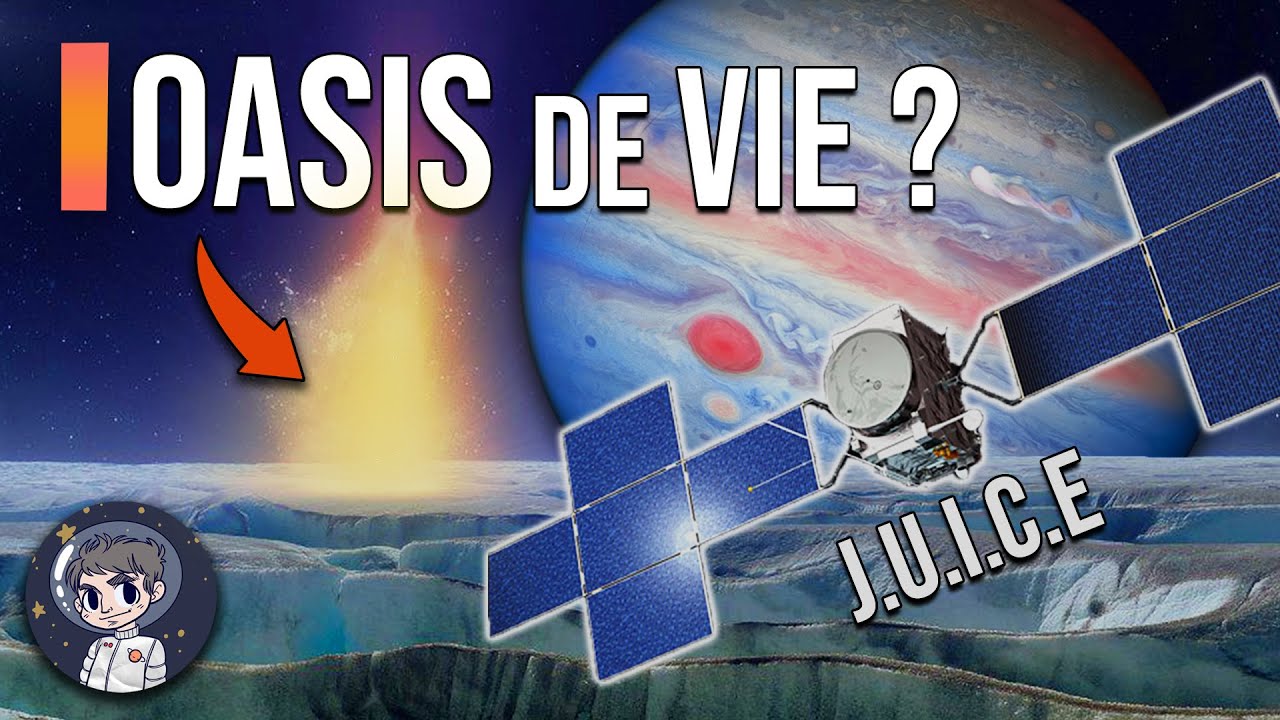
JUICE: A la recherche de vie EXTRATERRESTRE ! - Le Saviez Vous #13 - Le Journal de l'Espace
Keywords
Summary
111 words
Critical Evaluation
Value of the Information & Strength of the Argument
The video provides a solid overview of the JUICE mission, combining scientific facts with engaging storytelling. It effectively explains the significance of the mission in the search for extraterrestrial life, highlighting the potential of subsurface oceans on icy moons. The argumentation is well-structured, presenting the scientific rationale, the technical challenges, and the mission’s timeline. The use of expert quotes adds credibility, and the video successfully conveys the excitement and importance of this ambitious space exploration endeavor.
Scientific Rigor, Source Quality, Title Accuracy
The video demonstrates a good level of scientific rigor, relying on official sources such as ESA and NASA. The information is accurate and up-to-date as of the publication date. The title accurately reflects the content, focusing on the search for extraterrestrial life via the JUICE mission. The video does not overstate claims and appropriately notes uncertainties, such as the unconfirmed presence of plumes on Europa. The description provides links to relevant sources, including the mission’s official pages and the creator’s blog, which enhances transparency.
175 words
Title / Content Match
The title accurately reflects the content, focusing on the search for extraterrestrial life via the JUICE mission.
Quality & Reliability
7/10
The video provides a clear and accurate overview of the JUICE mission, based on established scientific facts and official sources (ESA, NASA). It correctly explains the mission's objectives, the characteristics of the Galilean moons, and the technical challenges. Minor simplifications are typical of science communication, but no major errors were identified.
Key Moments
Markers derived by PSI from the transcript: the creator did not define chapters.
- Introduction to the search for extraterrestrial life and the JUICE mission.
- Overview of Jupiter and its Galilean moons, highlighting their potential for hosting life.
- Discovery of subsurface oceans on Europa and Ganymede, and the scientific consensus on their habitability.
- Details on the JUICE mission's objectives for each moon: Europa, Callisto, and Ganymede.
- Technological challenges: radiation shielding, solar power limitations, and the spacecraft's design.
- Mission timeline: launch, gravity assists, arrival at Jupiter, and the planned impact on Ganymede.
- Discussion on planetary protection and the risk of contaminating Ganymede.
Cited Sources
- Le Journal de l'Espace - Blog — The creator's blog, providing additional space-related content.
- Forum de la conquête spatiale — A French space exploration forum, likely used for community discussions.
- Scott Buckley - Music — Source of background music used in the video.
- Utho Riley - Music — Source of background music used in the video.
- Sound Lapse - City Walk — Source of background music used in the video.
- Jamendo - Inspire Galactic — Source of background music used in the video.
- LabPadre YouTube Channel — Referenced as a source for space-related content.
- Bensound - Evolution — Source of background music used in the video.
- Sound Lapse - City Walk (YouTube) — Source of background music used in the video.
Concurring Sources
- ESA JUICE Mission — Official ESA page confirming the mission's objectives and timeline.
- NASA Galileo Mission — NASA's overview of the Galileo mission, which provided key data on the Galilean moons.
External References
Contribution & Novelties
The video provides a comprehensive and accessible overview of the JUICE mission, synthesizing information from multiple official sources. It effectively communicates the scientific significance of exploring Jupiter’s icy moons and the potential for discovering extraterrestrial life. The video’s originality lies in its clear explanation of the mission’s technical challenges and its engaging presentation style, making complex space science accessible to a broad audience.
Pour aller plus loin :
- JUICE mission - ESA — Official mission page with detailed information.
- Europa (moon) - Wikipedia — Overview of Europa’s characteristics and potential habitability.
- Ganymede (moon) - Wikipedia — Details on Ganymede, the largest moon in the solar system.
- Planetary protection - Wikipedia — Explanation of the policies preventing biological contamination.
118 words
Radar Profile
The radar profile shows high scores in information quantity and quality, reflecting the video's comprehensive and accurate content. The technical level is moderate, indicating a balance between depth and accessibility. The overall reliability is strong, supported by official sources and clear explanations.
💬 Très positif. Sur les 30 commentaires analysés, les spectateurs expriment un fort enthousiasme pour la chaîne et la vidéo, félicitant le créateur pour son contenu et célébrant le cap des 100 000 abonnés.