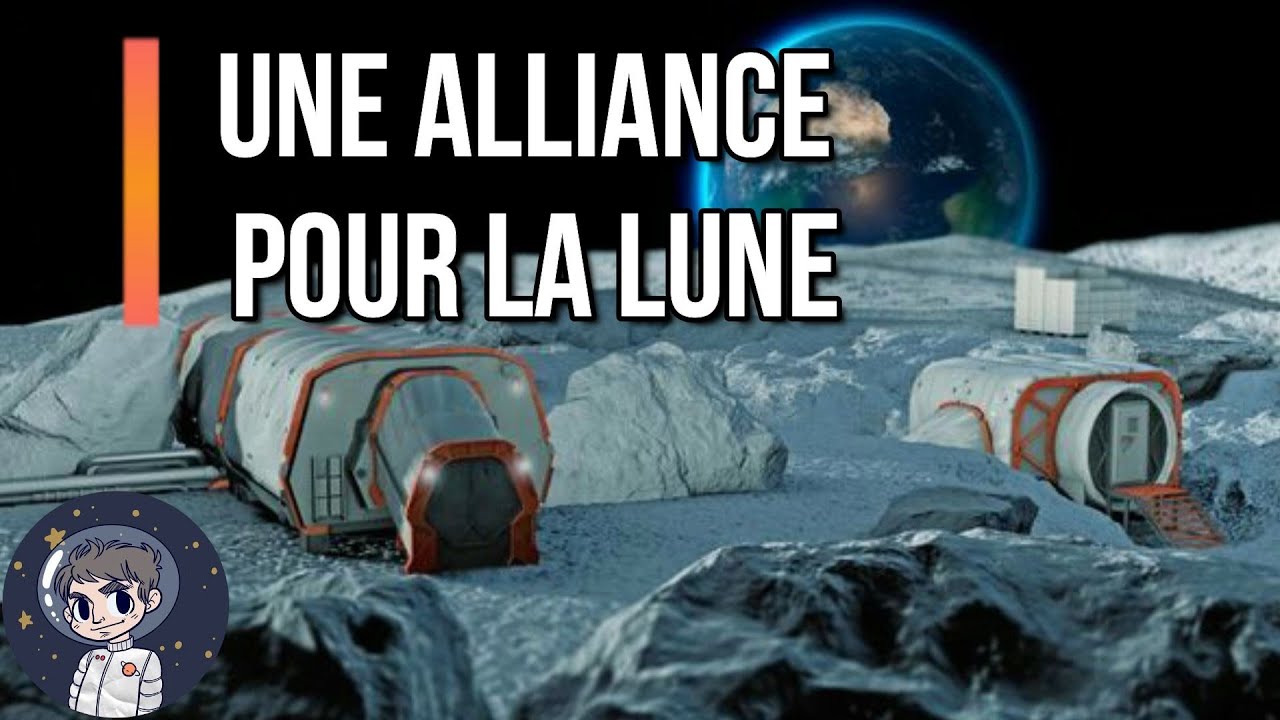
UNE ALLIANCE INATTENDUE POUR LA LUNE ! - Le Journal de l'Espace #75 - Actualités spatiales
Keywords
Summary
155 words
Critical Evaluation
Value of the Information & Strength of the Argument
The video provides a good overview of recent space developments, with clear explanations of the technical aspects. The host’s argumentation is generally solid, presenting facts and then offering analysis. For instance, the explanation of the SN10 explosion is well-structured, breaking down the sequence of events and the likely causes. The discussion of the Voyager Station is also informative, explaining the concept of artificial gravity and its potential benefits. However, the video is a news roundup rather than an in-depth analysis, so some topics are treated superficially. The host’s enthusiasm for the subject is evident, which adds to the video’s appeal, but it also means that some claims, such as the viability of the Voyager Station, are presented without critical scrutiny.
Scientific Rigor, Source Quality, Title Accuracy
The video relies on official announcements and statements from the entities involved (Roscosmos, CNSA, Rocket Lab, Orbital Assembly, SpaceX/Elon Musk). The host also references his own blog for more detailed articles. The title accurately reflects the main topic, and the content is consistent with the title. The video does not provide direct citations to scientific papers, but it does mention sources like NASA and ESA in the description. The host’s tone is measured, and he often notes when information is speculative or not yet confirmed. Overall, the scientific rigor is acceptable for a popular science news format.
232 words
Title / Content Match
The title accurately reflects the main topic of the video, which is the announcement of a lunar station alliance between Russia and China, presented as an unexpected partnership.
Quality & Reliability
7/10
The video is a weekly space news roundup, presenting recent announcements and events with a generally accurate and measured tone. The host clearly distinguishes facts from speculation, and while the content is not deeply sourced in the video itself, the channel provides links to its blog and other resources. The information is up-to-date as of the publication date and aligns with known events.
Chapters
Cited Sources
- Le Journal de l'Espace Blog — The host's blog, where he publishes articles on space news, including a detailed article on Rocket Lab's Neutron rocket.
- Forum de la conquête spatiale — A French space forum mentioned as a source of information and discussion.
- LabPadre YouTube Channel — A YouTube channel providing live streams and updates on SpaceX activities, used as a source for the SN10 explosion.
- NasaSpaceFlight YouTube Channel — A YouTube channel covering spaceflight news and launches, used as a source for the video.
Concurring Sources
- Roscosmos and CNSA sign agreement on lunar station — Official announcement of the Russia-China lunar station partnership, confirming the news reported in the video.
- Rocket Lab announces Neutron rocket — Rocket Lab's official press release about the Neutron rocket, matching the video's description.
- Orbital Assembly Corporation Voyager Station — Company website describing the Voyager Station project, consistent with the video's details.
External References
Contribution & Novelties
The video provides a concise and accessible summary of recent space news, making it valuable for a general audience. Its main contribution is in highlighting the Russia-China lunar station agreement, which was a significant geopolitical development in space exploration. The segment on the Voyager Station also brings attention to a novel private project that could have implications for future space habitats. The explanation of the SN10 explosion offers a clear technical breakdown that is not always found in mainstream media.
Pour aller plus loin :
- Artemis program — NASA’s program to return humans to the Moon, providing context for the lunar race.
- Rocket Lab Neutron — Wikipedia page on the Neutron rocket, offering more details on its design and mission.
- Artificial gravity — Wikipedia article explaining the concept and its applications in space habitats.
- Starship SN10 — Wikipedia page on SpaceX Starship prototypes, including SN10’s flight and explosion.
148 words
Radar Profile
The radar profile shows a balanced performance across all dimensions, with slightly higher scores in information quantity and quality, reflecting the video's role as a news digest. The technical level is moderate, suitable for a general audience, while reliability is solid due to reliance on official sources.
💬 Très positif. Sur les 30 commentaires analysés, tous expriment un soutien enthousiaste et une appréciation pour le contenu, avec des éloges récurrents sur la qualité de la narration et le retour de la chaîne après une pause.