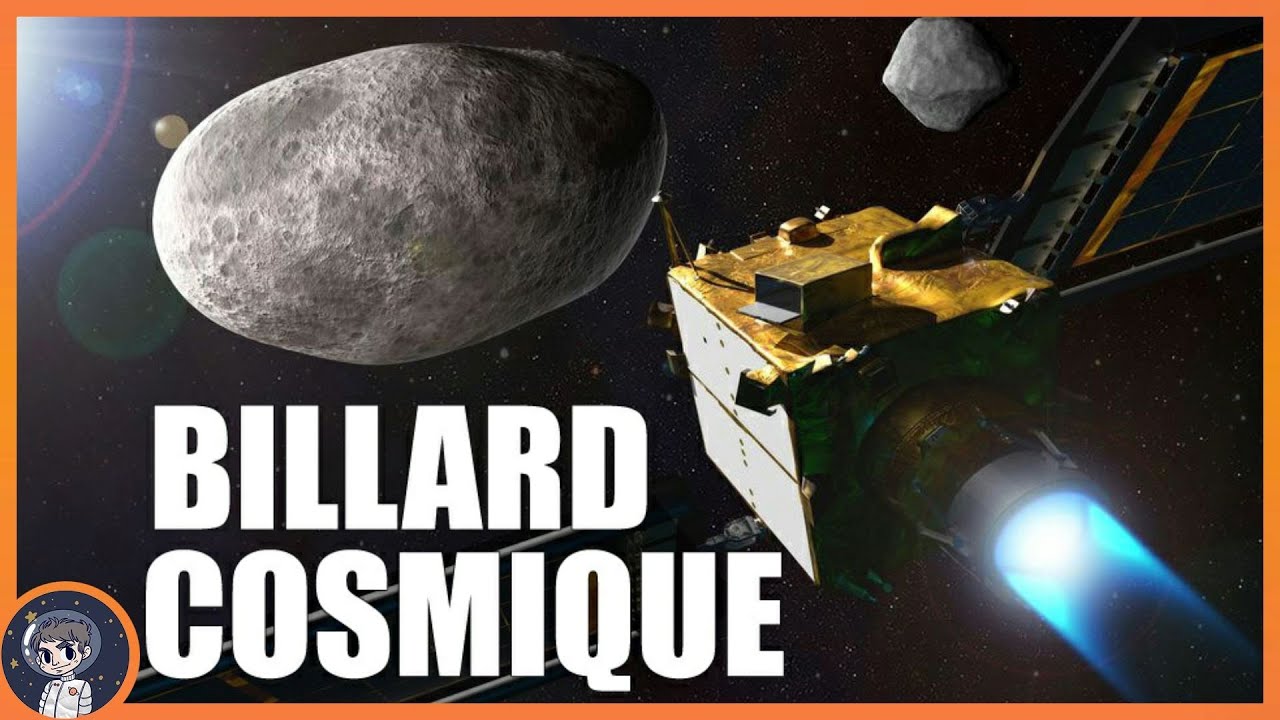
Pouvons-nous dévier un astéroïde avant qu'il ne soit trop tard ? Le Saviez-Vous #19 - JDE
Keywords
Summary
162 words
Critical Evaluation
Value of the Information & Strength of the Argument
The video provides a comprehensive and well-structured overview of asteroid deflection methods, effectively combining historical context, current scientific knowledge, and future missions. It presents multiple approaches, from nuclear options to gravity tractors, and explains their principles and limitations. The argumentation is solid, supported by references to real missions like Deep Impact and DART, and it correctly emphasizes the importance of early detection and the need for experimental validation. The presentation is engaging and accessible, making complex concepts understandable to a general audience.
Scientific Rigor, Source Quality, Title Accuracy
The video demonstrates good scientific rigor, referencing real programs and missions (NASA’s NEO Observations Program, ATLAS, LSST, Deep Impact, DART) and providing plausible technical details. However, it does not cite specific scientific papers or primary sources, relying instead on general knowledge and institutional programs. The title accurately reflects the content, and the video stays on topic throughout. The description includes links to the channel’s website and social media, but no direct references to scientific sources. Overall, the information is reliable and well-presented, though a more explicit citation of sources would enhance its scientific credibility.
191 words
Title / Content Match
The title accurately reflects the content, which explores the feasibility of asteroid deflection and the methods being developed.
Quality & Reliability
7/10
The video provides a well-structured overview of asteroid deflection methods, referencing real missions (DART, Deep Impact) and programs (ATLAS, LSST). It is scientifically accurate in general, though it simplifies some details and lacks direct citations to primary sources. The content is presented in an engaging and accessible manner, with a clear distinction between theoretical and tested approaches.
Key Moments
Markers derived by PSI from the transcript: the creator did not define chapters.
- Introduction to the threat of asteroids and the Chicxulub impact.
- Explanation of the asteroid belt and the frequency of small impacts.
- Discussion of detection programs and the LSST telescope.
- Presentation of the HAIV nuclear deflection concept.
- Overview of kinetic impact, gravity tractor, and solar radiation methods.
- Details of the DART mission and its objectives.
- Conclusion on the importance of developing deflection technologies.
Cited Sources
- Le Journal de l'Espace - Site officiel — Chaîne et site web de la vidéo.
- Forum de la conquête spatiale — Source mentionnée dans la description pour la communauté spatiale.
- Chaîne YouTube LabPadre — Source mentionnée pour les visuels de fusées.
- Musique par Scott Buckley — Musique utilisée dans la vidéo.
- Musique par Utho Riley — Musique utilisée dans la vidéo.
- Sound Lapse - City Walk — Musique utilisée dans la vidéo.
- Musique par Bensound - Evolution — Musique utilisée dans la vidéo.
- Musique par Carvine - Inspire Galactic — Musique utilisée dans la vidéo.
Concurring Sources
- NASA Planetary Defense — NASA's official page on planetary defense, consistent with the video's content.
- DART mission - Johns Hopkins APL — Official DART mission page, confirming the mission details mentioned in the video.
External References
Contribution & Novelties
The video provides a clear and engaging synthesis of current asteroid deflection strategies, making complex scientific concepts accessible to a general audience. It highlights the DART mission as a pioneering step in planetary defense, offering a concrete example of kinetic impact testing. The video also emphasizes the importance of early detection and the need for international collaboration.
Pour aller plus loin :
- DART mission - NASA — Official NASA page for the DART mission, providing detailed information and updates.
- Yarkovsky effect - Wikipedia — Explanation of the physical phenomenon used in one of the deflection methods.
- Near-Earth object - Wikipedia — Overview of NEOs, their classification, and detection efforts.
- Chicxulub crater - Wikipedia — Details on the impact crater associated with the dinosaur extinction.
124 words
Radar Profile
The radar profile shows high scores in information quantity and technical level, reflecting the video's comprehensive coverage and moderate technical depth. The quality and reliability scores are slightly lower, indicating that while the content is accurate, it lacks direct citations to primary sources. Overall, the video is a solid educational resource for understanding asteroid deflection.
💬 Très positif. Sur les 30 commentaires analysés, les spectateurs expriment un enthousiasme marqué pour la qualité de la vulgarisation et la pertinence du sujet, saluant le travail de l'équipe et la clarté des explications.