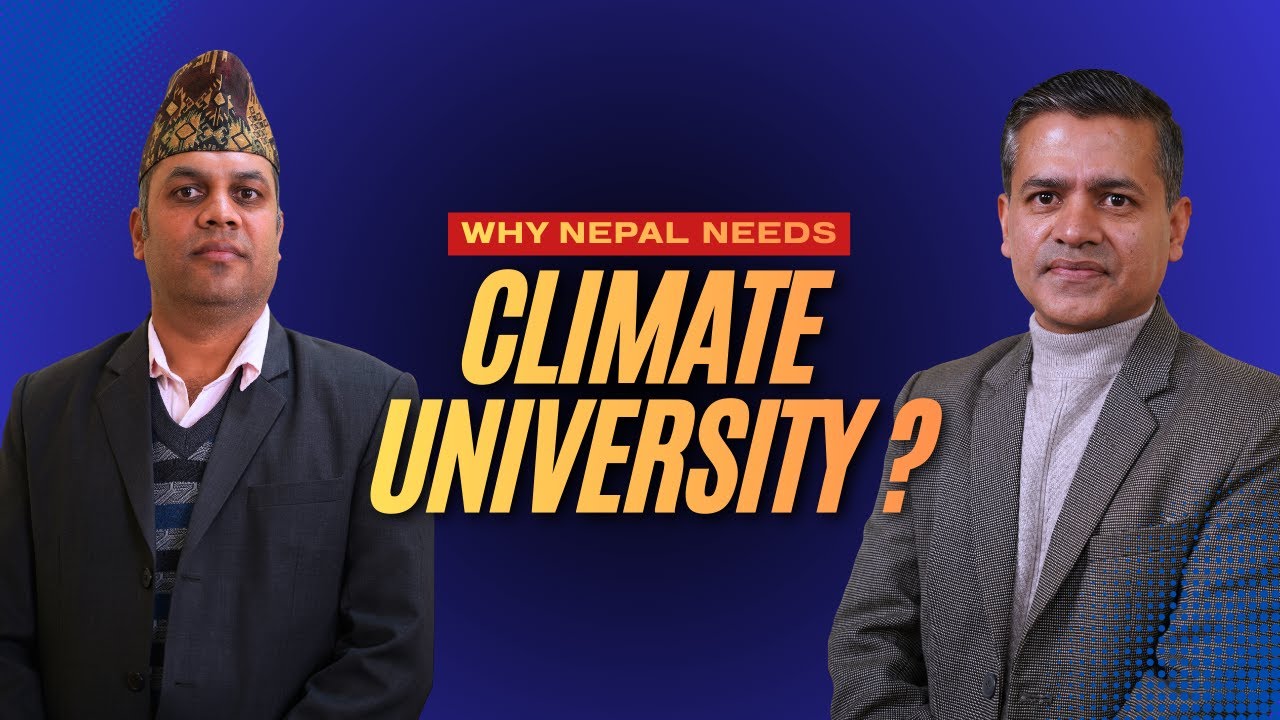
किन नेपालमा Climate University आवश्यक छ? Insightful Talk between Dr. Binod Panta & Dr. Sunil Lohani
Keywords
Summary
123 words
Critical Evaluation
Value of the Information & Strength of the Argument
The video provides valuable insights into the practical challenges of establishing climate education in Nepal, based on the speakers’ direct experience. The argumentation is coherent, emphasizing the need for interdisciplinary, accessible, and recognized courses. However, it lacks concrete data or case studies to support the claims, relying mostly on anecdotal evidence and general observations.
Scientific Rigor, Source Quality, Title Accuracy
The discussion is scientifically grounded in the speakers’ expertise, but no specific sources are cited. The title accurately reflects the content. The conversation is well-structured, but the lack of references reduces its scientific rigor.
103 words
Title / Content Match
The title accurately reflects the content, which discusses the need for a Climate University in Nepal.
Quality & Reliability
7/10
The discussion features two experts with relevant academic backgrounds, but it is primarily an opinion-based conversation without detailed data or citations. The claims are plausible and align with general knowledge, but lack specific references.
Key Moments
Markers derived by PSI from the transcript: the creator did not define chapters.
- Introduction of Dr. Sunil Lohani and his lab.
- Discussion on the lab's establishment and research areas.
- Challenges in securing international funding and building trust.
- Overview of the ACCESS project on climate change education.
- Importance of interdisciplinary climate courses for all.
- Concept of a digital Climate University in Nepal.
- Need for collaboration among universities and stakeholders.
- Discussion on renewable energy's role in climate mitigation.
- Potential for open-access courses and recognition.
- Call for climate literacy among all citizens.
Contribution & Novelties
The video offers a unique perspective on the need for a Climate University in Nepal, proposing a digital platform model that integrates various institutions. It emphasizes the importance of climate education for all, not just specialists.
Pour aller plus loin :
- Climate University Finland — Example of a collaborative climate education network.
- IPCC Reports — Scientific basis for climate change impacts and mitigation.
- Nepal’s National Adaptation Plan — Context for climate vulnerability in Nepal.
74 words
Radar Profile
The radar profile shows moderate scores across all dimensions, with slightly higher quality of information and lower technical depth, reflecting an expert discussion that is accessible but not highly technical.