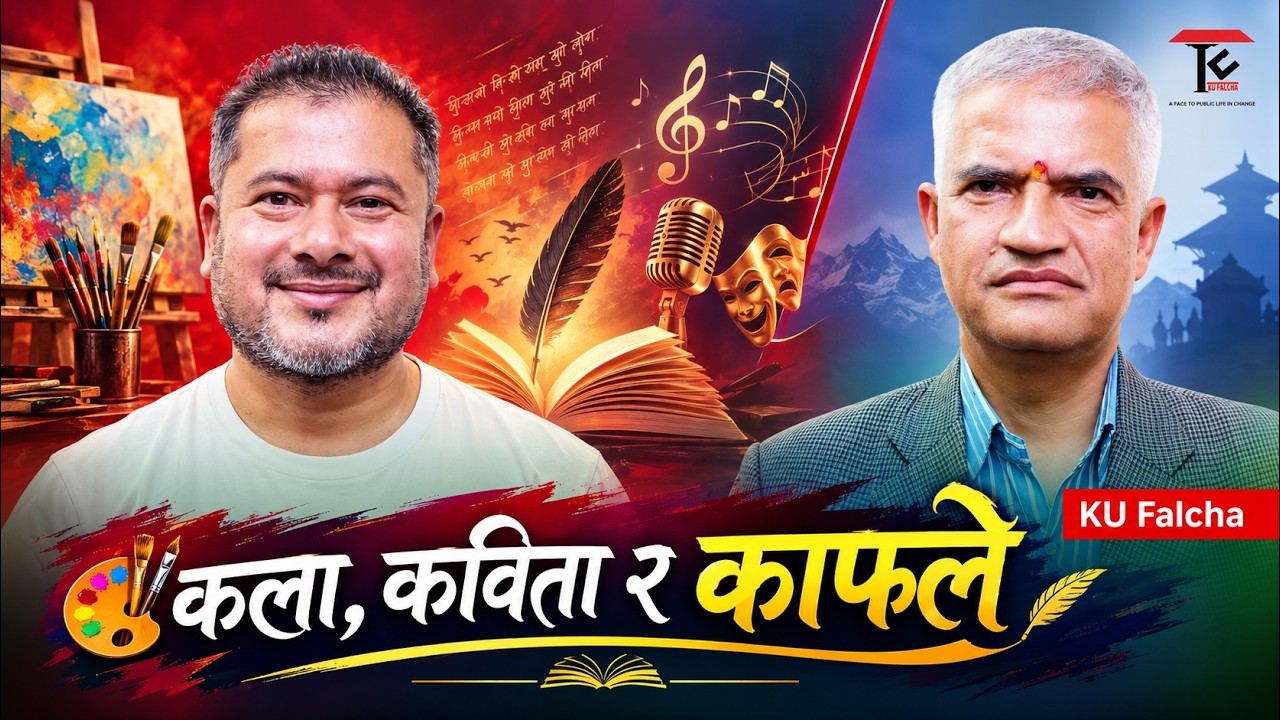
गीत लेखेर कति कमाइ हुन्छ? कला, कविता र काफ्ले KU Falcha with Dr. Hemraj Kafle & Yubaraj Kafle
Keywords
Summary
126 words
Critical Evaluation
Value of the Information & Strength of the Argument
The value of the information lies in the authentic personal experiences and cultural insights shared by the speakers, which provide a grassroots perspective on Nepali folk music and its social functions. The argumentation is based on anecdotal evidence and personal observations rather than systematic research, but it is coherent and passionate. The speakers effectively illustrate the importance of oral traditions and the risks of cultural loss, though they do not provide concrete data or examples beyond their own experiences. The discussion on AI and commercialization is relevant but remains at a surface level, without deep analysis.
Scientific Rigor, Source Quality, Title Accuracy
The video lacks formal scientific rigor; it is a conversational dialogue without citations or references to academic literature. The speakers are credible in their fields, but the content is not presented as a research output. The title is somewhat misleading as it focuses on earnings from songwriting, but the conversation covers broader cultural topics. The description mentions the KU Falcha platform but provides no additional sources. The video does not include any external references or links to further reading.
190 words
Title / Content Match
The title asks about earnings from songwriting, but the conversation focuses more on cultural heritage, personal experiences, and the value of folk music, with only brief mentions of commercialization. The title is somewhat misleading.
Quality & Reliability
6/10
The discussion is an informal conversation between two academics/poets, providing personal experiences and cultural observations rather than rigorous scientific analysis. While the speakers are credible (a professor and a poet), the content is anecdotal and lacks citations or empirical data. The video is a dialogue, not a structured study, so reliability is moderate.
Key Moments
Markers derived by PSI from the transcript: the creator did not define chapters.
- Introduction and context of the dialogue
- Discussion on the first question about songwriting earnings
- Personal anecdotes about folk music and courtship
- Exploration of the role of music in community bonding
- Impact of multilingual family background on creativity
- Discussion on regional diversity in Nepali music
- Concerns about AI and commercialization in music
- Importance of intergenerational transmission of folk traditions
- Role of educational institutions in preserving cultural heritage
- Concluding thoughts on the value of indigenous knowledge
Contribution & Novelties
The video provides a unique insider perspective on the cultural significance of Nepali folk music, emphasizing the importance of regional diversity and oral traditions. It highlights the challenges posed by modernization and AI, and calls for educational institutions to play a role in cultural preservation. The discussion is valuable for understanding the grassroots context of Nepali music, though it lacks novel theoretical contributions.
Pour aller plus loin :
- Oral tradition — Relevant for understanding the transmission of folk music.
- Indigenous knowledge — Relevant to the discussion on preserving indigenous knowledge.
- AI in music — Relevant to the concerns about AI’s impact on music creation.
104 words
Radar Profile
The radar profile shows moderate scores in information quantity and quality, with a low technical level and moderate reliability. This indicates a conversational, non-technical discussion with personal insights but limited scientific depth.