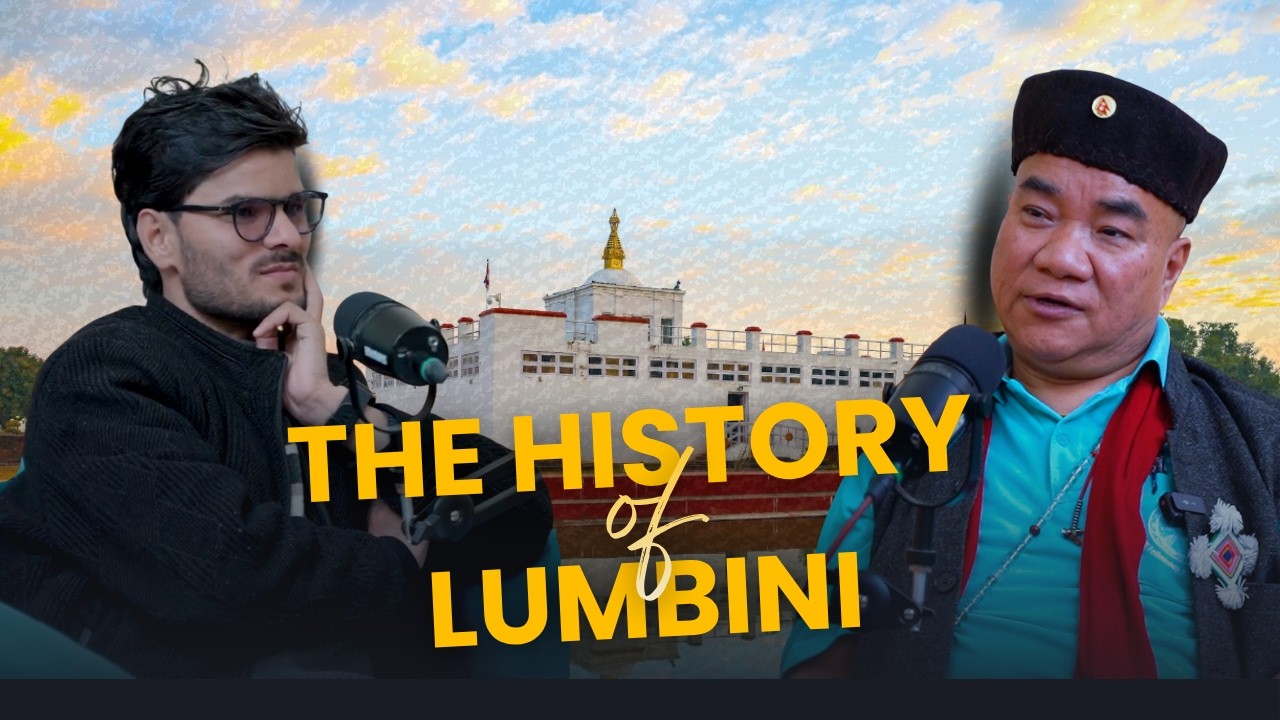
लुम्बिनी: हिजो, आज र भोलि | Common Ground with Ajit Man Tamang | EP12
Keywords
Summary
140 words
Critical Evaluation
Value of the Information & Strength of the Argument
The video provides valuable insights into Lumbini’s archaeological and historical significance, drawing on the speaker’s direct involvement in excavations and his deep knowledge of Buddhist texts and art. The argumentation is coherent, linking ancient inscriptions, artistic representations, and scientific interpretations to support claims. However, some assertions are based on personal interpretation rather than verifiable evidence, and the discussion occasionally digresses into broader Buddhist history.
Scientific Rigor, Source Quality, Title Accuracy
The speaker references historical sources such as the travel accounts of Chinese pilgrims (Faxian, Xuanzang) and the Ashoka pillar inscription, but does not provide specific citations or URLs. The title accurately reflects the content, which is a comprehensive discussion of Lumbini’s past, present, and future. The video lacks formal academic rigor, but the speaker’s expertise lends credibility to the information presented.
140 words
Title / Content Match
The title accurately reflects the content, which explores the past, present, and future of Lumbini.
Quality & Reliability
7/10
The speaker is a former executive of the Lumbini Development Trust and a scholar of Tamang culture and Buddhism, providing firsthand knowledge of archaeological findings and historical context. However, the discussion is largely based on personal interpretation and oral tradition, with limited citation of specific academic sources.
Key Moments
Markers derived by PSI from the transcript: the creator did not define chapters.
- Introduction of guest Ajit Man Tamang and topic of Lumbini.
- Discussion on the discovery of the Ashoka pillar in 1896.
- Explanation of the pillar's inscription and its significance.
- Archaeological layers at Maya Devi Temple and artifacts found.
- Interpretation of Buddha's birth and the seven steps myth.
- Management of Lumbini's water resources and preservation efforts.
- Comparison with other Buddhist heritage sites in Asia.
- Future prospects and challenges for Lumbini's development.
Cited Sources
- Ashoka Pillar inscription — Discussed as the primary evidence for Lumbini being Buddha's birthplace.
- Travel accounts of Chinese pilgrims (Faxian, Xuanzang) — Referenced for historical descriptions of Lumbini's location.
Concurring Sources
- UNESCO World Heritage Centre - Lumbini — Confirms Lumbini as the birthplace of Buddha and its universal value.
Contribution & Novelties
The video offers a unique perspective from a local expert with hands-on experience in Lumbini’s archaeology and management. It provides detailed insights into the site’s layered history and the challenges of preservation. The discussion of the seven steps myth and its artistic representations adds a nuanced interpretation.
Pour aller plus loin :
- Lumbini, the Birthplace of the Lord Buddha (UNESCO) — Official UNESCO World Heritage site description.
- Ashoka Pillar of Lumbini (Wikipedia) — Overview of the pillar’s history and inscription.
- Maya Devi Temple (Wikipedia) — Details on the temple’s archaeological significance.
91 words
Radar Profile
The radar profile shows high scores in quantity and quality of information, reflecting the speaker's expertise and the depth of discussion. The technical level is moderate, suitable for a general audience. Reliability is good but not perfect due to the lack of formal citations.