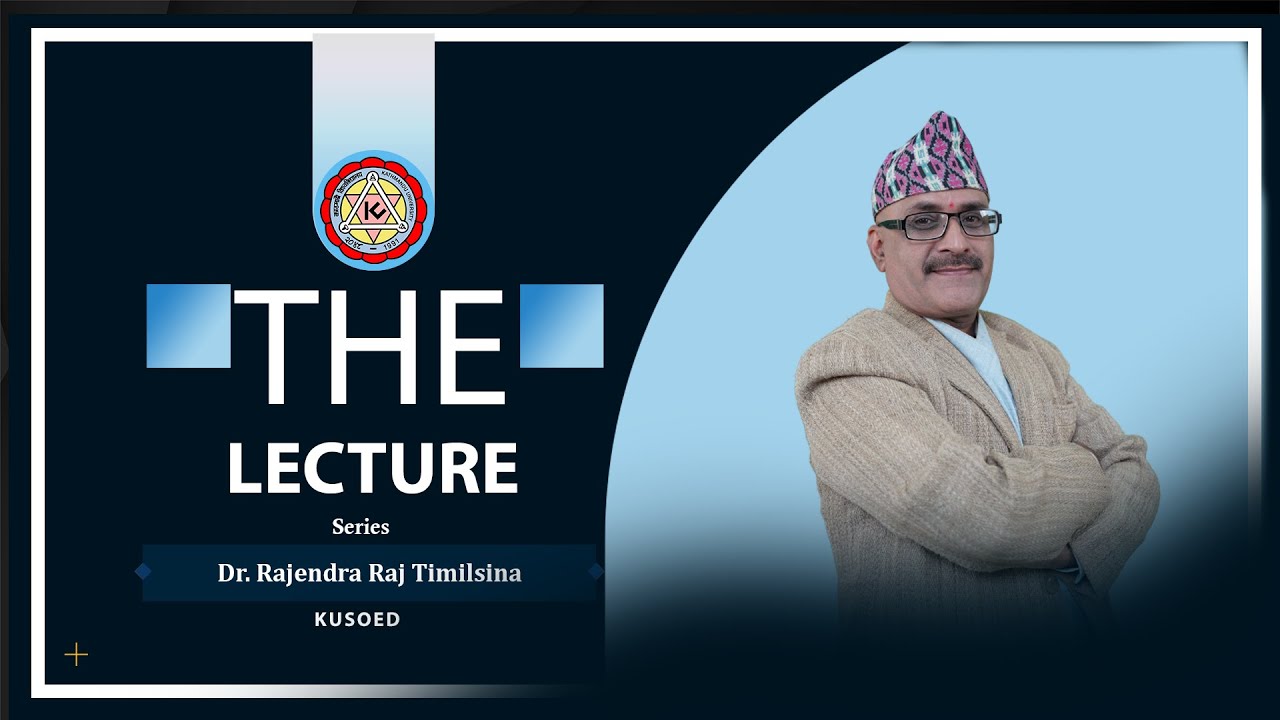
PhD Experience at Kathmandu University | Lecture Series with Dr. Rajendra Raj Timilsina | Episode 30
Keywords
Summary
161 words
Critical Evaluation
Value of the Information & Strength of the Argument
The value of the information lies in the unique personal perspective on pursuing a PhD in education in Nepal, particularly focusing on a niche topic like Vedic education for girls. The speaker provides a detailed account of his research process, including the development of a novel theoretical framework (Trishul paradigm) and his engagement with international academic communities. The argumentation is coherent and structured, as he divides his talk into pre-PhD, during PhD, and post-PhD phases. However, the claims are largely based on personal experience and lack empirical evidence or external validation. The speaker’s argument for the transformative power of education is compelling but remains anecdotal.
Scientific Rigor, Source Quality, Title Accuracy
The scientific rigor is moderate; the speaker references his own thesis and mentions specific concepts like neo-Sanskritization and the Trishul paradigm, but does not provide citations or external sources. The quality of sources is limited to his own work and general references to scholars like M.N. Srinivas and Claude Lévi-Strauss. The title accurately reflects the content, which is a personal account of the PhD experience. No comments were provided for analysis.
191 words
Title / Content Match
The title accurately reflects the content, which is a lecture about the speaker's PhD experience at Kathmandu University.
Quality & Reliability
7/10
The speaker provides a detailed personal account of his PhD journey, including specific details about his research, methodology, and academic activities. However, the talk is largely anecdotal and lacks verifiable citations or external references. The credibility is moderate, relying on the speaker's expertise and experience.
Key Moments
Markers derived by PSI from the transcript: the creator did not define chapters.
- Introduction and welcome
- Speaker's academic background and motivation for PhD
- Admission process and selection of stream
- Overview of thesis topic and research questions
- Literature review and discovery of female Vedic seers
- Development of Trishul paradigm and methodology
- Data chapters: recitation, ritual, and menstruation
- Discussion of paradoxes and neo-Sanskritization
- Post-PhD activities and conference presentations
- Conclusion and reflections on transformative education
Contribution & Novelties
The talk provides a unique insider perspective on the PhD journey in education at Kathmandu University, highlighting the integration of traditional Vedic knowledge with modern educational research. The speaker introduces a novel theoretical framework, the Trishul paradigm, which combines Sankhya philosophy with ethnographic methods. This contributes to the discourse on indigenous methodologies and the study of gender in religious education.
Pour aller plus loin :
- Sankhya philosophy — Foundational to the Trishul paradigm.
- Ethnography — Core methodology used in the thesis.
- Neo-Sanskritization — Concept applied to contemporary social change.
89 words
Radar Profile
The radar profile shows moderate scores across all dimensions, indicating a balanced but not exceptional presentation. The talk is informative and technically adequate, but lacks strong external validation and depth in certain areas.