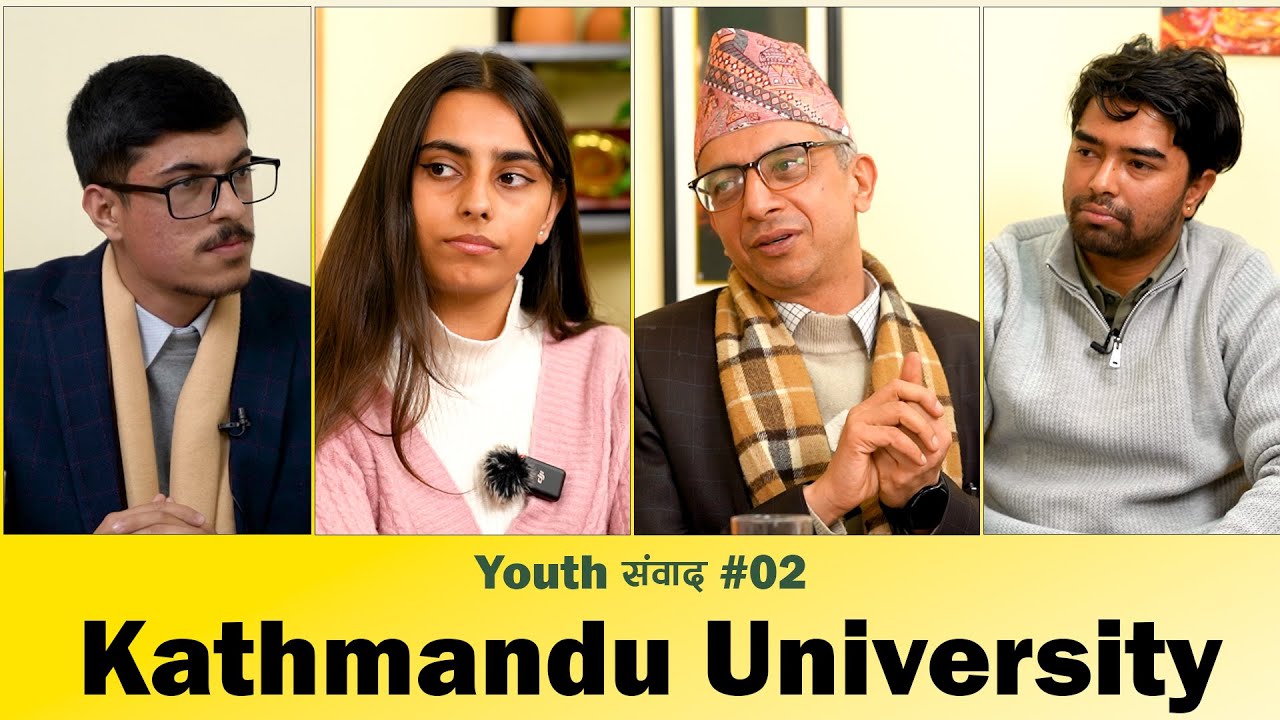
Gen Z विद्रोह र विश्वविद्यालयको दृष्टि | Gen Z Movement in Nepal | Youth संवाद EP02
Keywords
Summary
153 words
Critical Evaluation
Value of the Information & Strength of the Argument
The value of the information lies in its firsthand perspectives from an academic leader and students directly involved in the educational system. The dean provides a historical analysis of youth movements, linking them to current events, and offers a framework for leadership development based on discontinuity, performativity, and detachment. The students contribute practical insights on inclusivity and the challenges faced by marginalized groups. The argumentation is coherent and grounded in personal experience and academic knowledge, though it lacks empirical evidence and relies heavily on anecdotal observations.
Scientific Rigor, Source Quality, Title Accuracy
The discussion is rigorous in its logical structure, but the sources are primarily the participants’ own expertise and experiences. No external sources are cited, and the claims are not backed by data or references. The title accurately reflects the content, focusing on the Gen Z movement and university perspectives. The lack of citations and reliance on personal opinion reduce the scientific rigor, but the academic credentials of the dean add credibility.
172 words
Title / Content Match
The title accurately reflects the content, focusing on the Gen Z movement and university perspectives.
Quality & Reliability
7/10
The discussion features a university dean and students, providing credible perspectives on the Gen Z movement and university leadership. However, it is primarily opinion-based with limited empirical data or citations.
Key Moments
Markers derived by PSI from the transcript: the creator did not define chapters.
- Introduction and welcome of guests.
- Dean discusses historical context of youth movements in Nepal.
- Students share their views on the Gen Z movement.
- Discussion on university autonomy and open society.
- Debate on leadership development and meritocracy.
- Student Sandesh talks about inclusivity and representation.
- Discussion on gender disparity in faculty.
- Impact of technology on attention spans and leadership.
- Call for universities to foster critical thinking and philosophical foundations.
Contribution & Novelties
The video provides a unique platform for dialogue between a university dean and students, offering a multi-generational perspective on the Gen Z movement in Nepal. It contributes to the discourse on university reform and leadership development, emphasizing the need for autonomy, openness, and inclusivity. The discussion highlights the disconnect between traditional academic structures and the aspirations of the youth.
Pour aller plus loin :
- Paulo Freire’s Pedagogy of the Oppressed — Relevant to the dean’s reference to Freire and the concept of oppression and leadership.
- Hidden Curriculum — Discusses the implicit lessons taught in educational settings, relevant to the dean’s point.
- Meritocracy — Explores the concept of merit-based leadership, central to the discussion on university leadership.
116 words
Radar Profile
The radar profile shows moderate scores across all dimensions, indicating a balanced but not highly technical discussion. The highest scores are in information quantity and quality, reflecting the substantive dialogue, while technical level is lower due to the non-technical nature of the topic.