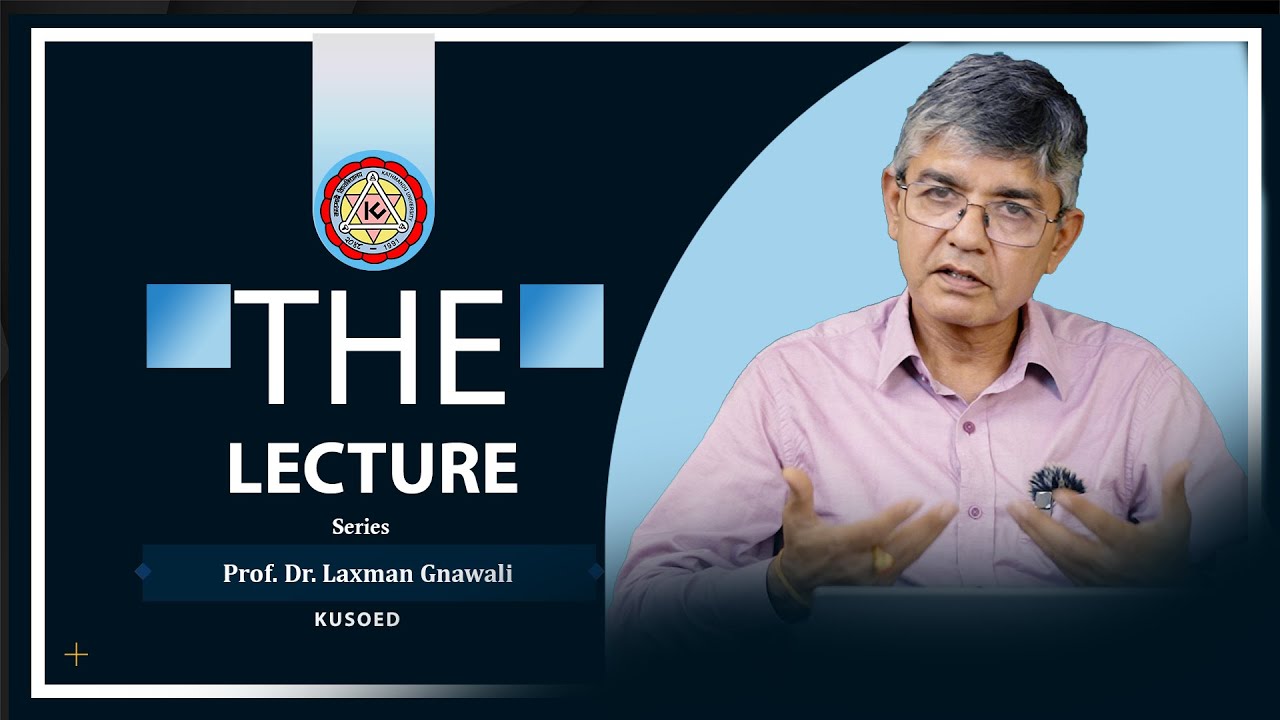
Why Learning Difficulties? The Lecture Series with Prof. Dr. Laxman Gnawali EP24
Keywords
Summary
184 words
Critical Evaluation
Value of the Information & Strength of the Argument
The lecture provides valuable insights into the nature of learning difficulties, emphasizing that they are not a result of laziness or lack of effort but are often rooted in neurological differences. The speaker effectively argues for a shift from punitive measures to supportive and inclusive approaches. He uses relatable examples and personal anecdotes to illustrate his points, making the content accessible. However, the argumentation is largely based on personal experience and general knowledge rather than empirical evidence or specific research findings. The speaker does not cite any studies or data to support his claims, which weakens the scientific rigor. He also makes some generalizations, such as stating that all children with learning difficulties have exceptional talents, which may not always be true. Overall, the argument is coherent and persuasive for a general audience, but lacks depth in scientific backing.
Scientific Rigor, Source Quality, Title Accuracy
The lecture demonstrates a moderate level of scientific rigor. The speaker, an education professor, shows familiarity with key terms and concepts related to learning difficulties, but he does not provide specific sources or references. The content is based on his professional experience and observations, which adds practical value but limits its scientific credibility. The title accurately reflects the content, as the lecture indeed focuses on why learning difficulties occur and how to address them. There is no mention of any research studies or authoritative sources, which is a significant gap for a scientific lecture. The speaker’s advice on avoiding medication and focusing on educational interventions aligns with current best practices, but without citations, it remains an opinion rather than evidence-based guidance.
275 words
Title / Content Match
The title accurately reflects the content, which discusses the concept of learning difficulties and how to identify and support students with such challenges.
Quality & Reliability
6/10
The lecture provides a general overview of learning difficulties, mentioning specific terms like dyslexia, dyscalculia, dysgraphia, ADHD, and dyspraxia, but lacks detailed scientific evidence or citations. The speaker's expertise in education is evident, but the content is largely anecdotal and based on personal experience rather than systematic research.
Key Moments
Markers derived by PSI from the transcript: the creator did not define chapters.
- Introduction: Professor Laxman Gnawali introduces the topic of learning difficulties and his background.
- Discussion on common complaints about students not learning and the misconception that it's due to lack of effort.
- Explanation of specific learning difficulties: dyslexia, dyscalculia, dysgraphia, ADHD, and dyspraxia.
- Emphasis on early identification and the role of parents and teachers in recognizing signs.
- Challenges in schools: teachers trying to control behavior rather than understanding underlying issues.
- Parental denial and social stigma associated with learning difficulties.
- Importance of awareness programs and teacher training.
- Advocacy for inclusive education and collaboration between schools and families.
- Critique of traditional assessment methods and proposal for alternative evaluation.
- Discussion on the unique talents of individuals with learning difficulties and the need for societal support.
Contribution & Novelties
The lecture offers a practical perspective on learning difficulties, emphasizing the need for early identification, inclusive education, and collaboration between teachers and parents. It highlights the social stigma and denial that often hinder support. The speaker’s experience in Nepal provides a cultural context that may be underrepresented in mainstream literature.
Pour aller plus loin :
- Learning disability - Wikipedia — Provides a comprehensive overview of learning disabilities, including definitions and types.
- Inclusive education - UNESCO — Discusses the principles and benefits of inclusive education.
- Dyslexia - National Institute of Neurological Disorders and Stroke — Offers detailed information on dyslexia, its symptoms, and management.
103 words
Radar Profile
The radar profile shows moderate scores across all dimensions, with slightly higher scores in quantity of information and lower in technical level and reliability. This indicates a lecture that provides a broad overview but lacks depth and scientific rigor.