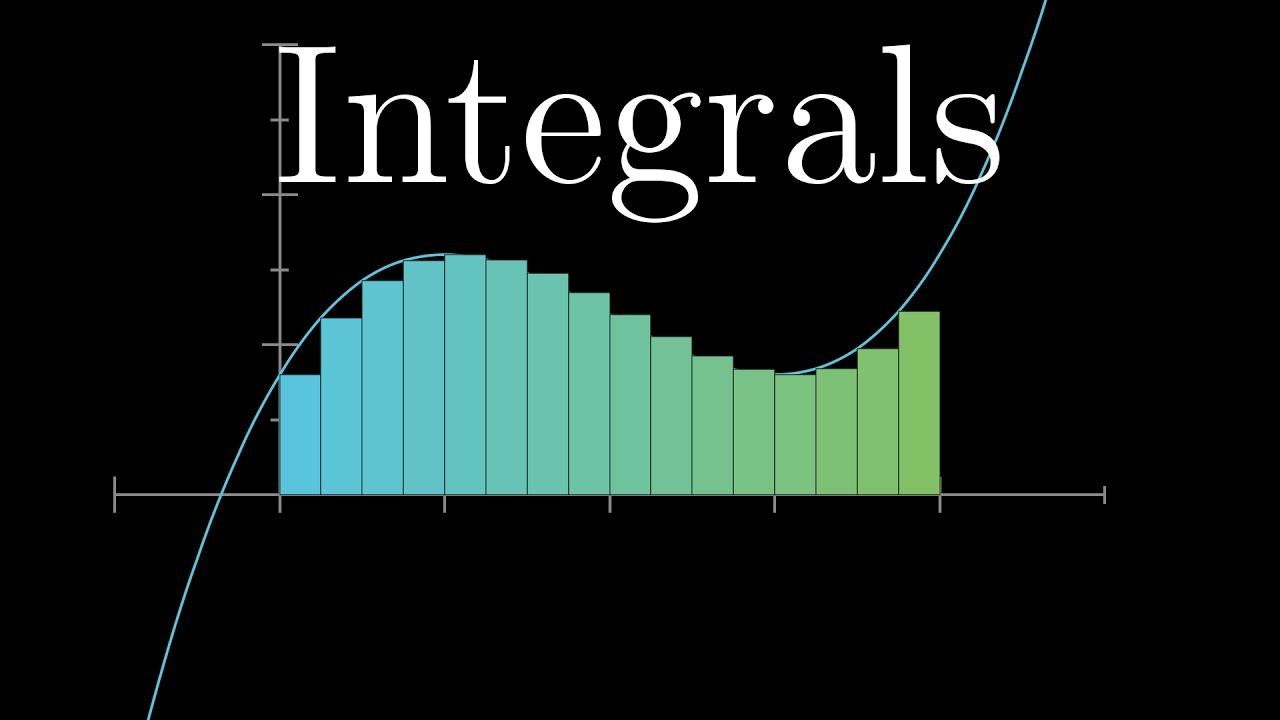
Integration and the fundamental theorem of calculus | Chapter 8, Essence of calculus
Keywords
Summary
148 words
Critical Evaluation
Value of the Information & Strength of the Argument
The video provides high value by building intuition from a concrete example, systematically refining approximations to reach the exact concept of the integral. The argumentation is solid: it starts with a simple case (constant velocity), extends to piecewise constant approximations, and then takes the limit to define the integral. The key step—showing that the derivative of the area function is the original function—is presented with clear geometric reasoning, making the fundamental theorem of calculus feel almost self-evident. The explanation of why the antiderivative is used and the role of the constant is thorough. The video successfully bridges the gap between the geometric area interpretation and the algebraic computation, which is a common stumbling block for learners.
Scientific Rigor, Source Quality, Title Accuracy
The video is scientifically rigorous, presenting the fundamental theorem of calculus with correct mathematical statements and intuitive justifications. The sources cited are primarily the channel’s own resources and a sponsor (Art of Problem Solving), which are relevant to the educational context. The title accurately reflects the content, focusing on integration and the fundamental theorem. The video does not cite external academic sources, but it is a tutorial aimed at explaining established mathematical concepts, so this is not a deficiency. The content is consistent with standard calculus textbooks.
218 words
Title / Content Match
The title accurately reflects the content, which focuses on integration and the fundamental theorem of calculus.
Quality & Reliability
9/10
High-quality educational content from a reputable channel known for mathematical rigor and clear explanations. The video presents the fundamental theorem of calculus with intuitive geometric reasoning and correct mathematical formalism.
Chapters
Cited Sources
- 3Blue1Brown Lessons: Integration — Official lesson page with supplementary materials and acknowledgments.
- 3Blue1Brown Recommended Playlist — Recommended videos for new viewers.
- Art of Problem Solving — Sponsor link, providing resources for math education.
- 3Blue1Brown Website — Official website with additional content.
- 3Blue1Brown Reddit — Community discussion forum.
Concurring Sources
- Khan Academy: Fundamental theorem of calculus — Provides a similar explanation of the fundamental theorem, reinforcing the concepts presented.
Contribution & Novelties
The video’s original contribution lies in its pedagogical approach: it uses a single, relatable example (car speedometer) to build a deep intuition for the integral and the fundamental theorem, avoiding the typical rote presentation. It emphasizes the geometric interpretation of the integral as the area under a curve and shows how the derivative of that area function naturally leads to the antiderivative. This approach demystifies the theorem and makes it feel intuitive rather than magical.
Pour aller plus loin :
- Fundamental theorem of calculus — Provides a formal statement and proof, complementing the intuitive explanation.
- Riemann integral — Formalizes the concept of the integral as a limit of Riemann sums, which is the basis of the video’s approximation approach.
- Antiderivative — Explains the concept of antiderivatives and their role in integration.
131 words
Radar Profile
The radar profile shows high scores in information quality and reliability, with slightly lower scores in quantity and technical depth. This reflects the video's focus on deep conceptual understanding rather than exhaustive coverage or advanced technical detail.
💬 Très positif. Sur les 30 commentaires analysés, les spectateurs expriment une gratitude massive pour la clarté et l'intuition apportées, regrettant souvent de ne pas avoir eu accès à ce type de ressources plus tôt dans leur apprentissage.