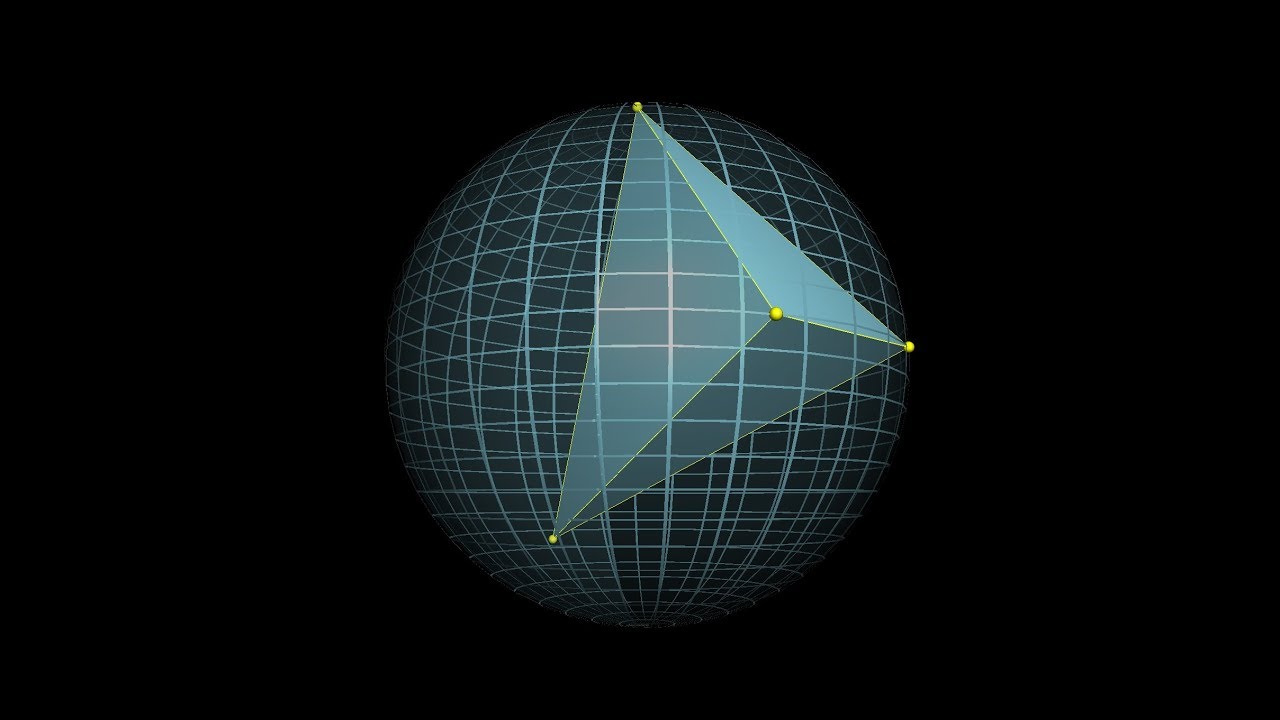
The hardest problem on the hardest test
Keywords
Summary
133 words
Critical Evaluation
Value of the Information & Strength of the Argument
The video provides a high-value explanation of a difficult mathematical problem. The argumentation is solid, building from a simpler 2D case to the 3D generalization. The key insight—reformulating the random selection process—is presented clearly and convincingly. The visual animations greatly aid comprehension, making the abstract concepts tangible. The reasoning is rigorous, and the conclusion is well-supported.
Scientific Rigor, Source Quality, Title Accuracy
The scientific rigor is high. The solution is mathematically correct and the explanation is precise. The video cites the Putnam archive and a written solution, providing verifiable sources. The title accurately describes the content, and the video lives up to its promise of presenting a difficult problem with an elegant solution.
122 words
Title / Content Match
The title accurately reflects the content: the video addresses a notoriously difficult problem from the Putnam competition, and the solution is presented in an accessible yet rigorous manner.
Quality & Reliability
9/10
The video presents a rigorous mathematical solution to a Putnam problem, with clear logical steps and visual explanations. The reasoning is sound and the conclusion is correct. The channel is known for high-quality educational content.
Key Moments
Markers derived by PSI from the transcript: the creator did not define chapters.
- Introduction to the Putnam competition and the problem statement.
- Simplification to 2D: three points on a circle.
- Analysis of the 2D case: fixing two points and varying the third.
- Derivation of the 1/4 probability in 2D.
- Generalization to 3D: using diameters and coin flips.
- Conclusion and final puzzle from Brilliant.
Cited Sources
- 1992 Putnam Archive — Official archive of the 1992 Putnam exam, which includes the problem discussed.
- 2005 Putnam Archive — Archive of the 2005 Putnam exam, mentioned as containing a similar problem.
- 2005 Putnam Solutions — Solutions to the 2005 Putnam exam, referenced for further study.
- A different write-up of this solution — An alternative written solution to the problem.
- Brilliant.org — Sponsor link, also provides the final puzzle and related courses.
- Solution to the puzzle mentioned at the end — Link to the solution of the final puzzle.
- manim GitHub repository — The open-source animation library used to create the video.
- 3Blue1Brown website — Home page of the channel.
Concurring Sources
- 1992 Putnam Archive — The official problem statement confirms the problem's origin.
External References
Contribution & Novelties
The video’s original contribution lies in its pedagogical approach: it does not simply present the solution but guides the viewer through the thought process, emphasizing the strategy of simplifying the problem and reformulating the random selection. This method is broadly applicable in mathematics. The visual animations are particularly effective in conveying the geometric intuition.
Pour aller plus loin :
- Putnam Competition — Overview of the competition and its format.
- Geometric probability — The branch of probability dealing with geometric objects.
- Tetrahedron — Definition and properties of the tetrahedron.
88 words
Radar Profile
The radar profile shows a very high score in information quality and reliability, with slightly lower but still strong scores in information quantity and technical level. This indicates a video that is both accurate and accessible, with a good balance of depth and breadth.
💬 Très positif. Sur les 30 commentaires analysés, l'immense majorité exprime admiration et amusement, avec des blagues sur la difficulté du problème et des témoignages d'inspiration pour étudier les mathématiques.