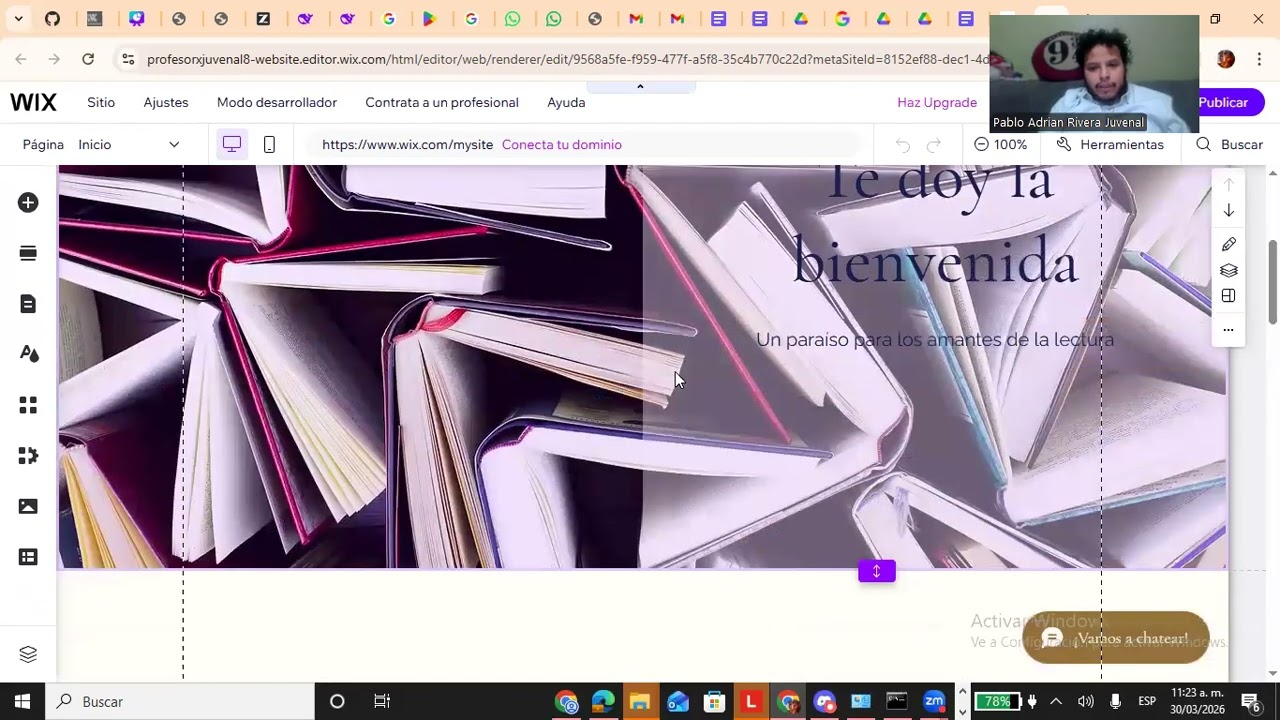
Nuevas tecnologías en educación, módulo 3 segunda sesión, parte 2
Keywords
Summary
172 words
Critical Evaluation
Value of the Information & Strength of the Argument
The video provides practical, hands-on value for students, teaching them a cost-effective skill (website creation) that could save money and potentially generate income. The argumentation is based on personal experience and practical reasoning, such as avoiding hidden costs and ads in Wix. However, the claims about Wix’s drawbacks are not substantiated with data or external sources, and the recommendation for ‘vibe coding’ is presented without discussing potential limitations or ethical considerations. The argumentation is coherent but lacks depth and critical analysis.
Scientific Rigor, Source Quality, Title Accuracy
The video does not cite any scientific sources or references. The title accurately describes the content, which is a tutorial on using new technologies in education. The instructor’s recommendations are based on personal opinion and practical experience rather than empirical evidence. The lack of citations and rigorous scientific grounding reduces the overall reliability. No comments were provided for analysis.
155 words
Title / Content Match
The title accurately reflects the content: a session on new technologies in education, focusing on building a website for an integrative activity.
Quality & Reliability
6/10
The video is a practical tutorial with live demonstrations, but it lacks citations and rigorous scientific grounding. The instructor provides personal opinions and recommendations without supporting evidence.
Key Moments
Markers derived by PSI from the transcript: the creator did not define chapters.
- Introduction and overview of the session's goals.
- Explanation of the integrative activity and the requirement to create a website.
- Critique of Wix and Google Sites, introducing the concept of 'technofeudalism'.
- Demonstration of creating a Neocities account and setting up the site.
- Using DeepSeek AI to generate HTML code for the homepage.
- Editing the generated code and adding a logo.
- Creating additional pages and linking them.
- Troubleshooting and finalizing the website.
Cited Sources
- Neocities — Recommended as the hosting platform for creating the website.
- DeepSeek AI — Used as the AI tool to generate HTML code for the website.
- Wix — Criticized as an alternative with hidden costs and ads.
- Google Sites — Mentioned as another alternative with similar drawbacks.
Contribution & Novelties
The video introduces the concept of ‘vibe coding’ as a practical method for non-programmers to create websites, which is a novel approach in educational settings. It also highlights the importance of digital autonomy and avoiding commercial platforms. The tutorial is directly applicable to the students’ integrative activity.
Pour aller plus loin :
- Vibe coding — Concept of AI-assisted programming.
- Creative Commons — Licensing for free-to-use images.
- Technofeudalism — Critical perspective on digital platforms.
73 words
Radar Profile
The radar profile shows moderate scores across all dimensions, indicating a balanced but not exceptional video. The highest score is in quantity of information, reflecting the detailed tutorial, while quality and reliability are lower due to lack of citations.