405 Segunda parte, módulo 3 Laboratorio de innovación social, parte 1
Keywords
Summary
157 words
Critical Evaluation
Value of the Information & Strength of the Argument
The video provides practical value for students working on social innovation projects, offering clear guidelines for the video assignment and explaining mission and vision concepts with relatable examples. The instructor’s argumentation is straightforward and based on personal experience and common business practices, though it lacks formal academic depth. The introduction of the ‘Construye’ model is interesting but presented as a work in progress, without rigorous validation. The discussion on contextualization, using examples like tree planting and urban painting, effectively illustrates the importance of planning and understanding the environment. Overall, the content is useful for its intended audience but not highly rigorous.
Scientific Rigor, Source Quality, Title Accuracy
The video does not cite any formal sources, relying instead on anecdotal examples and general knowledge. The instructor mentions his own model and an article, but no specific references are provided. The title is somewhat misleading as it refers to module 3 while the content focuses on module 4. The lack of citations and the informal nature of the presentation reduce its scientific rigor. However, the instructor does provide practical, experience-based insights that are relevant to the course.
194 words
Title / Content Match
The title indicates a second part of module 3, but the content actually covers module 4, which may confuse viewers.
Quality & Reliability
6/10
The video is an informal class session, providing practical guidance on project presentation, mission/vision concepts, and a personal model (Construye). It lacks formal citations and rigorous scientific grounding, but offers practical examples and clear explanations.
Key Moments
Markers derived by PSI from the transcript: the creator did not define chapters.
- Introduction and administrative announcements
- Overview of module 4 requirements and video assignment
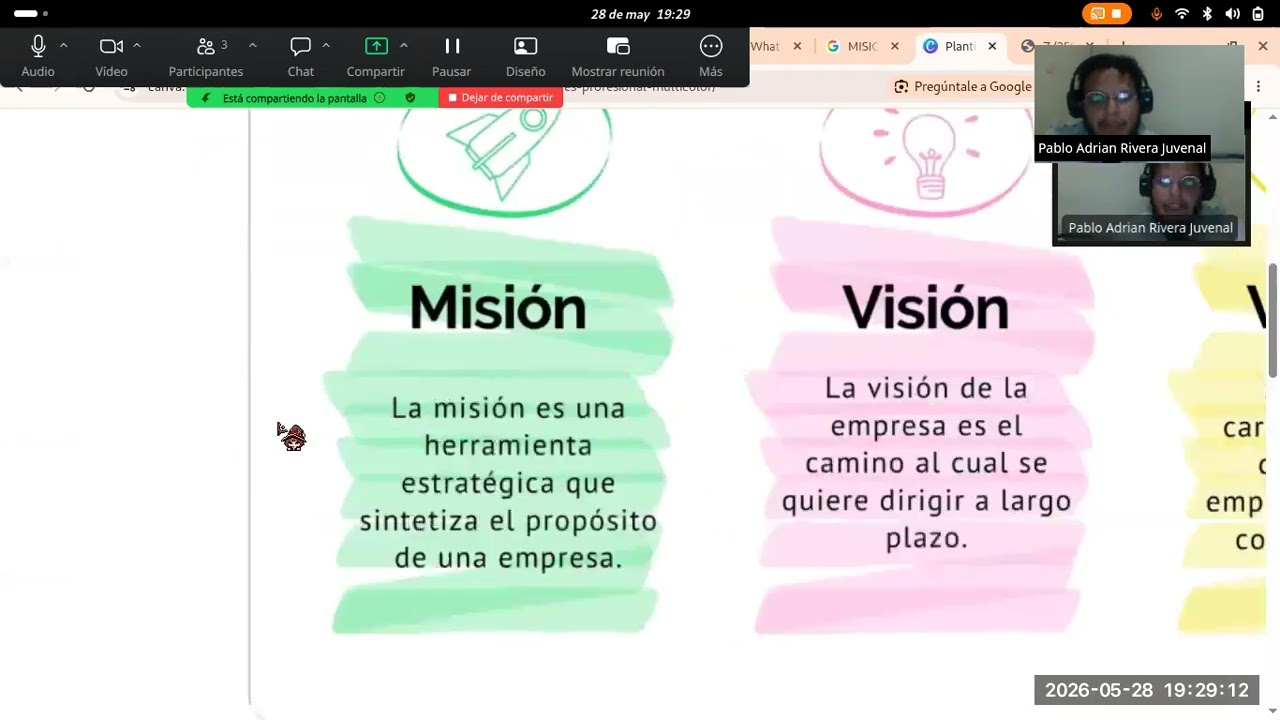
- Explanation of mission and vision concepts
- Introduction of the Construye model
- Discussion on contextualization and observation
- Examples of poor planning and importance of context
- Q&A session with students
- Further details on video presentation techniques
- Closing remarks and reminders
Contribution & Novelties
The video offers a practical guide for students on creating a project presentation video, with clear structure and examples. The instructor’s ‘Construye’ model, though not fully developed, provides a framework for social innovation projects, emphasizing contextualization and observation. This could be valuable for practitioners.
Pour aller plus loin :
- Social innovation — Provides an overview of social innovation concepts.
- Mission statement — Explains the concept of mission in organizations.
- Vision statement — Discusses vision in strategic management.
- SMART criteria — Relevant to the mentioned SMART objectives.
86 words
Radar Profile
The radar profile shows moderate scores across all dimensions, indicating a balanced but not exceptional video. The highest score is in quantity of information, while technical level and reliability are lower, reflecting the informal and practical nature of the content.