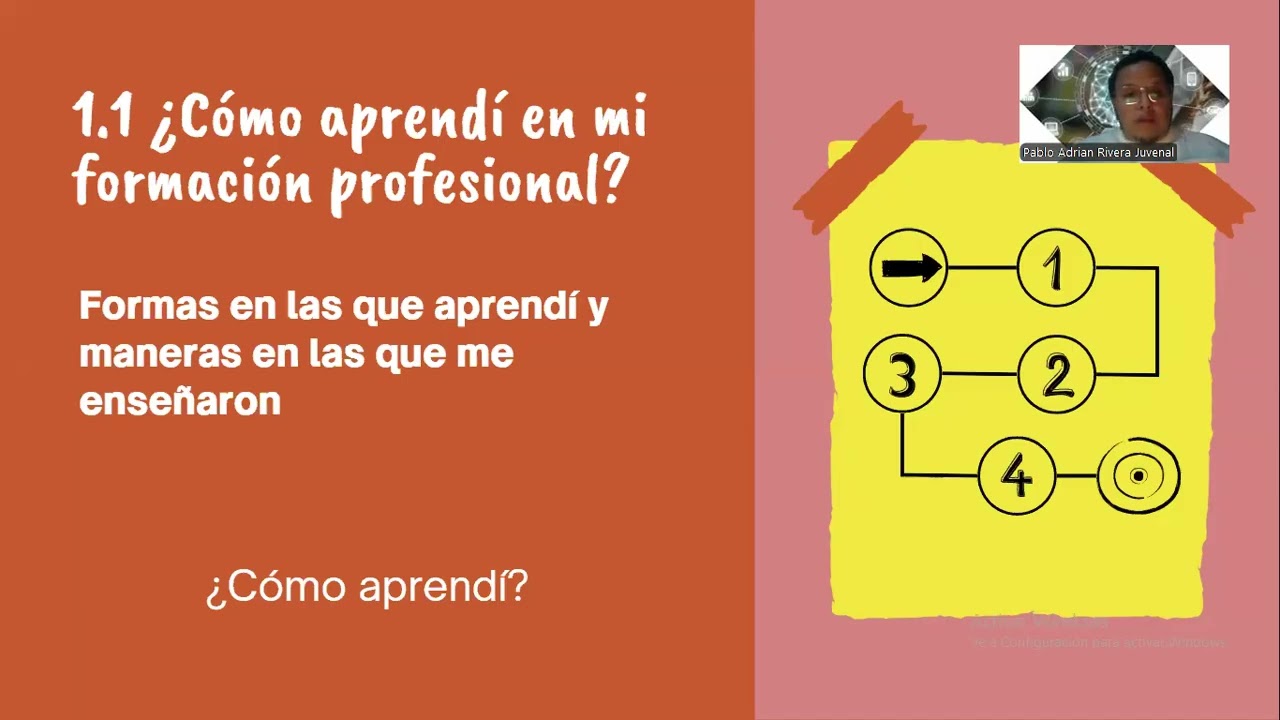
Sesión 2 Formación docente grupo 803
Keywords
Summary
165 words
Critical Evaluation
Value of the Information & Strength of the Argument
The video provides practical insights into teaching from an experienced educator, emphasizing the multidimensional nature of teaching and the importance of considering factors beyond content delivery. The argumentation is based on the instructor’s experience and common educational theories, but lacks empirical evidence or citations. The discussion of the Pygmalion effect and Freire’s banking education adds theoretical depth, but the presentation is largely anecdotal. The instructor effectively engages students and encourages reflection, but the scientific rigor is limited.
Scientific Rigor, Source Quality, Title Accuracy
The video does not cite specific sources or provide references. The instructor mentions concepts like the Pygmalion effect and Freire’s banking education but does not provide citations. The title accurately reflects the content, as it is a session of a teacher training course. The lack of formal sourcing reduces the scientific rigor, but the content is relevant and coherent.
151 words
Title / Content Match
The title accurately reflects the content: a second session of a teacher training course for a specific group.
Quality & Reliability
6/10
The video is a recorded online class session for a psychology degree program. It is based on the instructor's expertise and experience, but lacks formal citations or references to scientific literature. The content is presented in a conversational and practical manner, with some theoretical references (e.g., Pygmalion effect, Freire's banking education) but without rigorous sourcing.
Key Moments
Markers derived by PSI from the transcript: the creator did not define chapters.
- Introduction and welcome, administrative announcements about assignment deadlines.
- Review of previous session, discussion of student experiences and the Pygmalion effect.
- Discussion of the multidimensional nature of teaching, including system, technology, and personal factors.
- Explanation of three types of evaluation: diagnostic, continuous, and summative.
- Discussion of the teacher's role as an orienter and the importance of channeling students to specialists.
- Introduction of the concept of transformative education and Freire's banking education.
- Conclusion and preview of next unit.
Contribution & Novelties
The video offers a practical perspective on teacher training, emphasizing the importance of emotional and social dimensions in teaching. It highlights the need for teachers to act as mediators and orienters, and warns against overstepping professional boundaries. The discussion of the Pygmalion effect and Freire’s banking education provides a theoretical framework, but the presentation is more practical than novel.
Pour aller plus loin :
- Pygmalion effect — The concept of teacher expectations influencing student performance.
- Paulo Freire — Brazilian educator known for critical pedagogy and the concept of banking education.
- Formative assessment — Related to the continuous evaluation discussed in the video.
102 words
Radar Profile
The radar profile shows moderate scores across all dimensions, indicating a balanced but not exceptional video. The quantity of information is relatively high, but the quality and technical level are moderate, reflecting the conversational and practical nature of the content. The overall reliability is moderate due to the lack of formal citations.