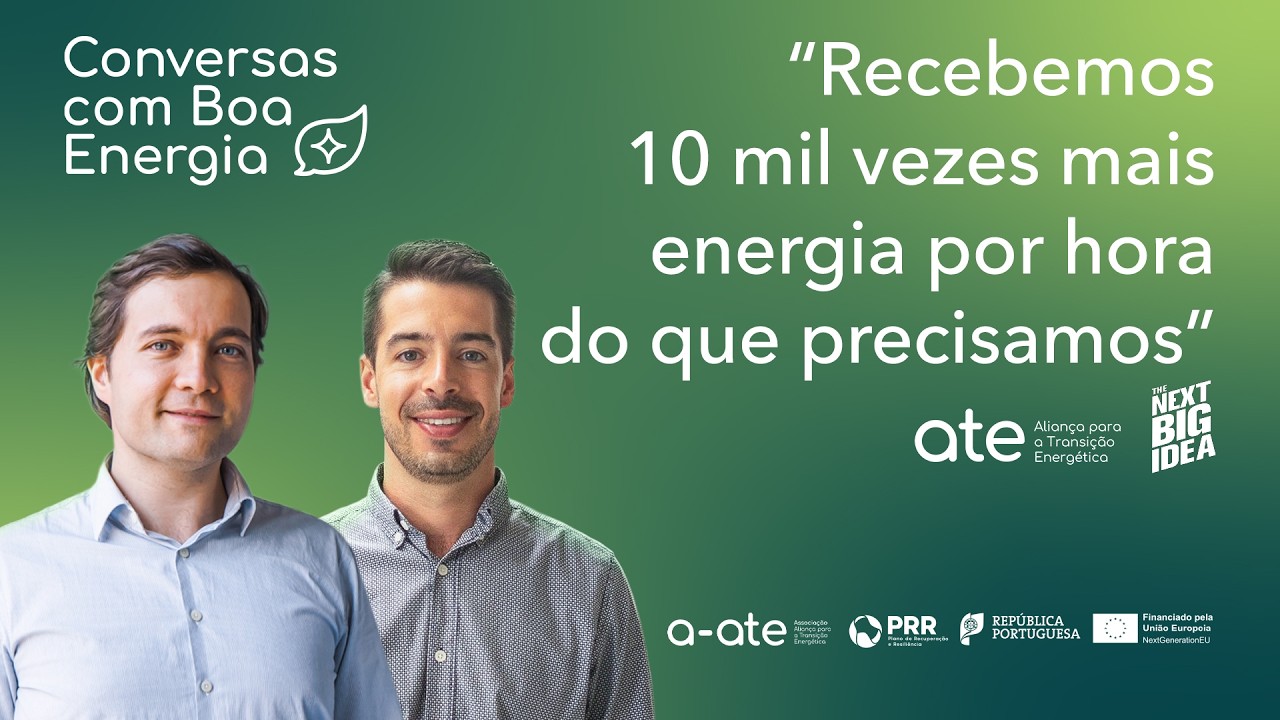
EP1 Podcast "Conversas com Boa Energia" | Pedro Salomé (INL) e César Martins (Chemitek) | 03.03.2026
Keywords
Summary
215 words
Critical Evaluation
Value of the Information & Strength of the Argument
The value of the information lies in the practical insights from experts directly involved in agrovoltaic projects. They provide concrete examples, such as the Korean legislation prohibiting fertile land for photovoltaics, and Italian cases where shading improves crop yields. The argumentation is coherent, emphasizing the need for pilot projects and adaptation to local conditions. However, the discussion is largely anecdotal, lacking quantitative data or references to specific studies, which limits its scientific rigor.
Scientific Rigor, Source Quality, Title Accuracy
The scientific rigor is moderate; the experts are credible, but they do not cite specific sources or studies. The title accurately reflects the content, which is a podcast episode. The description provides some context but no additional sources. The discussion is more of an expert opinion than a rigorous scientific review.
139 words
Title / Content Match
The title accurately reflects the content, which is the first episode of a podcast discussing agrovoltaics with two experts.
Quality & Reliability
7/10
The podcast features two experts (a researcher and a company CEO) discussing agrovoltaics, providing practical insights and some data. However, it lacks detailed citations and rigorous scientific evidence, relying on anecdotal examples and general statements.
Key Moments
Markers derived by PSI from the transcript: the creator did not define chapters.
- Introduction and welcome, setting the topic of solar energy and agrovoltaics.
- Pedro Salomé gives a key number: Earth receives 10,000 times more energy per hour than needed annually.
- César Martins adds that only 8 minutes of annual solar energy would meet 2025 energy needs.
- Pedro explains the origin of agrovoltaics in Germany and the Korean legislation banning fertile land for photovoltaics.
- Discussion on Italian cases where shading from panels increases crop yields, like tomatoes.
- César discusses Chemitek's cleaning products and the need for certification for agricultural contact.
- Exploration of drone-based cleaning technology and its suitability for agrovoltaics.
- Pedro outlines the roadmap: prototypes now, first major evaluation in two years, and the need for national suppliers.
- Discussion on social acceptance and the importance of demonstration projects.
Contribution & Novelties
The podcast provides an accessible introduction to agrovoltaics, highlighting the Portuguese context and the collaboration between a research lab and a chemical company. It offers practical insights into the challenges of cleaning solar panels in agricultural settings and the potential of drone technology. The discussion emphasizes the need for pilot projects and adaptation to local conditions.
Pour aller plus loin :
- Agrovoltaics - Wikipedia — Overview of the concept and its applications.
- International Iberian Nanotechnology Laboratory (INL) — Official website of the research institution involved.
- Chemitek — Company website with information on their solar panel cleaning products.
- Solar panel cleaning - Wikipedia — General information on methods and importance.
109 words
Radar Profile
The radar profile shows balanced scores across information quantity, quality, technical level, and reliability, with a slight emphasis on practical application. This reflects a podcast that is informative but not deeply technical, suitable for a general audience interested in sustainable energy and agriculture.