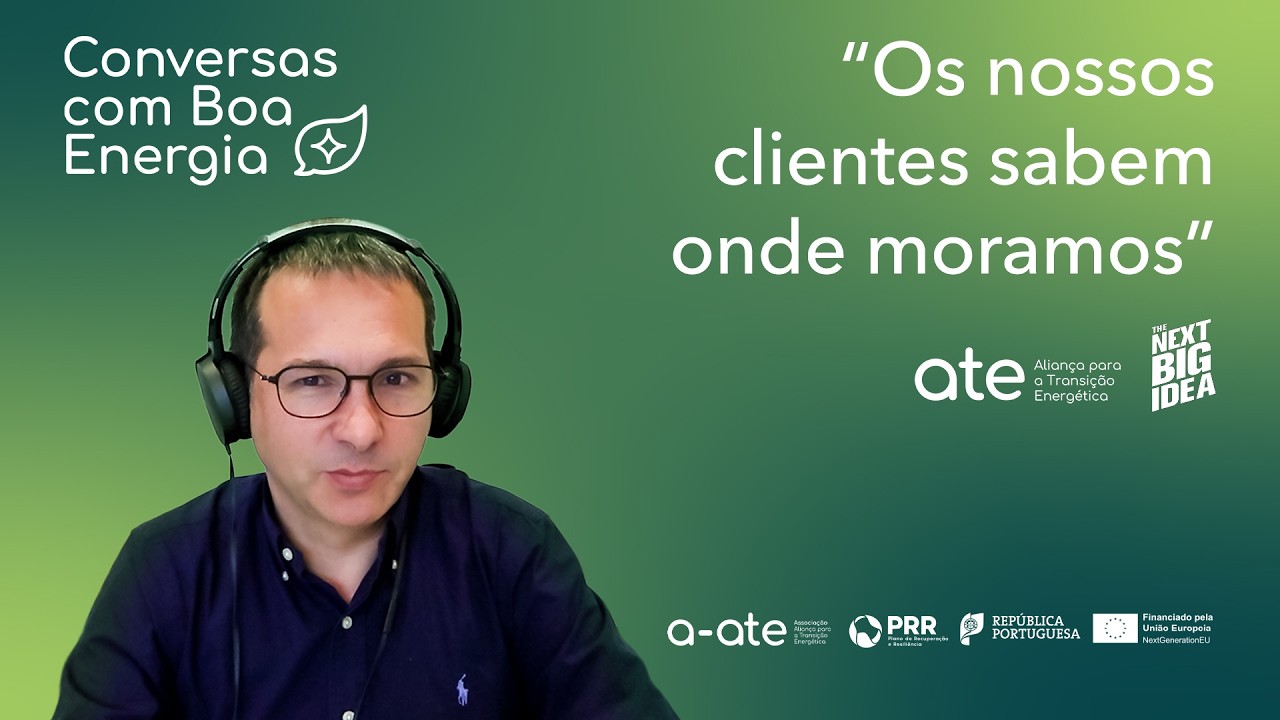
EP2 Podcast "Conversas com Boa Energia" | Alexandre Rodrigues, CEVE 18.03.2026
Keywords
Summary
141 words
Critical Evaluation
Value of the Information & Strength of the Argument
The interview provides valuable insights into the practical challenges and innovative solutions in local energy distribution. Rodrigues’s arguments are grounded in real-world experience, such as the voltage variation issue and the need for predictive maintenance. The discussion of specific projects (PREDIT, ADMS, Deep Grid) adds concrete value, showing how technology is being applied. However, the argumentation is not deeply technical; it stays at a descriptive level without delving into methodologies or data. The value lies in the practical perspective of a cooperative, which is often underrepresented in energy discussions.
Scientific Rigor, Source Quality, Title Accuracy
The scientific rigor is moderate. The information is based on the interviewee’s professional experience, but no specific sources or studies are cited. The title accurately reflects the content, and the description provides minimal context. The lack of external references limits the verifiability of the claims. The projects mentioned are real initiatives, but their details are not independently verified. Overall, the content is credible but not rigorously sourced.
171 words
Title / Content Match
The title accurately reflects the content: an interview with Alexandre Rodrigues from CEVE, discussing local energy distribution and innovation projects.
Quality & Reliability
6/10
The interview provides practical insights from a technical director of a local energy cooperative, but lacks detailed technical depth and external references. The information is credible but not extensively verified.
Key Moments
Markers derived by PSI from the transcript: the creator did not define chapters.
- Introduction of the podcast and guest Alexandre Rodrigues.
- Rodrigues gives the number 230V, explaining voltage variations in homes.
- Discussion about CEVE's history and role as a cooperative.
- Challenges of recruiting talent and working with local communities.
- Introduction of the PREDIT Transformer project for predictive maintenance.
- Explanation of the Open ADMS project and its role as a digital twin.
- Discussion of the Deep Grid project for EV charging management.
- Rodrigues highlights energy storage as the next big leap.
- Rodrigues identifies Vale do Ave as a well-prepared region for energy autonomy.
- Final thoughts on increasing visibility and flexibility to accelerate projects.
Cited Sources
- Aliança para a Transição Energética — Mentioned as the consortium behind the projects.
Concurring Sources
- Smart Grids — The projects discussed align with smart grid concepts.
Contribution & Novelties
This interview offers a unique perspective from a local energy cooperative, highlighting practical challenges and innovative projects in grid management. It underscores the importance of predictive maintenance and digital twins for low-voltage networks, which are less commonly discussed than high-voltage systems. The focus on community proximity and talent retention adds a human dimension to the energy transition.
Pour aller plus loin :
- Digital twin — A concept central to the ADMS project, providing a virtual replica of physical assets.
- Predictive maintenance — The approach used in the PREDIT Transformer project to prevent transformer failures.
- Smart grid — The overarching framework for integrating advanced monitoring and control in electricity networks.
109 words
Radar Profile
The radar profile shows moderate scores across all dimensions, indicating a balanced but not exceptional content. The highest score is in information quantity, while technical depth is slightly lower, reflecting the interview's accessible but not deeply technical nature.