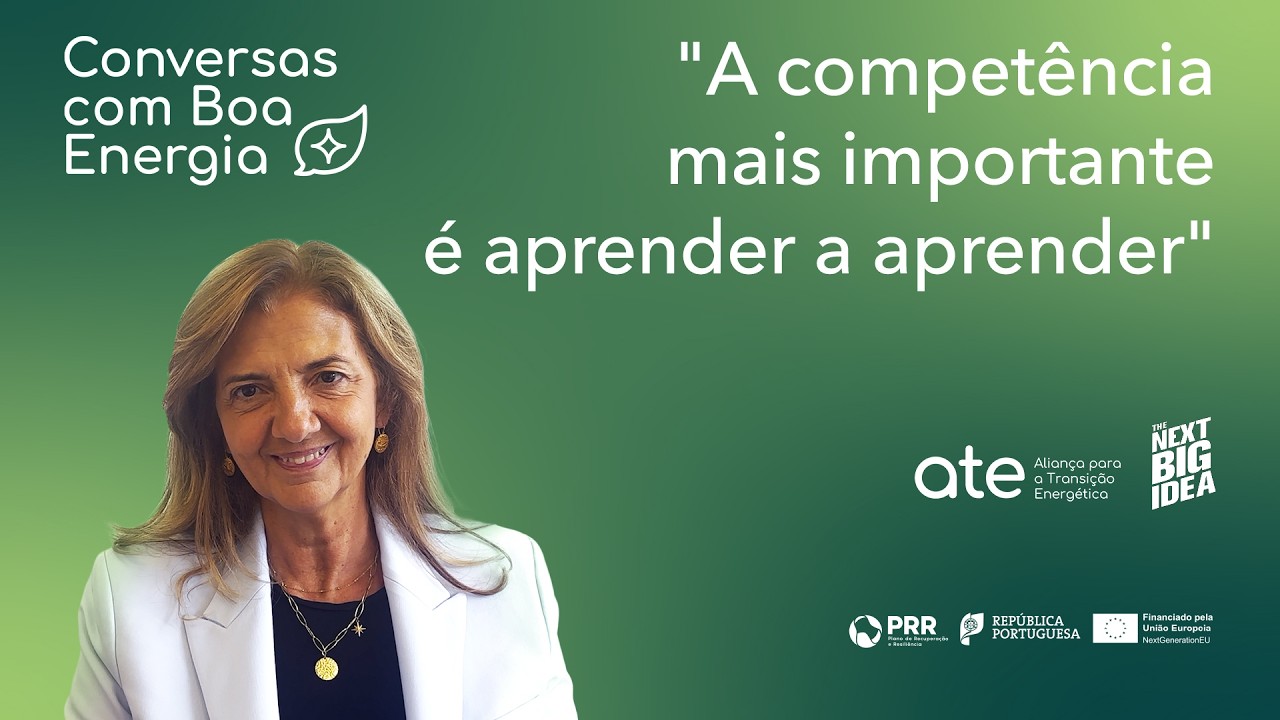
EP9 Podcast "Conversas com Boa Energia" | Margarida Segard, ISQ Academy
Keywords
Summary
206 words
Critical Evaluation
Value of the Information & Strength of the Argument
The podcast provides valuable insights into the skills gap in the energy transition, supported by references to European studies and statistics (e.g., 3.5 million technicians needed by 2030). The argumentation is coherent, emphasizing the need for collaborative innovation and the integration of digital and green skills. However, the discussion is largely based on personal experience and general observations, lacking detailed evidence or case studies.
Scientific Rigor, Source Quality, Title Accuracy
The scientific rigor is moderate: the speaker cites general studies (e.g., CEDEFOP) but does not provide specific references. The title accurately reflects the content, which is an expert opinion podcast. No comments were provided for analysis.
115 words
Title / Content Match
The title accurately reflects the content, which is a conversation with Margarida Segard about skills and training in the energy transition.
Quality & Reliability
7/10
The podcast features an expert in vocational training and energy transition, providing informed opinions and references to European studies. However, it lacks detailed citations and verifiable data, and the discussion is largely qualitative.
Key Moments
Markers derived by PSI from the transcript: the creator did not define chapters.
- Introduction and welcome of Margarida Segard, Director of ISQ Academy.
- Segard shares key numbers: 1,800 employees and operations in nearly 20 countries.
- Discussion on ISQ's origins in welding and expansion into energy and other sectors.
- Explanation of ISQ Academy's focus on training, certification, and addressing skills gaps.
- Overview of the ATE agenda projects and collaborative innovation with over 80 organizations.
- Discussion on upskilling and reskilling, and key skills in demand: technical, adaptability, and sustainability.
- Challenges for employers: 48% of changes hindered by skills gaps, and 52% of executives feeling like impostors.
- Future of training: AI personalization, virtual reality, and the importance of manual skills.
- Final advice: prioritize learning to learn and change governance models.
Cited Sources
- CEDEFOP — Mentioned as a source for European skills gap studies.
Concurring Sources
- IRENA - Renewable Energy and Jobs — Provides data on employment in renewable energy, aligning with the skills gap discussion.
Contribution & Novelties
The podcast offers a practical perspective from an industry training provider on the skills needed for the energy transition, emphasizing the integration of digital and green skills. It highlights the need for collaborative innovation and the importance of certification.
Pour aller plus loin :
- European Year of Skills — Official initiative promoting lifelong learning.
- Skills for the Energy Transition — IRENA’s work on workforce development.
- Upskilling and Reskilling — Overview of concepts.
72 words
Radar Profile
The radar profile shows moderate scores across all dimensions, with slightly higher scores in information quantity and quality, reflecting the podcast's informative nature but limited technical depth and source rigor.