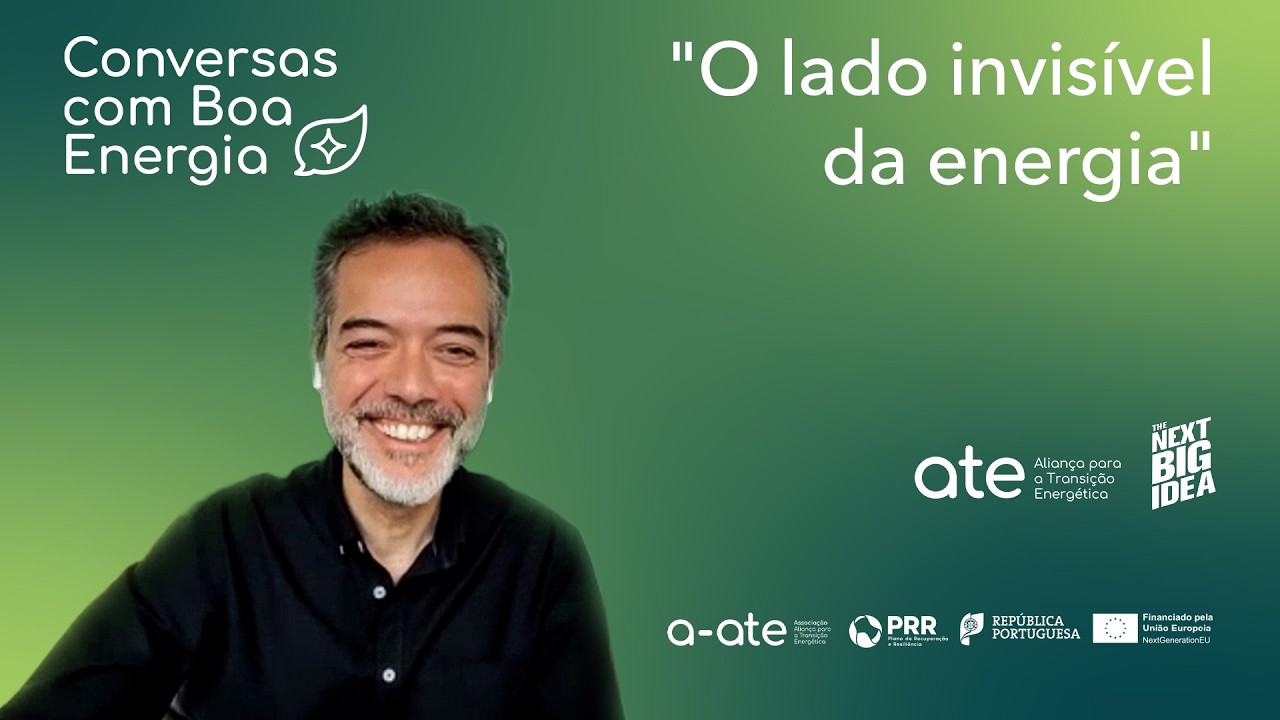
EP6 Podcast "Conversas com Boa Energia" | Humberto Ferreira, Pragmasoft - a Wirtek Company
Keywords
Summary
149 words
Critical Evaluation
Value of the Information & Strength of the Argument
The value of the information lies in the firsthand experience of a CEO in the energy technology sector, providing practical insights into SCADA systems, digital twins, and interoperability challenges. The argumentation is coherent, based on real projects and industry trends. However, the discussion remains at a high level without deep technical details, and some claims lack supporting evidence.
Scientific Rigor, Source Quality, Title Accuracy
The scientific rigor is moderate; the podcast is an opinion-based interview without citations to specific studies or reports. The sources mentioned are the company’s projects and the ATE agenda, but no external references are provided. The title accurately reflects the content, and the discussion is relevant to the topic of energy digitalization.
125 words
Title / Content Match
The title accurately reflects the content, which is a podcast episode discussing energy technology with Humberto Ferreira.
Quality & Reliability
7/10
The podcast features an expert interview with the CEO of Pragmasoft, providing insights into SCADA systems, cybersecurity, and digitalization of electrical grids. The information is based on professional experience and ongoing projects, but lacks detailed technical depth and external verification.
Key Moments
Markers derived by PSI from the transcript: the creator did not define chapters.
- Introduction and welcome of Humberto Ferreira
- Ferreira shares a statistic: Portugal's coal production dropped from 27% to 0% and solar rose from 1% to 20% in less than 10 years.
- Discussion on the history of Pragmasoft and its focus on energy sector know-how.
- Explanation of the 'invisible side of energy' and Pragmasoft's role in ensuring reliable distribution.
- Ferreira describes the company's work on SCADA systems and automation.
- Discussion on the acquisition by Wirtek and the cultural fit.
- Introduction to the ATE agenda and the SCADA simulator project.
- Details on the SCADA simulator as a digital twin for testing and training.
- Challenges in developing the simulator, including AI integration and regulation.
- Introduction to the Stargate project for protocol interoperability.
- Testing and validation of Stargate with real equipment.
- Ferreira's key lesson: the energy sector is no longer stable; rapid changes require adaptation.
- Discussion on AI and decision-making, cybersecurity, and data sovereignty.
- Ferreira's priorities: more testing with clients and continuous improvement of tools.
Cited Sources
- ATE - Aliança para a Transição Energética — Mentioned as the agenda under which the projects are developed.
- The Next Big Idea — Mentioned as the podcast partner and newsletter.
Concurring Sources
- SCADA — Provides general information on SCADA systems, aligning with the podcast's description.
- Digital twin — Explains the concept of digital twins, which the podcast discusses in the context of the SCADA simulator.
Contribution & Novelties
The podcast provides a practitioner’s perspective on the digitalization of energy grids, focusing on SCADA systems and interoperability. It introduces the concept of a SCADA simulator as a digital twin for training and testing, and the Stargate project for protocol integration. The discussion highlights the importance of cybersecurity and data sovereignty in critical infrastructure.
Pour aller plus loin :
- SCADA — Overview of SCADA systems.
- Digital twin — Concept of digital twins in engineering.
- IEC 61850 — Standard for communication in substations.
82 words
Radar Profile
The radar profile shows balanced scores across information quantity, quality, technical level, and reliability, indicating a moderately informative and credible podcast. The technical level is slightly lower, reflecting the non-technical audience.