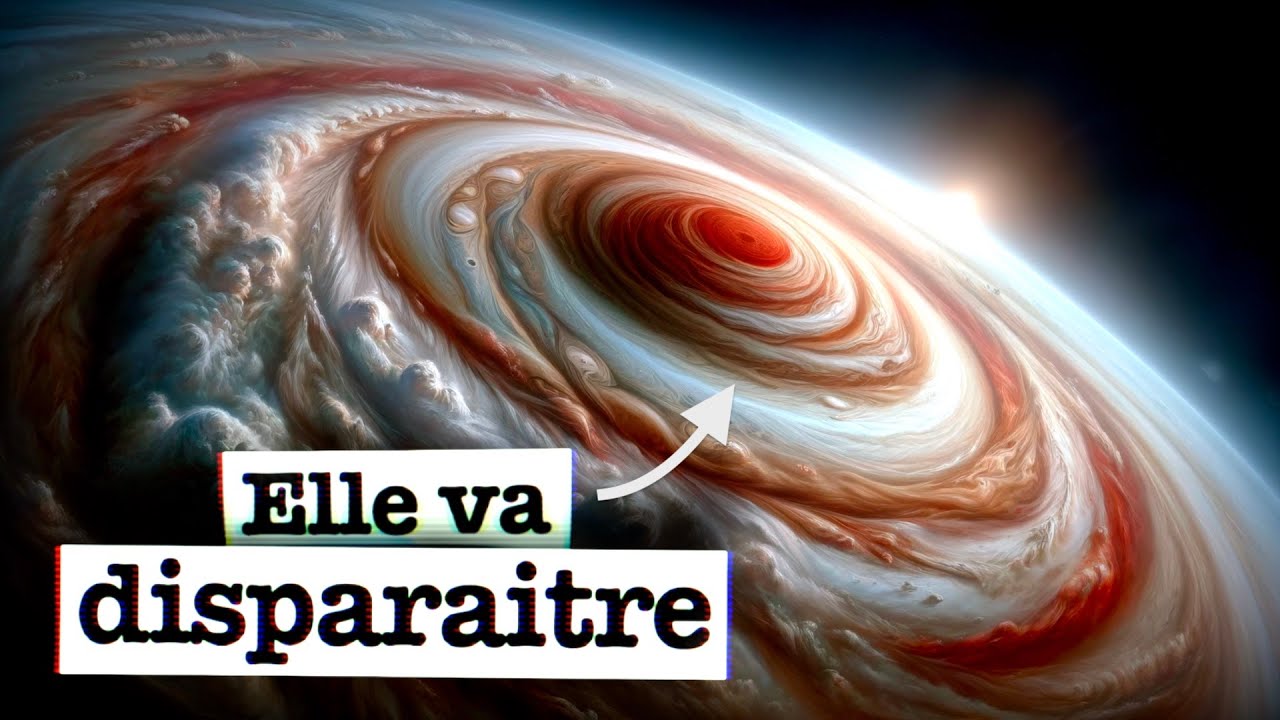
La plus grosse TEMPÊTE du Système Solaire
Keywords
Summary
169 words
Critical Evaluation
Value of the Information & Strength of the Argument
The video provides valuable information, synthesizing historical records, observational data, and recent research. It effectively explains complex meteorological concepts in an accessible manner. The argumentation is solid, presenting multiple hypotheses for the storm’s origin and evaluating them based on evidence. The inclusion of a recent Spanish study adds novelty and depth. The video’s strength lies in its clear narrative and use of concrete examples, such as the comparison with Typhoon Tip and the Juno mission’s depth measurement.
Scientific Rigor, Source Quality, Title Accuracy
The video demonstrates scientific rigor by referencing historical observations, space missions (Voyager, Juno), and a recent peer-reviewed study. The sources cited in the description include reputable outlets like NASA, Space.com, and the New York Times. The title accurately reflects the content, focusing on the largest storm in the Solar System. The video’s content aligns well with the title, providing a comprehensive overview of the Great Red Spot.
159 words
Title / Content Match
The title accurately reflects the content, which focuses on the largest storm in the Solar System, the Great Red Spot.
Quality & Reliability
8/10
The video presents a well-structured overview of Jupiter's Great Red Spot, citing historical observations and recent research. It accurately distinguishes between storms and anticyclones and discusses a recent Spanish study using supercomputer simulations. The information is consistent with established scientific knowledge, though some details are simplified for a general audience.
Chapters
Cited Sources
- Great Red Spot - Wikipedia — General reference for the Great Red Spot's characteristics and history.
- Grande Tache rouge - Wikipédia — French Wikipedia article on the Great Red Spot.
- Grande Tache sombre - Wikipédia — Reference to dark spots on Neptune, mentioned in the video.
- Cassini Jupiter Portrait - NASA — NASA image of Jupiter from Cassini, illustrating the planet's appearance.
- Juno Media Gallery - SwRI — Images and data from the Juno mission, used to discuss the storm's depth.
- Jupiter's Great Red Spot Could Disappear - Space.com — Article discussing the shrinking of the Great Red Spot.
- Jupiter's Great Red Spot Photos - Space.com — Collection of photos of the Great Red Spot.
- The Great Red Spot - Syfy — Article about the Great Red Spot's history and science.
- Grande Tache Rouge : changements inattendus - SciencePost — French article about unexpected changes in the Great Red Spot's size.
- Jupiter's Great Red Spot - NYT — New York Times article on recent Hubble observations of the Great Red Spot.
- Cassini Jupiter - JPL Photojournal — JPL Photojournal images of Jupiter from Cassini.
Concurring Sources
- NASA - Jupiter Facts — NASA's official facts about Jupiter, confirming the planet's composition and the Great Red Spot's characteristics.
- ESA - Jupiter's Great Red Spot — ESA article on the Great Red Spot, supporting the information about its size and nature.
Dissenting Sources
- Historical observations of the Great Red Spot — Some historical records suggest the Great Red Spot may have been observed earlier than the 19th century, but the video argues that Cassini's 1665 observation might have been a different anticyclone, which is a point of debate.
Contribution & Novelties
The video adds value by synthesizing historical observations with recent research, particularly the Spanish study suggesting the Great Red Spot may be younger than previously thought. It also clarifies the distinction between a storm and an anticyclone, which is often misunderstood. The video’s engaging narrative and visual aids make complex concepts accessible.
Pour aller plus loin :
- Great Red Spot - NASA — Official NASA facts about Jupiter and its Great Red Spot.
- Juno Mission — NASA’s Juno mission page, providing detailed data on Jupiter’s atmosphere.
- Atmospheric Dynamics of Jupiter — Review article on the atmospheric dynamics of gas giants.
- MareNostrum Supercomputer — Barcelona Supercomputing Center, home of MareNostrum, used in the Spanish study.
114 words
Radar Profile
The radar profile shows high scores in information quantity and quality, with a moderate technical level. This indicates a well-balanced video that is informative and reliable, but not overly technical, making it suitable for a general audience interested in astronomy.
💬 Très positif. Sur les 30 commentaires analysés, l'ensemble exprime un soutien enthousiaste, des remerciements pour la qualité pédagogique et des félicitations pour les 200 000 abonnés, sans aucune critique négative.