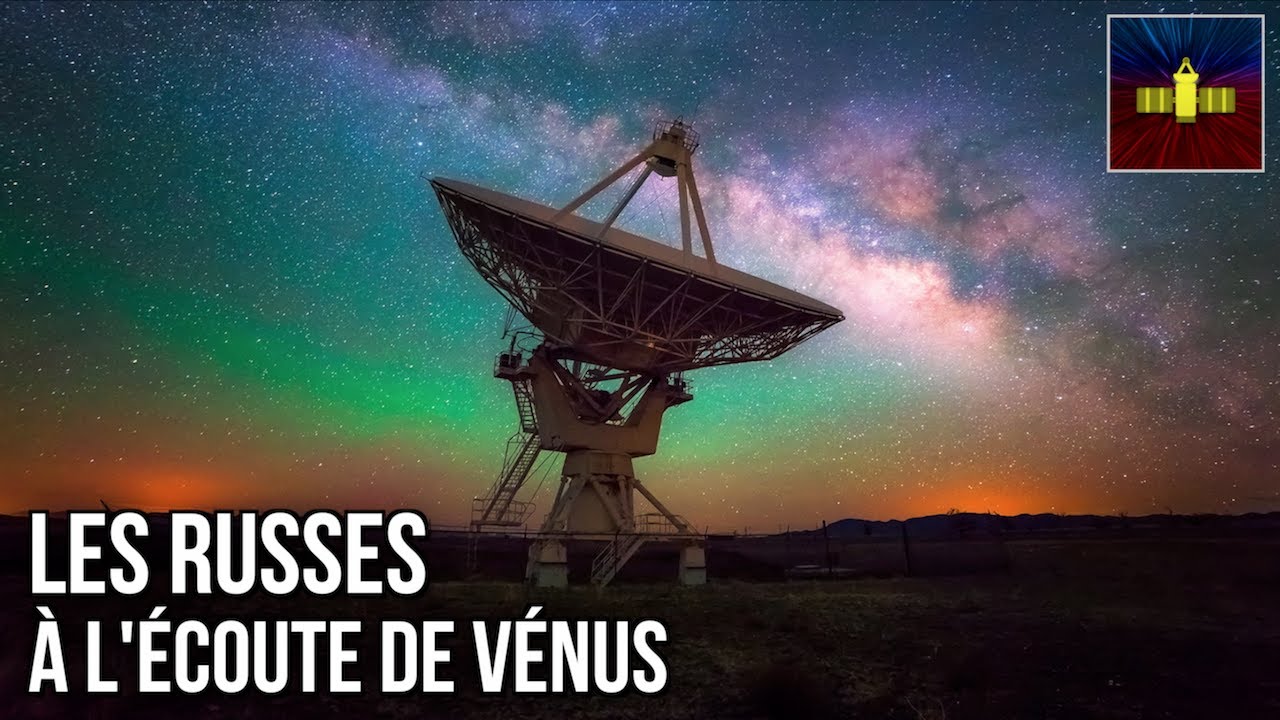
🛰 Le jour où les Russes ont contacté les Aliens...
Keywords
Summary
190 words
Critical Evaluation
Value of the Information & Strength of the Argument
The video provides a valuable historical account of a lesser-known episode in the space race, effectively contextualizing it within the broader scientific and political climate of the 1960s. The argumentation is coherent, moving from basic concepts to the specific events, and the creator uses analogies (e.g., comparing the electromagnetic spectrum to the distance from Paris to New York) to make complex ideas accessible. The narrative is engaging and well-structured, though it occasionally leans into speculative and humorous asides that, while entertaining, slightly detract from the scientific rigor.
Scientific Rigor, Source Quality, Title Accuracy
The video cites several sources in the description, including Wikipedia articles on the Morse Message, the Pluton complex, Venus exploration, and the Fermi paradox, which lends credibility to the historical claims. However, the creator does not explicitly cite sources within the video itself, and some statements are presented without direct references. The title is somewhat sensationalist (‘contacted the Aliens’), but the content clarifies that no actual contact was made, which is a minor discrepancy. Overall, the scientific accuracy is good for a popular science video, but the lack of in-line citations and the playful tone limit its rigor.
200 words
Title / Content Match
The title is catchy and slightly sensationalist, but the content does cover the Soviet attempt to contact Venus, which aligns with the title's promise.
Quality & Reliability
7/10
The video presents a historical narrative with references to credible sources (Wikipedia, scientific concepts), but lacks in-depth verification and includes some speculative elements. The information is generally accurate but simplified for a general audience.
Key Moments
Markers derived by PSI from the transcript: the creator did not define chapters.
- Introduction and thanks to subscribers
- Explanation of the electromagnetic spectrum and human vision limitations
- Introduction to radio astronomy and radio telescopes
- Context of the Cold War and Soviet space achievements
- Description of the Pluton complex and the decision to send messages to Venus
- Sending of the first Morse message 'MIR' on November 19, 1962
- Receipt of the echo and explanation that it was not an alien response
- Sending of the second message 'LENIN USSR' and discussion of Soviet propaganda
- Mariner 2 flyby and the revelation of Venus's hostile conditions
- Reflection on the significance of these messages and the ongoing search for extraterrestrial intelligence
Cited Sources
- Morse Message (1962) — Historical details about the Morse messages sent to Venus.
- Pluton (complex) — Information about the Soviet radio telescope complex.
- Exploration de Vénus — Overview of Venus exploration missions.
- Iossif Chklovski — Soviet astronomer and SETI pioneer.
- Mariner 2 — Details about the Mariner 2 probe.
- Paradoxe de Fermi — Explanation of the Fermi paradox.
- Radioastronomie — Basics of radio astronomy.
- Spectre électromagnétique — Explanation of the electromagnetic spectrum.
- Chromoscope — Interactive tool to view the sky in different wavelengths.
- Villes fermées — Article about closed cities, possibly related to the Pluton complex.
- Morse Message (1962) - Revolvy — Alternative source on the Morse message.
- Fermi Paradox - YouTube — Video on the Fermi paradox.
Concurring Sources
- Morse Message (1962) — Confirms the details of the Morse messages sent to Venus.
- Pluton (complex) — Confirms the existence and purpose of the Pluton complex.
- Exploration de Vénus — Confirms the timeline of Venus exploration and the findings of Venera missions.
Contribution & Novelties
The video brings to light a relatively obscure historical event—the Soviet Union’s attempt to communicate with Venus via Morse code—making it accessible to a general audience. It effectively combines elements of space history, radio astronomy, and the search for extraterrestrial intelligence (SETI), offering a unique narrative that is often overlooked in popular science. The creator’s engaging storytelling and use of analogies help demystify complex scientific concepts.
Pour aller plus loin :
- Search for extraterrestrial intelligence (SETI) — Provides an overview of SETI efforts, including historical and modern projects.
- Wow! signal — A famous radio signal detected in 1977, often cited in discussions about potential alien contact.
- Arecibo message — A 1974 radio message sent to globular cluster M13, another example of humanity’s attempts to communicate with extraterrestrials.
- Fermi paradox — The paradox that underpins the motivation for sending such messages.
140 words
Radar Profile
The radar profile shows a balanced performance across all dimensions, with slightly higher scores in information quantity and quality, reflecting the video's informative nature. The technical level is moderate, suitable for a general audience, while the overall reliability is solid, supported by cited sources.
💬 Très positif. Sur les 30 commentaires analysés, les spectateurs expriment un enthousiasme marqué pour la qualité de la vulgarisation, la clarté des explications et le style engageant du créateur, avec de nombreux encouragements et félicitations.