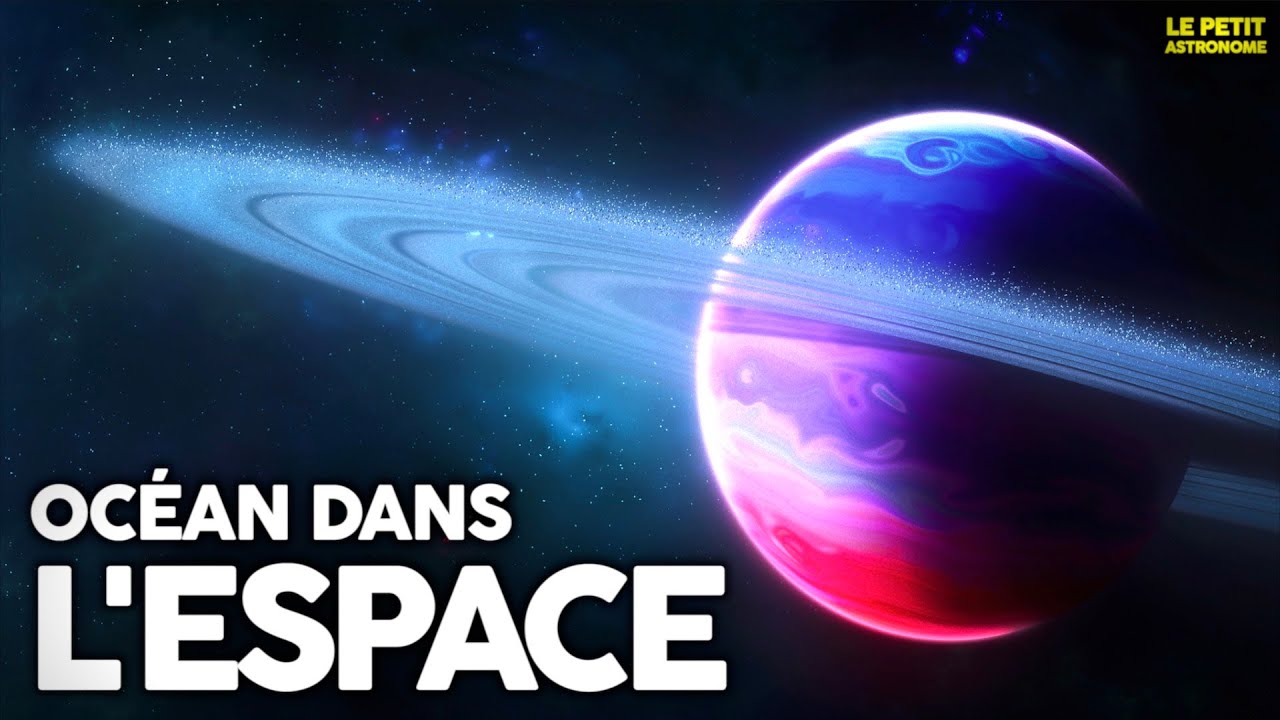
Un océan d'eau liquide près de Saturne
Keywords
Summary
190 words
Critical Evaluation
Value of the Information & Strength of the Argument
The video provides a valuable synthesis of current knowledge about subsurface oceans in the solar system, with a focus on the recent Mimas discovery. The argumentation is solid, presenting evidence from spacecraft missions (Galileo, Cassini) and peer-reviewed research (Nature study). The creator explains complex concepts like tidal heating, orbital resonance, and libration in an accessible manner, making the science understandable without oversimplifying. He also clearly distinguishes between confirmed oceans (Europa, Enceladus) and those that are still hypothetical (Mimas), and acknowledges the uncertainties in the models. The narrative is engaging and well-structured, building from the broader context of ocean moons to the specific case of Mimas, and finally to the implications for astrobiology.
Scientific Rigor, Source Quality, Title Accuracy
The video demonstrates scientific rigor by referencing a specific study published in Nature and collaborations with the Paris Observatory. The creator cites multiple sources in the description, including articles from SciencePost, Space.com, and the Planetary Society, which adds credibility. The title accurately reflects the content, and the video does not overstate the findings, clearly stating that the ocean on Mimas is a hypothesis based on models, not a direct observation. The creator also acknowledges the ‘clickbait’ thumbnail, but the content itself is serious and well-researched. The video’s structure with chapters helps viewers navigate the content, and the creator’s tone is informative and measured.
230 words
Title / Content Match
The title accurately reflects the main topic: the discovery of a liquid water ocean on Mimas, a moon of Saturn. The content thoroughly covers this subject, providing context and comparisons with other ocean moons.
Quality & Reliability
8/10
The video presents recent scientific findings about subsurface oceans on icy moons, referencing a study published in Nature and collaborations with the Paris Observatory. The information is accurate and up-to-date, with clear explanations of the evidence and uncertainties. The creator distinguishes between confirmed and hypothesized oceans, and acknowledges the limits of current models.
Chapters
Cited Sources
- Mimas cache peut-être un jeune océan — Article about the Mimas ocean discovery
- The biggest oceans in the solar system — Overview of ocean worlds
- List of largest lakes and seas in the Solar System — Reference for sizes of liquid bodies
- Mimas — General information about Mimas
- Hubble discovers underground ocean on Jupiter's largest moon — Article about Ganymede's ocean
- Présence d'un jeune océan — Paris Observatory announcement about Mimas ocean
- Where are the ocean worlds in our solar system? — Overview of ocean worlds
- Saturn's 'Death Star' moon Mimas may have a liquid subsurface ocean — Space.com article about Mimas ocean
- Saturn's moon Mimas is a 'stealth' ocean world — Space.com article about Mimas ocean
- Le Fond Vidéo — Background video
Concurring Sources
- Mimas cache peut-être un jeune océan — Confirms the discovery of a young ocean on Mimas
- Présence d'un jeune océan — Official announcement from the Paris Observatory
- Saturn's 'Death Star' moon Mimas may have a liquid subsurface ocean — Space.com article supporting the ocean hypothesis
- Saturn's moon Mimas is a 'stealth' ocean world — Space.com article supporting the ocean hypothesis
Dissenting Sources
- No discordant sources found — All cited sources are consistent with the video's claims. The video itself acknowledges that the ocean on Mimas is not yet confirmed, but no source contradicts the hypothesis.
Contribution & Novelties
The video provides an original and accessible synthesis of the recent discovery of a subsurface ocean on Mimas, placing it in the broader context of ocean worlds in the solar system. It explains the scientific methods used to infer the ocean’s presence, such as libration and orbital analysis, and discusses the implications for astrobiology. The video also highlights the collaborative nature of the research, involving the Paris Observatory and a Nature publication.
Pour aller plus loin :
- Mimas (Wikipedia) — General reference on Mimas, its characteristics, and the ocean discovery.
- Europa (moon) (Wikipedia) — Detailed information on Europa, the archetypal ocean moon.
- Tidal heating (Wikipedia) — Explanation of the mechanism that keeps subsurface oceans liquid.
- Cassini–Huygens (Wikipedia) — Mission that provided key data on Saturn’s moons, including Mimas.
- Nature (journal) (Wikipedia) — The journal where the Mimas ocean study was published.
141 words
Radar Profile
The radar profile shows high scores across all dimensions, indicating a well-rounded and reliable video. The quantity and quality of information are strong, with a good technical level that remains accessible. The global reliability is high, supported by credible sources and clear explanations.
💬 Très positif. Sur les 30 commentaires analysés, les spectateurs expriment un enthousiasme marqué pour la qualité de la vulgarisation, la clarté des explications et l'originalité du traitement, avec des remerciements récurrents et des encouragements à continuer.