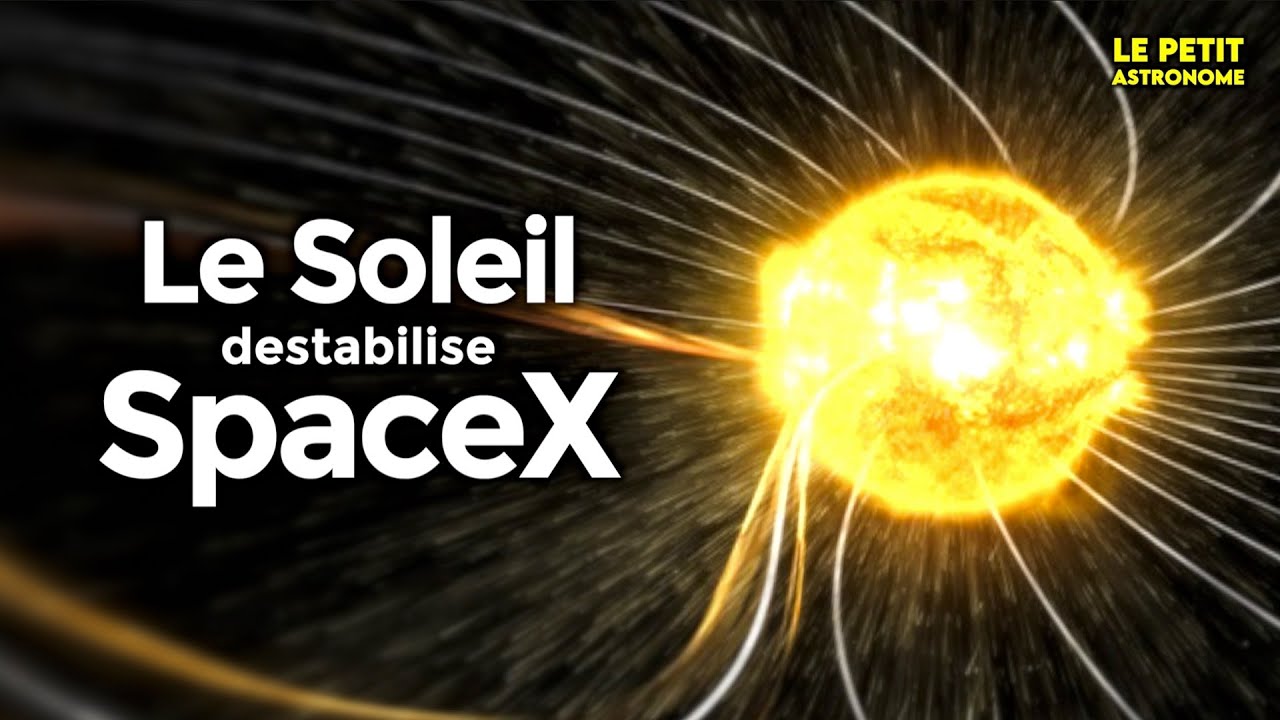
Des satellites SpaceX détruits par le Soleil
Keywords
Summary
201 words
Critical Evaluation
Value of the Information & Strength of the Argument
The video provides valuable information by explaining a complex space weather event in an accessible manner. It effectively combines factual reporting with scientific context, such as the solar cycle and atmospheric drag. The argumentation is solid, as the presenter supports his points with references to credible sources and logical reasoning. He also presents a balanced view by acknowledging both the legitimate goals of Starlink and its potential drawbacks. The critical stance towards SpaceX is well-argued, based on the availability of forecasts and the company’s responsibility.
Scientific Rigor, Source Quality, Title Accuracy
The video demonstrates strong scientific rigor by citing multiple authoritative sources, including NOAA’s Space Weather Prediction Center, the UK government’s space blog, Smithsonian Magazine, Space.com, and The New York Times. The information is accurate and up-to-date. The title accurately reflects the content, and the video’s structure is coherent, moving from the observed phenomenon to the explanation and broader implications. The presenter also provides additional resources in the description for viewers to explore further.
173 words
Title / Content Match
The title accurately reflects the content, which explains how solar activity destroyed 40 SpaceX Starlink satellites.
Quality & Reliability
8/10
The video provides a clear, well-structured explanation of the Starlink satellite loss due to a geomagnetic storm, citing multiple credible sources (NOAA, Smithsonian, Space.com, UK government blog, NYT). The scientific content is accurate and appropriately contextualized, though some simplifications are made for a general audience.
Key Moments
Markers derived by PSI from the transcript: the creator did not define chapters.
- Introduction: Mysterious debris over Puerto Rico
- Background on Starlink project and controversies
- Launch of 49 Starlink satellites on Feb 3, 2022
- Explanation of geomagnetic storm and its effects
- Loss of 40 satellites and re-entry over Puerto Rico
- Financial impact and criticism of SpaceX
- Future risks and conclusion
Cited Sources
- SpaceRef: Solar Storm Knocks 40 SpaceX Satellites Out of Orbit — Report on the Starlink satellite loss
- Wikipedia: Orage magnétique — Background on geomagnetic storms
- UK Government Blog: Recently launched Starlink satellites hit by geomagnetic storm — Official UK statement on the event
- France Soir: Guerre des étoiles satellites — Article on satellite constellations and space debris
- Futura Sciences: Images de la destruction dans l'atmosphère de 40 satellites SpaceX — French science news on the event
- LA Times: Astronomers and the night sky — Opinion on satellite constellations and astronomy
- NYT: SpaceX Satellites Lost in Storm — News article on the Starlink loss
- Smithsonian Magazine: Solar Storm Knocks 40 SpaceX Satellites Out of Orbit — Science news report
- Space.com: SpaceX Starlink satellites lost in geomagnetic storm — Space news article
- NOAA SWPC: Geomagnetic storm conditions likely 2-3 February 2022 — NOAA forecast for the storm
- Techno-Science: Starlink : 40 satellites abattus par une éruption solaire — French science news on the event
Concurring Sources
- NOAA SWPC: Geomagnetic storm conditions likely 2-3 February 2022 — Forecast confirming the storm
- UK Government Blog: Recently launched Starlink satellites hit by geomagnetic storm — Official confirmation of the event
- Smithsonian Magazine: Solar Storm Knocks 40 SpaceX Satellites Out of Orbit — Independent report on the event
External References
Contribution & Novelties
The video provides a clear and engaging explanation of a specific space weather event and its impact on satellite constellations, making it accessible to a general audience. It highlights the growing risk of space debris and the challenges of managing satellite constellations in an era of increasing solar activity. The presenter also offers a critical perspective on SpaceX’s decision-making, encouraging viewers to consider the broader implications of commercial space activities.
Pour aller plus loin :
- Geomagnetic storm — Wikipedia article explaining the phenomenon.
- Space weather — Wikipedia article on space weather and its effects.
- Kessler syndrome — Concept of cascading space debris collisions.
- Starlink — Wikipedia article on the Starlink satellite constellation.
112 words
Radar Profile
The radar profile shows high scores in information quantity, quality, and reliability, with a slightly lower technical level, indicating a well-researched and accurate video that is accessible to a broad audience.
💬 Très positif. Sur les 30 commentaires analysés, les spectateurs expriment un enthousiasme marqué pour la qualité et le ton de la vidéo, saluant notamment le sarcasme envers Elon Musk et la clarté des explications.