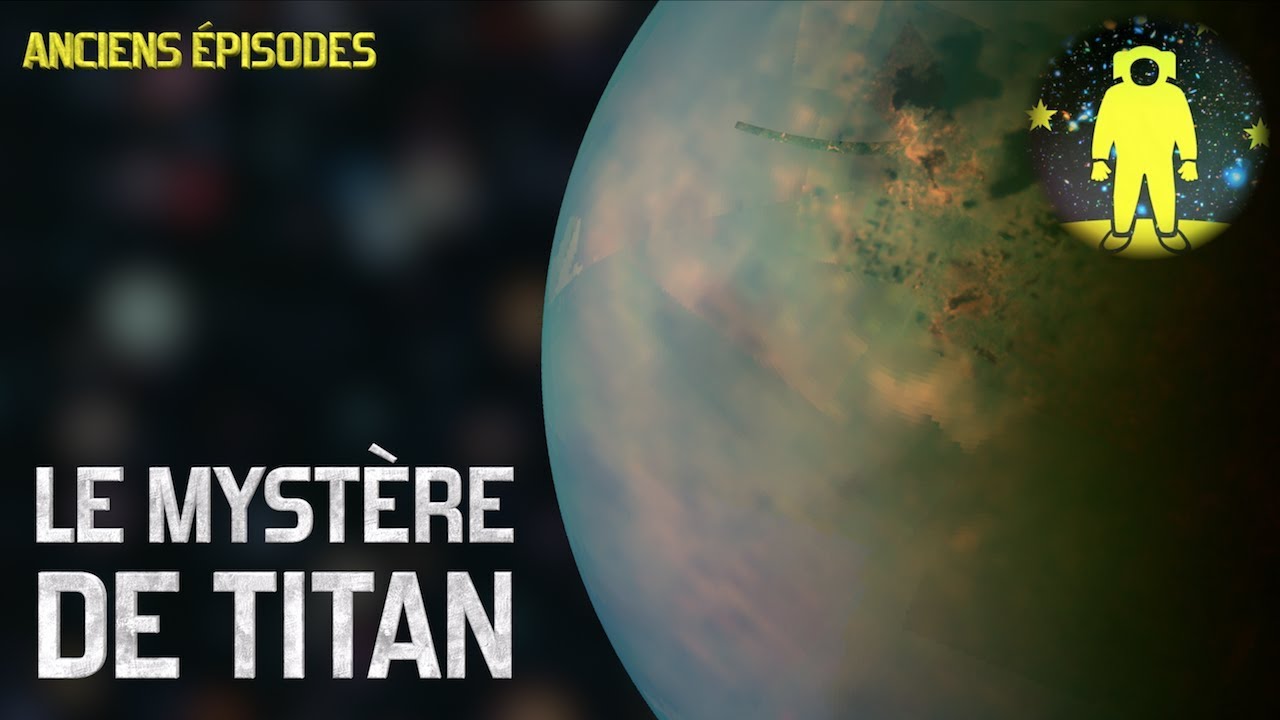
🛰 Le mystère de Titan
Keywords
Summary
148 words
Critical Evaluation
Value of the Information & Strength of the Argument
The video provides a clear and engaging narrative of the discovery and exploration of Titan, highlighting the key scientific questions and findings. The argumentation is generally sound, presenting the mystery of Titan’s atmosphere and the evidence gathered by missions. However, the video simplifies some aspects and includes a few inaccuracies, such as the date of Huygens’ discovery and the composition of Mars’ atmosphere. The presenter’s enthusiasm is evident, but the scientific depth is moderate, suitable for a general audience.
Scientific Rigor, Source Quality, Title Accuracy
The video relies on well-known facts about Titan and the Cassini-Huygens mission, but does not explicitly cite specific sources during the narration. The description provides links to Wikipedia articles and other resources, which serve as references. The title accurately reflects the content, focusing on the mystery of Titan’s atmosphere. The video’s scientific rigor is acceptable for a popular science context, though it would benefit from more precise details and citations.
164 words
Title / Content Match
The title accurately reflects the content, which focuses on the mystery of Titan's dense atmosphere.
Quality & Reliability
7/10
The video provides a generally accurate overview of Titan's atmosphere and the Cassini-Huygens mission, but includes some imprecisions (e.g., the date of Huygens' discovery, the composition of Mars' atmosphere) and a lack of detailed sourcing. The information is consistent with established knowledge, but the presentation is simplified and occasionally misleading.
Key Moments
Markers derived by PSI from the transcript: the creator did not define chapters.
- Introduction to the mystery of Titan's atmosphere.
- Discovery of Titan by Christiaan Huygens in 1655.
- Voyager 1 reveals Titan's dense atmosphere in 1980.
- Launch of Cassini-Huygens in 1997 and arrival at Saturn in 2004.
- Huygens probe lands on Titan in January 2005.
- Discussion of Titan's methane lakes and the possibility of life.
Cited Sources
- Atmosphère de Titan — Reference for Titan's atmosphere characteristics.
- Cassini-Huygens — Reference for the Cassini-Huygens mission.
- Titan (lune) — General reference on Titan.
- Voyager 1 — Reference for Voyager 1's flyby of Titan.
- Titan (fusée) — Reference for the Titan rocket family.
- Titan IV — Reference for the Titan IV rocket.
- Capcom Espace - Titan — Reference for Titan rockets.
- Bonus video — Bonus video on Titan rockets.
Concurring Sources
- Atmosphère de Titan — Confirms the density and composition of Titan's atmosphere.
- Cassini-Huygens — Confirms mission timeline and findings.
- Titan (lune) — Confirms Titan's size and gravity.
Dissenting Sources
- Mars atmosphere composition — The video states Mars' atmosphere is mainly nitrogen and methane, but it is actually 95% carbon dioxide.
Contribution & Novelties
The video offers a concise and accessible summary of Titan’s atmospheric mystery, synthesizing information from multiple missions. It highlights the paradox of a small moon retaining a thick atmosphere and the implications for planetary science. The presentation is engaging, but it does not introduce new scientific findings; rather, it serves as an educational overview.
Pour aller plus loin :
- Titan (moon) — Comprehensive overview of Titan’s characteristics and exploration.
- Atmosphere of Titan — Detailed scientific analysis of Titan’s atmosphere.
- Cassini–Huygens — Mission details and discoveries.
- Methane lakes on Titan — Information on the hydrocarbon lakes.
- Possibility of life on Titan — Discussion of potential habitability.
105 words
Radar Profile
The radar profile shows a balanced performance across all dimensions, with slightly higher scores in information quantity and quality, and lower in technical level. This indicates a well-rounded educational video that is accessible to a general audience while providing substantial content.
💬 Très positif. Sur les 30 commentaires analysés, l'écrasante majorité exprime un fort enthousiasme pour la chaîne et la vidéo, avec des demandes de sujets futurs et des remerciements pour la qualité du contenu.