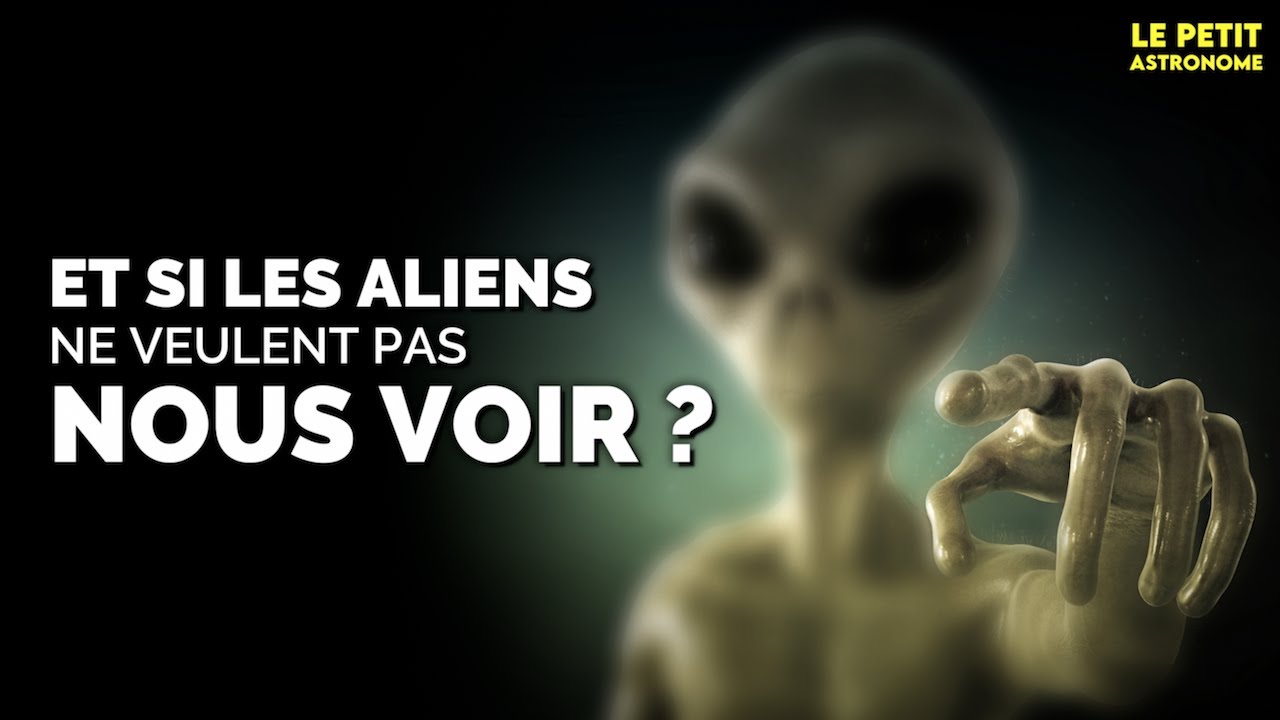
Et si les extraterrestres ne veulent pas nous contacter ?
Keywords
Summary
141 words
Critical Evaluation
Value of the Information & Strength of the Argument
The video provides a valuable synthesis of the Fermi paradox, presenting the main hypotheses in a clear and accessible manner. The argumentation is logically structured, moving from the definition of the paradox to the categorization of solutions, and finally to the specific angle of alien disinterest. The creator supports the discussion with historical context and references to the Wikipedia article, but the argumentation relies more on logical reasoning and thought experiments than on empirical evidence. The philosophical perspective on cultural relativism is thought-provoking and adds depth to the discussion, though it remains speculative.
Scientific Rigor, Source Quality, Title Accuracy
The video demonstrates scientific rigor by correctly identifying the Fermi paradox as a misnomer and by presenting a balanced overview of hypotheses. The main source cited is the French Wikipedia article on the Fermi paradox, which is a reliable secondary source. However, the video does not reference primary scientific papers or expert interviews, which limits its depth. The title accurately reflects the content, focusing on the possibility that aliens may not wish to contact us. The video’s production quality and the creator’s engagement with the topic are commendable, but the lack of direct citations to scientific literature is a minor weakness.
209 words
Title / Content Match
The title accurately reflects the video's focus on the possibility that extraterrestrial civilizations may not wish to contact us, which is a central theme explored through the Fermi paradox and cultural relativism.
Quality & Reliability
7/10
The video provides a clear and accurate overview of the Fermi paradox, correctly distinguishing it from a true paradox and presenting multiple hypotheses in a structured manner. The creator cites the Wikipedia article on the Fermi paradox and mentions the historical context (1950 Los Alamos discussion). However, the video lacks direct citations to primary scientific literature, and some philosophical interpretations are presented without explicit sourcing.
Key Moments
Markers derived by PSI from the transcript: the creator did not define chapters.
- Introduction to the Fermi paradox and the question of alien contact.
- Historical background of the Fermi paradox, 1950 Los Alamos discussion.
- Clarification that the Fermi paradox is not a true paradox but an unresolved problem.
- Categorization of hypotheses into three groups: we are alone, they exist but haven't contacted us, or they have contacted us unknowingly.
- Discussion of the possibility that aliens may not want to contact us due to different values and motivations.
- Conclusion emphasizing the beauty of unanswered questions in science.
Cited Sources
- Paradoxe de Fermi - Wikipédia — Main source for the definition and history of the Fermi paradox.
- Vidéo YouTube - LwkmqvmcyEw — Referenced as a source for further information.
- Vidéo YouTube - xrGAQCq9BMU — Referenced as a source for further information.
- Vidéo YouTube - ypW-lJwsoDE — Credited for end credits visuals.
- Playlist YouTube - Stock Footage Collective — Credited for background visuals.
Concurring Sources
- Fermi paradox - Wikipedia — Provides a comprehensive overview of the paradox and its proposed solutions, aligning with the video's content.
Contribution & Novelties
The video offers a fresh perspective on the Fermi paradox by emphasizing the cultural relativism of alien civilizations, arguing that human motivations for exploration may not be universal. It synthesizes existing hypotheses in a clear, accessible manner, making the topic approachable for a general audience. The creator’s humorous and engaging style adds value, though the scientific content is not novel.
Pour aller plus loin :
- Fermi paradox - Wikipedia — Comprehensive overview of the paradox and proposed solutions.
- Drake equation - Wikipedia — A probabilistic framework for estimating the number of active extraterrestrial civilizations.
- Rare Earth hypothesis - Wikipedia — Hypothesis that complex life is extremely rare in the universe.
- Zoo hypothesis - Wikipedia — Suggests aliens deliberately avoid contact to allow natural evolution.
124 words
Radar Profile
The radar profile shows a balanced performance across all dimensions, with slightly higher scores in information quantity and quality, and lower in technical depth. This reflects the video's strength as an accessible introduction to the Fermi paradox, while acknowledging its limitations in advanced scientific detail.
💬 Très positif. Sur les 30 commentaires analysés, les spectateurs expriment un enthousiasme marqué pour la qualité du contenu, l'humour et la clarté des explications, avec de nombreux encouragements à continuer et des demandes de vidéos plus longues.