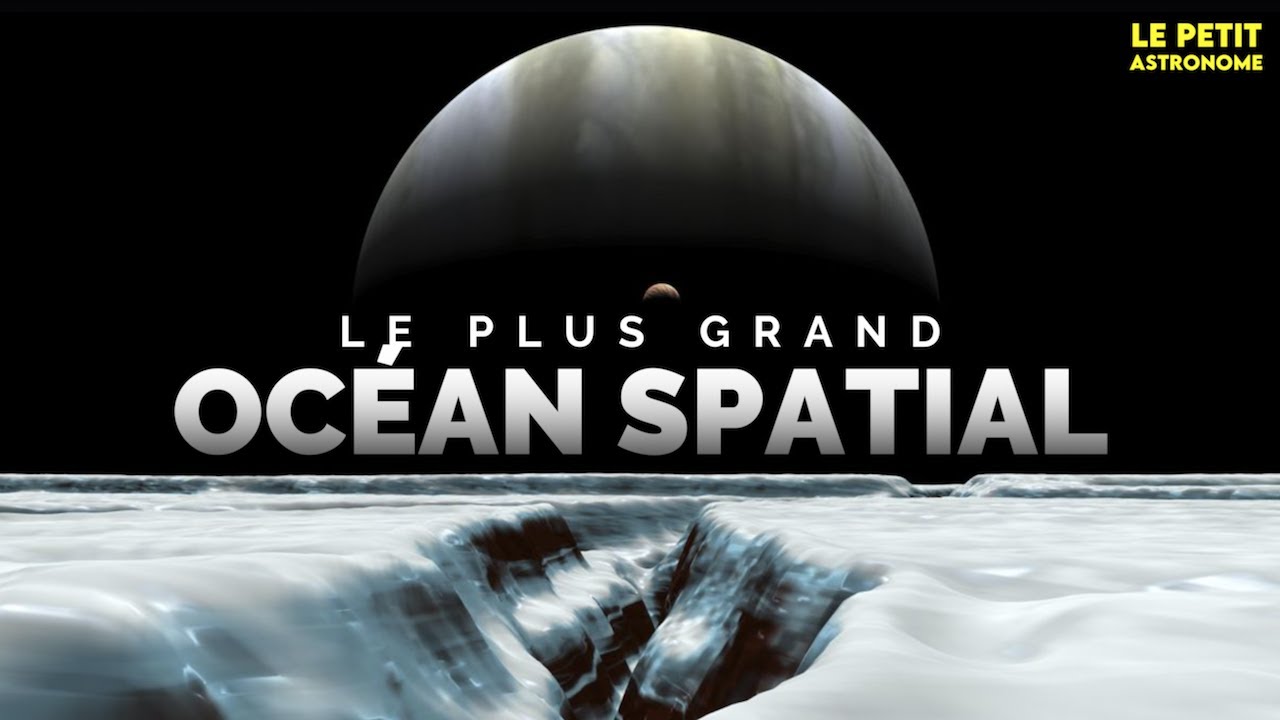
Le plus grand océan du système solaire
Keywords
Summary
167 words
Critical Evaluation
Value of the Information & Strength of the Argument
The video provides valuable information by synthesizing current scientific knowledge about subsurface oceans, particularly on Ganymede. It effectively argues that Ganymede hosts the largest liquid water ocean, supported by evidence from the Galileo and Hubble missions. The creator explains the mechanisms behind subsurface oceans, such as tidal heating and radioactive decay, and distinguishes between confirmed facts and hypotheses. The argumentation is logical and well-structured, progressing from Earth’s oceans to the discovery of Ganymede’s ocean and finally to the broader concept of liquid oceans on gas giants. The inclusion of the metallic hydrogen ocean on Jupiter adds depth, though it is clearly differentiated from water oceans.
Scientific Rigor, Source Quality, Title Accuracy
The video demonstrates strong scientific rigor by referencing credible sources, including NASA, Wikipedia, and reputable science news outlets. The creator accurately presents the timeline of discoveries, from the Galileo mission to the Hubble confirmation. The title is appropriate and accurately reflects the content. The video does not overstate claims, clearly indicating where evidence is conclusive versus where it is still speculative, such as with Titan’s potential ocean. The use of multiple sources enhances reliability, and the creator’s explanations align with established scientific consensus.
203 words
Title / Content Match
The title accurately reflects the content, which focuses on identifying the largest liquid water ocean in the solar system.
Quality & Reliability
8/10
The video presents accurate scientific information about subsurface oceans, particularly on Ganymede, based on NASA and ESA findings. The creator clearly distinguishes confirmed facts from hypotheses and uses credible sources. Minor simplifications are present but do not compromise accuracy.
Key Moments
Markers derived by PSI from the transcript: the creator did not define chapters.
- Introduction to the largest ocean in the solar system, teasing that it is not on Earth.
- Comparison of Earth's oceans, including the Pacific Ocean's size and volume.
- Explanation of subsurface oceans and the conditions that allow liquid water to exist.
- Discussion of Europa's ocean and why it is not the largest, leading to Ganymede.
- Evidence from the Galileo spacecraft and Hubble Space Telescope confirming Ganymede's subsurface ocean.
- Introduction to the concept of metallic hydrogen oceans on gas giants, concluding that Jupiter has the largest liquid ocean.
Cited Sources
- Ganymède (lune) - Wikipédia — General information about Ganymede, including its characteristics and subsurface ocean.
- Océan subglaciaire - Wikipédia — Definition and details about subsurface oceans, specifically on Ganymede.
- NASA - Hubble Observations Suggest Underground Ocean on Jupiter's Largest Moon — Official NASA press release confirming the subsurface ocean on Ganymede.
- Science@NASA - Titan's Ocean — Information about Titan's potential subsurface ocean.
- Le Monde - Un océan sous la glace de Ganymède — News article about the discovery of Ganymede's subsurface ocean.
- Futura-Sciences - Ganymède : Hubble confirme l'existence d'un océan d'eau salée — Article detailing the Hubble confirmation of Ganymede's ocean.
Concurring Sources
- NASA - Hubble Observations Suggest Underground Ocean on Jupiter's Largest Moon — Confirms the existence of Ganymede's subsurface ocean.
- Le Monde - Un océan sous la glace de Ganymède — News article supporting the discovery.
- Futura-Sciences - Ganymède : Hubble confirme l'existence d'un océan d'eau salée — Article confirming the ocean's existence.
External References
Contribution & Novelties
The video provides a clear and engaging synthesis of current knowledge about subsurface oceans, particularly highlighting Ganymede as the largest liquid water ocean in the solar system. It effectively explains the scientific evidence and distinguishes between confirmed facts and ongoing research. The comparison with other moons and the discussion of metallic hydrogen oceans on gas giants adds depth, offering viewers a broader perspective on water and liquid states in the solar system.
Pour aller plus loin :
- NASA’s Europa Clipper Mission — Upcoming mission to study Europa’s subsurface ocean, relevant to the search for life.
- Subsurface Ocean on Ganymede - NASA — Direct source for the Hubble discovery.
- Titan’s Methane Lakes - NASA — Information on Titan’s liquid methane lakes, contrasting with water oceans.
124 words
Radar Profile
The radar profile shows high scores in information quantity, quality, and reliability, with a slightly lower technical level. This indicates a well-researched and accurate video that is accessible to a general audience, balancing depth with clarity.
💬 Très positif. Sur les 30 commentaires analysés, tous expriment une forte appréciation, louant la qualité de la vulgarisation, l'humour et la clarté des explications, sans aucune critique négative.