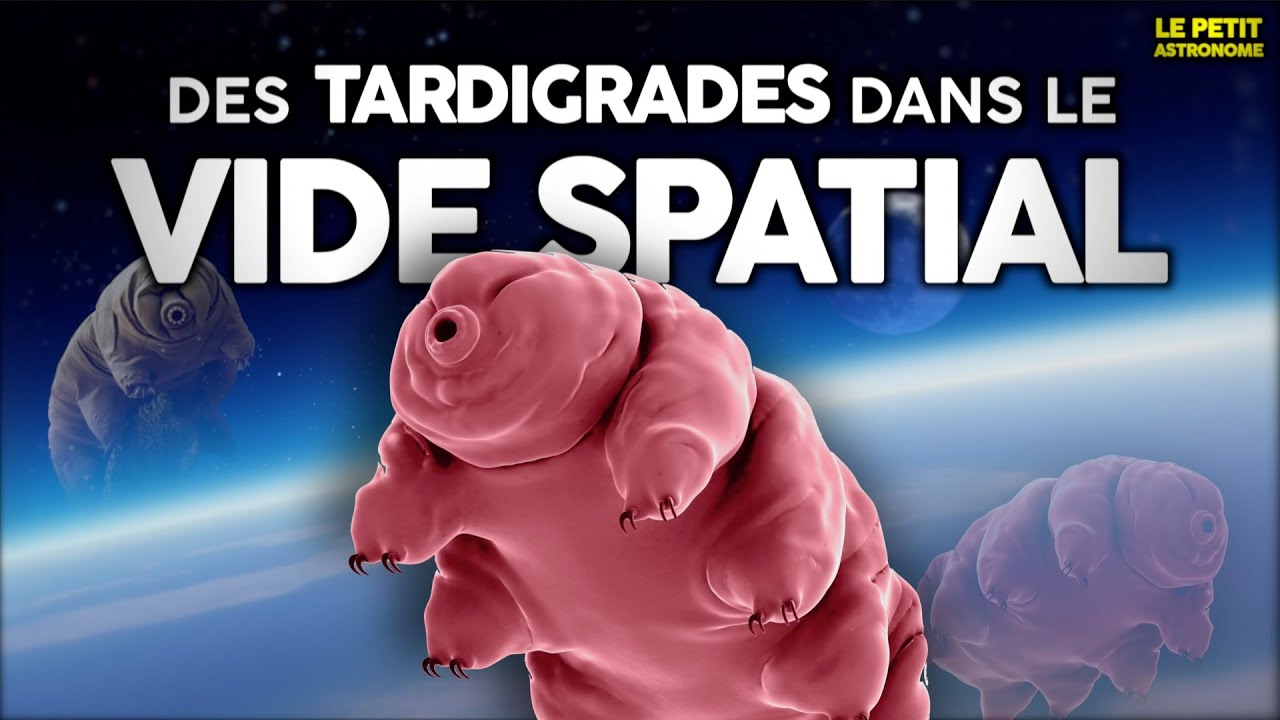
L'animal qui peut survivre dans l'espace
Keywords
Summary
176 words
Critical Evaluation
Value of the Information & Strength of the Argument
The video provides valuable information about tardigrades and their extremophile capabilities, presenting a balanced view that separates fact from fiction. It effectively explains complex biological concepts like cryptobiosis in an accessible manner. The argumentation is solid, relying on documented experiments such as the Foton-M3 mission, and it appropriately cautions against overstating tardigrade survival as ’living’ in space. However, the video could benefit from more detailed explanations of the mechanisms behind radiation resistance and the specific conditions of the experiments.
Scientific Rigor, Source Quality, Title Accuracy
The video demonstrates good scientific rigor by referencing real missions and studies, and the description includes links to reputable sources such as NASA, ESA, and peer-reviewed articles. The title accurately reflects the content, though it slightly sensationalizes the ‘survival’ aspect. The video also corrects a common misconception about tardigrades living in space, clarifying that they merely survive. The inclusion of a correction about liquid nitrogen temperature shows attention to accuracy, though the initial error was a minor lapse.
172 words
Title / Content Match
The title accurately reflects the content, focusing on the tardigrade's ability to survive in space, though the video also covers broader aspects of space exposure and lunar crash.
Quality & Reliability
7/10
The video presents a generally accurate overview of tardigrade extremophile abilities and the Foton-M3 experiment, but contains minor inaccuracies (e.g., liquid nitrogen temperature) and simplifies some nuances. Sources are cited in the description, including peer-reviewed and institutional references.
Chapters
Cited Sources
- Tardigrada - Wikipedia — General information about tardigrades.
- Beresheet - Wikipedia — Details about the Beresheet lunar lander mission.
- Tardigrade - Le Mag des Animaux — Overview of tardigrade characteristics.
- Tardigrades survive exposure to space in low Earth orbit - Current Biology — Peer-reviewed study on tardigrade survival in space.
- Foton-M3 mission - eoPortal — Mission details of Foton-M3.
- Foton-M3 mission to launch European experiments - ESA — ESA's overview of the Foton-M3 mission.
- Anhydrobiose - Futura Sciences — Definition and explanation of anhydrobiosis.
- Tardigrade - Futura Sciences — Definition and characteristics of tardigrades.
- What would happen to your body if you were exposed to the vacuum of space? - Maxisciences — Explanation of human exposure to space vacuum.
- Foton-M3 - NASA Ames — NASA's page on the Foton-M3 mission.
- NASA Ames News Release 2007-63AR — NASA press release about the Foton-M3 mission.
- Tardigrade: un animal extraordinaire sur la Lune - Radio France — Radio France article about tardigrades on the Moon.
- Moon Tardigrades: What's Next? - Space.com — Discussion about the fate of tardigrades on the Moon.
- Thousands of tardigrades crash-land on the Moon. Did they survive? - Washington Post — News article about tardigrades on the Moon.
Concurring Sources
- Tardigrades survive exposure to space in low Earth orbit - Current Biology — Peer-reviewed study confirming tardigrade survival in space vacuum.
- NASA Ames Research Center - Foton-M3 — NASA's official page on the mission.
Dissenting Sources
- Some sources may overstate tardigrade survival on the Moon — While the video mentions the possibility of survival, some media reports may exaggerate the certainty of survival without considering radiation effects.
Contribution & Novelties
The video provides a clear and engaging synthesis of tardigrade survival in space, correcting common misconceptions and presenting the Foton-M3 experiment and the Beresheet crash in an accessible manner. It adds value by explaining the concept of cryptobiosis and the distinction between survival and adaptation.
Pour aller plus loin :
- Tardigrade - Wikipedia — Comprehensive overview of tardigrade biology.
- Cryptobiosis - Wikipedia — Detailed explanation of the state of suspended animation.
- Extremophile - Wikipedia — Context on organisms thriving in extreme environments.
- Foton-M3 mission - eoPortal — Technical details of the mission.
- Beresheet - Wikipedia — Information about the lunar lander.
101 words
Radar Profile
The radar profile shows a balanced performance across all dimensions, with slightly higher scores in information quantity and quality, indicating a well-rounded educational video. The technical level is moderate, suitable for a general audience, while reliability is solid due to cited sources.
💬 Très positif. Sur les 30 commentaires analysés, la grande majorité exprime un fort enthousiasme et une appréciation pour la qualité pédagogique de la vidéo, avec quelques remarques constructives sur des détails techniques.