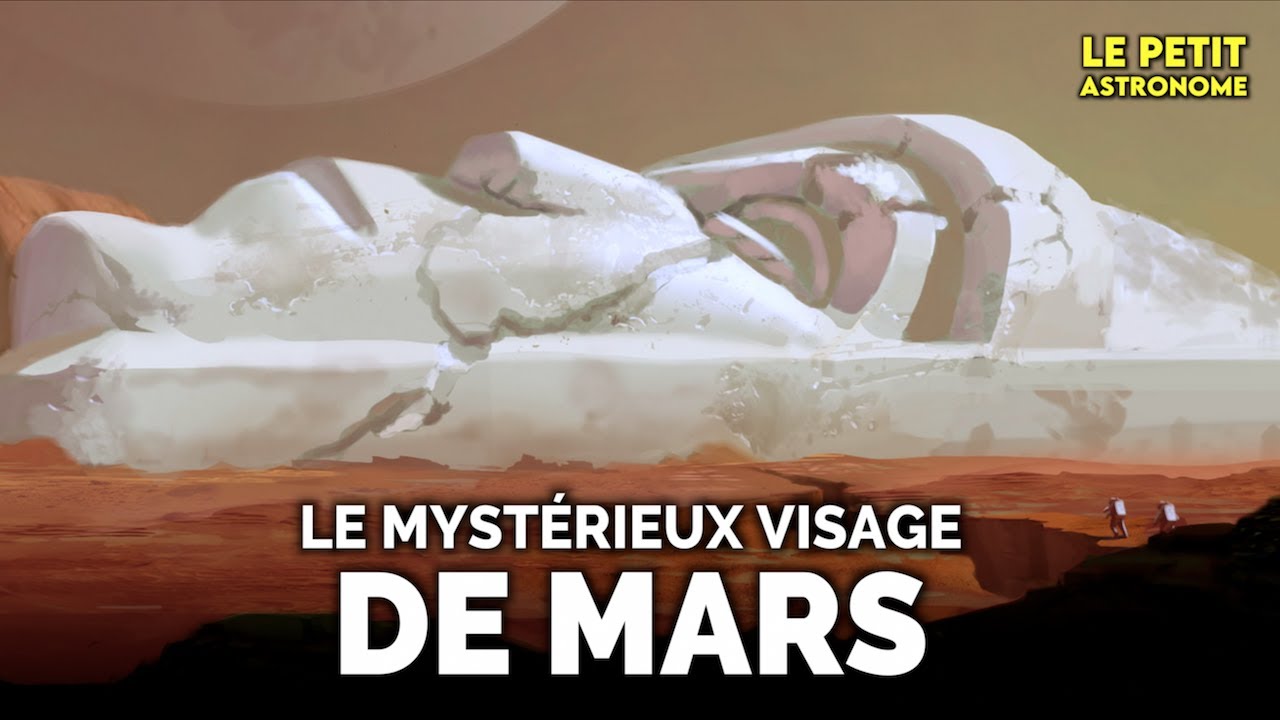
Le Visage de Mars (et autres paréidolies)
Keywords
Summary
173 words
Critical Evaluation
Value of the Information & Strength of the Argument
The video provides valuable information by systematically debunking common astronomical pareidolia with scientific evidence. The argumentation is solid, using historical context and later observations to correct misconceptions. For instance, the Face on Mars is debunked with high-resolution images from Mars Global Surveyor, and the Martian canals are explained as a result of optical limitations. The host’s explanations are clear and logical, making complex topics accessible without oversimplifying the science.
Scientific Rigor, Source Quality, Title Accuracy
The video maintains scientific rigor by referencing reliable sources, including NASA’s JPL and Wikipedia articles for further reading. The host accurately describes the phenomena and avoids speculative claims. The title is appropriate and matches the content, which focuses on pareidolia in space. The video is well-structured, moving from the most famous example to lesser-known cases, and the host’s tone is engaging yet factual.
147 words
Title / Content Match
The title accurately reflects the content, which focuses on the Face on Mars and other examples of pareidolia in space.
Quality & Reliability
8/10
The video presents well-known cases of pareidolia in astronomy, supported by references to NASA missions and Wikipedia articles. The scientific explanations are accurate, though simplified for a general audience. The host clearly distinguishes between myth and scientific reality, debunking the Face on Mars with evidence from later high-resolution images.
Key Moments
Markers derived by PSI from the transcript: the creator did not define chapters.
- Introduction to pareidolia in space
- The Face on Mars: Viking 1 photo and myth
- Debunking with Mars Global Surveyor images
- Constellations as human interpretations
- Nebulae and their names (Cat's Eye, Hand of God)
- Martian canals: Schiaparelli and debunking
- Saturn's rings: Galileo's 'ears'
- Io's volcanic plumes mistaken for moons
- Arrokoth: the snowman-shaped object
- Conclusion and encouragement to find more examples
Cited Sources
- Cydonia Mensae - Wikipedia — Background on the region of Mars where the Face is located.
- Martian canals - Wikipedia — Historical context on the Martian canals myth.
- Rings of Saturn - Wikipedia — Information on Saturn's rings and their discovery.
- Enceladus (moon) - Wikipedia — Mentioned as a moon resembling the Death Star.
- France Culture article on pareidolia — Additional examples of pareidolia in space.
- NASA JPL image of the Face on Mars — Original Viking 1 image of the Face on Mars.
Concurring Sources
- NASA JPL image of the Face on Mars — Supports the existence of the original image and its later debunking.
- Cydonia Mensae - Wikipedia — Confirms the geological nature of the region.
Contribution & Novelties
The video offers a comprehensive and engaging overview of pareidolia in astronomy, compiling well-known and lesser-known examples. It effectively debunks myths with scientific evidence, making it a valuable educational resource. The host’s approachable style and humor enhance the learning experience.
Pour aller plus loin :
- Pareidolia - Wikipedia — General concept of pareidolia.
- Face on Mars - Wikipedia — Detailed history and debunking.
- Cydonia (region of Mars) - Wikipedia — Geological context of the region.
- Viking program - Wikipedia — The mission that took the original images.
- Mars Global Surveyor - Wikipedia — The spacecraft that provided high-resolution images debunking the Face.
102 words
Radar Profile
The radar profile shows high scores in information quantity, quality, and reliability, with a slightly lower technical level, indicating that the video is well-researched and accurate but accessible to a general audience.
💬 Très positif. Sur les 30 commentaires analysés, la grande majorité exprime un enthousiasme marqué pour la qualité pédagogique et humoristique de la vidéo, avec quelques remarques constructives sur des erreurs mineures.