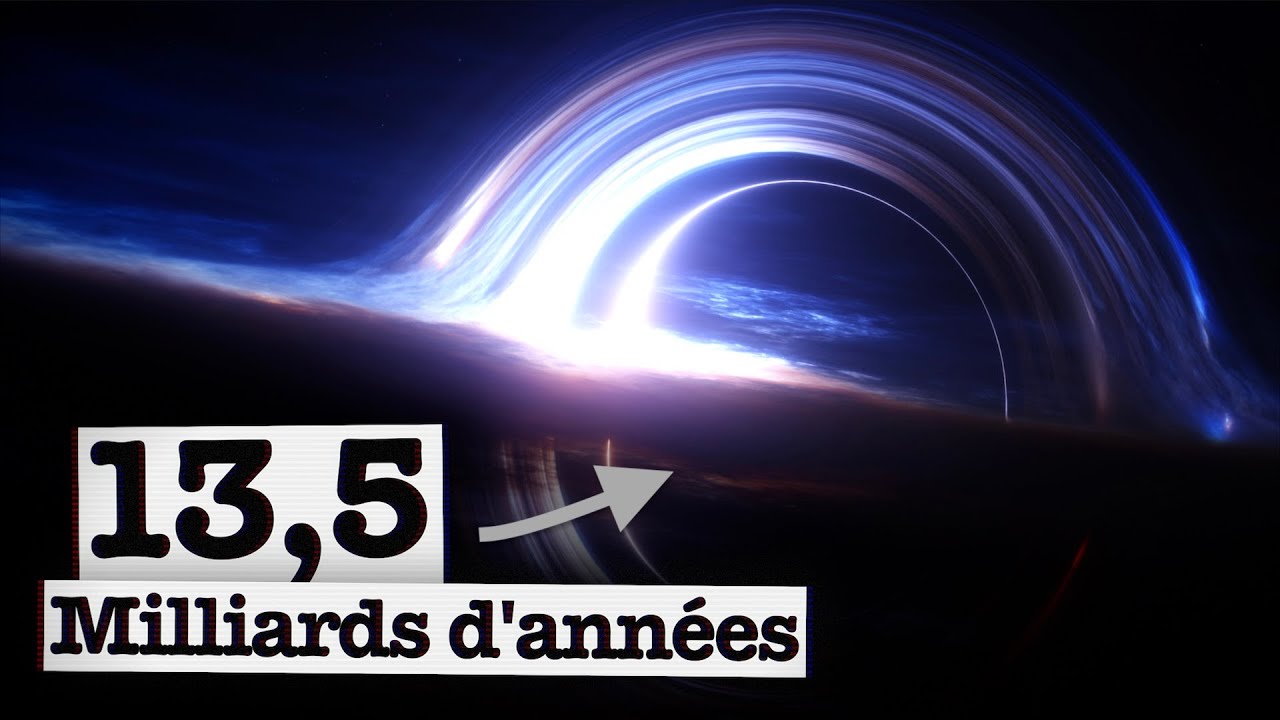
Les plus vieux TROUS NOIRS de tout l'UNIVERS
Keywords
Summary
167 words
Critical Evaluation
Value of the Information & Strength of the Argument
The video provides valuable information on a cutting-edge topic in astrophysics, synthesizing recent discoveries from the James Webb Space Telescope. The argumentation is solid, presenting the mystery of early supermassive black holes and then offering a plausible explanation (super-Eddington accretion) supported by physical principles. The creator clearly distinguishes between established facts and theoretical hypotheses, which strengthens the scientific credibility. The use of specific examples (GN-z11, UHZ1) and quantitative data (masses, accretion rates) adds depth. The argumentation is logical and well-structured, guiding the viewer from the problem to potential solutions.
Scientific Rigor, Source Quality, Title Accuracy
The video demonstrates good scientific rigor by referencing specific astronomical objects and theories. The sources provided in the description include reputable outlets like The Guardian, Live Science, and Phys.org, as well as Wikipedia pages for key concepts. The title accurately reflects the content, focusing on the oldest known black holes. The video does not overstate claims, often using qualifiers like ’theories’ and ‘hypotheses.’ The creator also acknowledges the limits of current knowledge, which is a sign of scientific honesty. The adéquation between the title and the content is strong, as the video directly addresses the topic of the oldest black holes.
205 words
Title / Content Match
The title accurately reflects the content, which focuses on the discovery and mystery of the oldest known black holes in the early universe.
Quality & Reliability
8/10
The video presents current astrophysical research on distant supermassive black holes, referencing specific objects (GN-z11, UHZ1, MOM-z14) and theories (super-Eddington accretion, direct collapse). The information is generally accurate and up-to-date, though simplified for a general audience. The creator clearly distinguishes established facts from hypotheses.
Chapters
Cited Sources
- Direct collapse black hole - Wikipedia — Referenced as a possible formation mechanism for supermassive black holes.
- List of the most distant astronomical objects - Wikipedia — Mentioned as a regularly updated list of distant objects, including record-breaking galaxies.
- GN-z11 - Wikipedia — Discussed as a distant galaxy hosting a supermassive black hole.
- MOM-z14 - Wikipedia — Presented as the current record holder for the most distant galaxy.
- UHZ1 - Wikipedia — Mentioned as the most distant black hole known.
- Astronomers discover the oldest black hole - Phys.org — Referenced as a source for the discovery of an old black hole.
- Most distant galaxy: Hubble breaks cosmic distance record - Astronomy.com — Referenced for context on distant galaxy records.
- Oldest black hole ever observed - BBC News — Referenced as a news source for the oldest black hole discovery.
- GN-z11, la galaxie la plus lointaine de l'Univers - Ciel & Espace — Referenced for information on GN-z11.
- Miracle ou mirage ? Voici la plus vieille galaxie connue vue par le James Webb - Les Numériques — Referenced for information on MOM-z14.
- James Webb telescope discovers the oldest, most distant black hole - Live Science — Referenced as a source for the oldest black hole discovery.
- L'existence des trous noirs intermédiaires a enfin été prouvée directement - Numerama — Referenced for information on intermediate-mass black holes.
- Revealed: the oldest black hole ever observed, dating to dawn of universe - The Guardian — Referenced as a major news source for the oldest black hole.
Concurring Sources
- The Guardian article on oldest black hole — Supports the existence of early supermassive black holes.
- Live Science article on oldest black hole — Confirms the discovery of distant black holes.
- Phys.org article on oldest black hole — Provides additional evidence for early black holes.
Contribution & Novelties
The video synthesizes recent discoveries from the James Webb Space Telescope regarding early supermassive black holes, presenting the mystery of their formation and the potential explanation of super-Eddington accretion. It offers a clear and accessible explanation of complex astrophysical concepts, making cutting-edge research understandable to a broad audience. The video also highlights the ongoing record-breaking discoveries, providing an up-to-date snapshot of the field.
Pour aller plus loin :
- Super-Eddington accretion — Key concept for understanding rapid black hole growth.
- James Webb Space Telescope — The instrument enabling these discoveries.
- Primordial black holes — Alternative formation theory mentioned in the video.
100 words
Radar Profile
The radar profile shows high scores across all dimensions, indicating a well-rounded and reliable video. The quantity and quality of information are strong, with a good technical level that remains accessible. The overall reliability is high, reflecting the use of credible sources and clear explanations.
💬 Très positif. Sur les 29 commentaires analysés, les spectateurs expriment un enthousiasme marqué pour la qualité de la vidéo, la progression de la chaîne, et la passion communicative du créateur, avec de nombreux encouragements et remerciements.