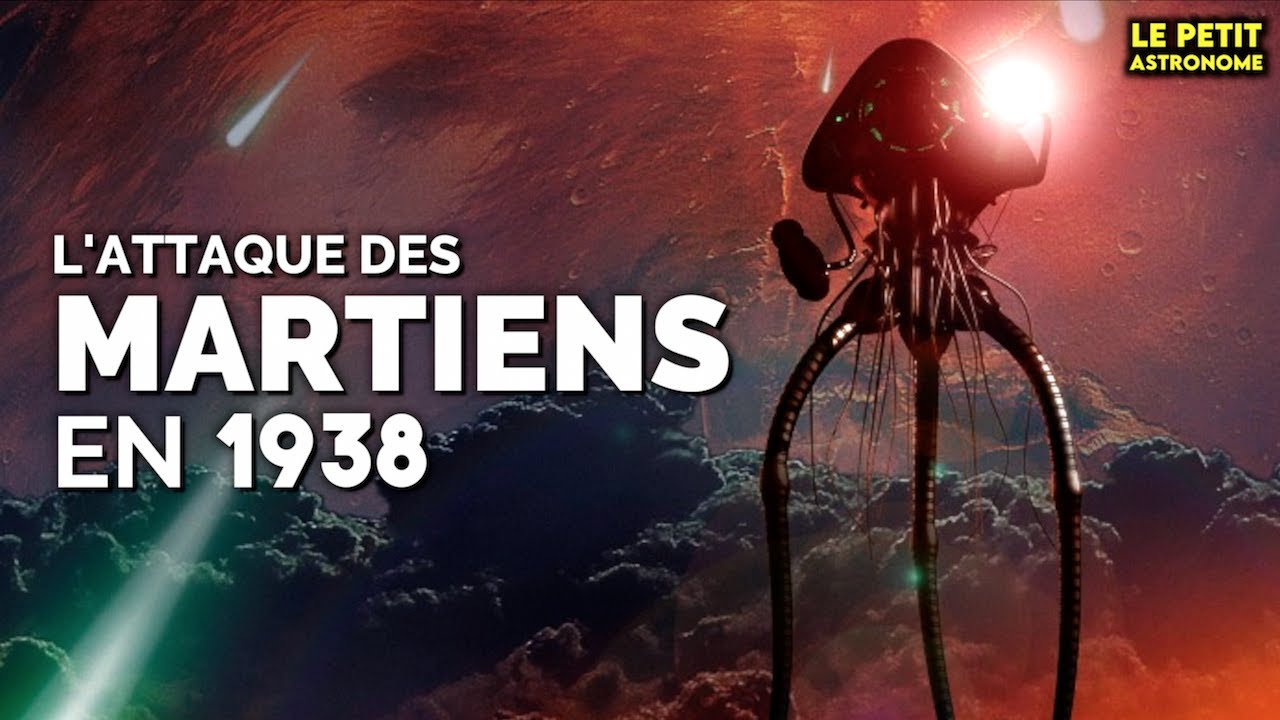
Le jour où les martiens ont attaqué...
Keywords
Summary
151 words
Critical Evaluation
Value of the Information & Strength of the Argument
The video provides a valuable and well-structured argument that deconstructs a widely accepted historical myth. It effectively uses primary sources, such as the original broadcast and contemporary newspaper articles, to support its claims. The argumentation is logical and progresses systematically, addressing each aspect of the myth (the hoax, the panic, the media’s role) and providing evidence to counter it. The inclusion of an interview with sociologist Pierre Lagrange adds credibility and depth to the analysis. The video successfully demonstrates that the ‘panic’ was likely exaggerated and that the public’s response was more rational than often depicted.
Scientific Rigor, Source Quality, Title Accuracy
The video demonstrates a strong commitment to factual accuracy and critical thinking. It cites multiple sources, including Wikipedia articles, a Slate article, and an interview with Pierre Lagrange on France Culture, to support its claims. The creator also provides links to the original radio broadcast and other relevant materials in the description. The title, while catchy, is somewhat misleading as it suggests a focus on the Martian attack itself, whereas the video is actually a debunking of the myth surrounding it. However, this does not significantly detract from the overall quality of the content.
205 words
Title / Content Match
The title is catchy and intriguing, but it is somewhat misleading as it suggests a focus on the Martian attack itself, while the video is actually a debunking of the myth surrounding it.
Quality & Reliability
8/10
The video is well-researched, citing historical sources and an expert interview. It critically examines the myth of the 1938 panic, using primary sources and academic work. Minor limitations include the lack of direct citations for some claims and the presenter's informal tone.
Key Moments
Markers derived by PSI from the transcript: the creator did not define chapters.
- Introduction: the myth of the Martian attack and the official version.
- Context: H.G. Wells' novel 'The War of the Worlds' and its influence.
- Debunking the 'hoax': the broadcast was an adaptation, not a prank.
- Debunking the panic: survey data shows only a small fraction believed it.
- The role of newspapers in exaggerating the story to discredit radio.
- Pierre Lagrange's analysis and the conclusion about media manipulation.
Cited Sources
- La Guerre des mondes (Wikipedia FR) — Background on H.G. Wells' novel.
- La Guerre des mondes (radio, 1938) (Wikipedia FR) — Details about the 1938 radio adaptation.
- The War of the Worlds (1938 radio drama) (Wikipedia EN) — English Wikipedia article on the broadcast.
- Hadley Cantril (Wikipedia FR) — Reference to the psychologist who studied the panic.
- La Guerre des mondes, histoire d'un canular radiophonique (France Culture) — Interview with Pierre Lagrange about the event.
- La version radio de la Guerre des Mondes (YouTube) — Link to the original broadcast.
- Slate article on the panic — Article discussing the panic and its myth.
- Visualdon's end credits visuals (YouTube) — Credits for visuals used in the video.
- Stock Footage Collective playlist (YouTube) — Background visuals used in the video.
- Additional video link (YouTube) — Possibly a related video or source.
Concurring Sources
- The War of the Worlds (1938 radio drama) - Wikipedia — Supports the claim that the broadcast was an adaptation, not a hoax.
- Pierre Lagrange interview - France Culture — Provides expert opinion that aligns with the video's thesis.
Dissenting Sources
- Hadley Cantril's study 'The Invasion from Mars' — The video criticizes Cantril's methodology, suggesting it exaggerated the panic.
Contribution & Novelties
The video offers a fresh perspective on a well-known historical event, debunking the myth of mass panic and revealing the media’s role in exaggerating the story. It provides a nuanced analysis that challenges the ‘official’ narrative and encourages critical thinking about media influence.
Pour aller plus loin :
- The War of the Worlds (1938 radio drama) - Wikipedia — Detailed historical context and analysis of the broadcast.
- Hadley Cantril - Wikipedia — Information on the psychologist whose study is criticized in the video.
- Pierre Lagrange - Wikipedia — The sociologist interviewed in the video, known for his work on the Martian panic myth.
- Media panic - Wikipedia — Related concept of moral panic, which can be applied to understand the media’s reaction.
122 words
Radar Profile
The radar profile shows high scores in information quantity, quality, and reliability, indicating a well-researched and informative video. The technical level is moderate, making it accessible to a general audience while still providing depth.
💬 Très positif. Sur les 30 commentaires analysés, les spectateurs expriment une forte appréciation pour le travail d'investigation et la remise en question du mythe, avec des éloges récurrents pour la qualité de la recherche et le style de présentation.