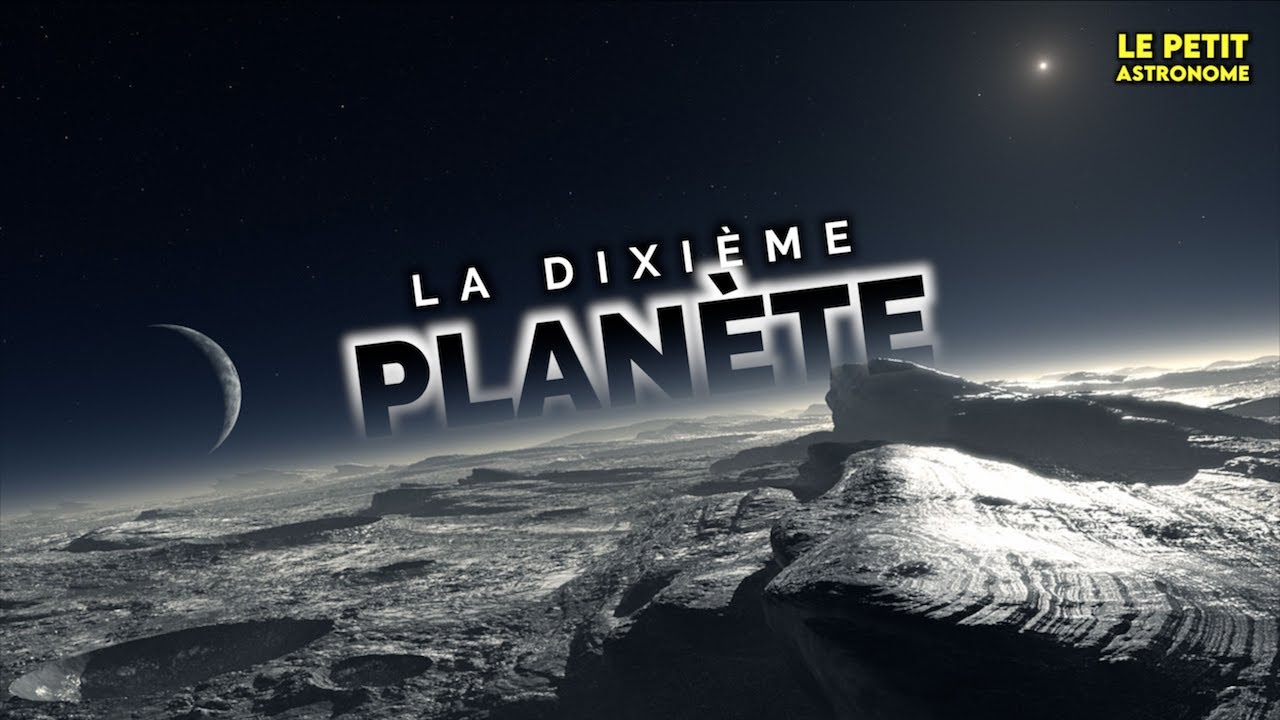
Une dixième planète dans le système solaire !?
Keywords
Summary
157 words
Critical Evaluation
Value of the Information & Strength of the Argument
The video provides valuable historical context and clear explanations of the scientific criteria for planethood. The argumentation is solid, logically progressing from the discovery of Eris to the IAU’s decision. The presenter effectively uses analogies and examples to make complex concepts accessible. However, some minor inaccuracies (e.g., date of Pluto’s reclassification, perihelion/aphelion confusion) slightly weaken the precision of the argument.
Scientific Rigor, Source Quality, Title Accuracy
The video demonstrates good scientific rigor, with sources listed in the description including Wikipedia articles and a Stanford news release. The title accurately reflects the content, though it could be seen as slightly sensational. The video does not delve into conspiracy theories, and the presenter explicitly warns against them. The sources are credible and relevant, though the reliance on Wikipedia might be considered less authoritative in some contexts.
143 words
Title / Content Match
The title is catchy and relevant, as the video explains the historical context and the role of Eris in the reclassification of Pluto.
Quality & Reliability
8/10
The video is well-structured and based on established scientific facts, with sources provided in the description. Minor inaccuracies in dates and terminology are present but do not undermine the overall reliability.
Key Moments
Markers derived by PSI from the transcript: the creator did not define chapters.
- Introduction: Pluto's reclassification in 2006 and the role of Eris.
- Historical overview: from ancient planets to the discovery of Uranus and Neptune.
- Discovery of the first asteroids (Ceres, Pallas, Juno, Vesta) and their initial classification as planets.
- Discovery of Eris in 2005 and its implications for Pluto's status.
- Explanation of the IAU's new definition of a planet, including the 'clearing the neighborhood' criterion.
- Discussion of Eris's characteristics and its orbit, and the conclusion that Pluto remains a dwarf planet.
Cited Sources
- Pluto (dwarf planet) - Wikipedia — General information about Pluto, its reclassification, and its characteristics.
- Eris (dwarf planet) - Wikipedia — Details about Eris, its discovery, and its physical properties.
- List of potential dwarf planets - Wikipedia — Overview of other potential dwarf planets in the solar system.
- Stanford News: Astronomers measure mass of Eris — Scientific article about the mass of Eris, supporting the claim that it is more massive than Pluto.
- Why is Pluto no longer a planet? - Library of Congress — Explanation of the IAU's criteria for planethood, including the 'clearing the neighborhood' requirement.
Concurring Sources
- Pluto (dwarf planet) - Wikipedia — Confirms Pluto's reclassification and its characteristics.
- Eris (dwarf planet) - Wikipedia — Confirms Eris's discovery and its role in the debate.
- Stanford News: Astronomers measure mass of Eris — Supports the claim that Eris is more massive than Pluto.
Dissenting Sources
- Comment by user on YouTube — A commenter pointed out that the date of Pluto's reclassification was August 24, 2006, not September 13, and that the debate about Pluto's status existed since its discovery, not just in the 2000s.
External References
Contribution & Novelties
The video offers a clear and engaging narrative that connects the historical discovery of asteroids with the modern reclassification of Pluto, providing a comprehensive understanding of why Pluto is no longer a classical planet. It emphasizes the role of Eris and the importance of the ‘clearing the orbit’ criterion, which is often misunderstood. The video also highlights the ongoing search for dwarf planets and the dynamic nature of scientific definitions.
Pour aller plus loin :
- IAU definition of a planet — Official definition and its implications.
- Kuiper belt — The region of the solar system where many dwarf planets reside.
- New Horizons mission — The spacecraft that flew by Pluto, providing detailed images and data.
115 words
Radar Profile
The radar profile shows high scores in information quantity, quality, and reliability, with a slightly lower score in technical level, indicating that the video is accessible to a general audience while still providing substantial scientific content.
💬 Très positif. Sur les 30 commentaires analysés, la grande majorité exprime des éloges pour la qualité pédagogique et la clarté des explications, avec quelques remarques constructives sur des erreurs mineures.