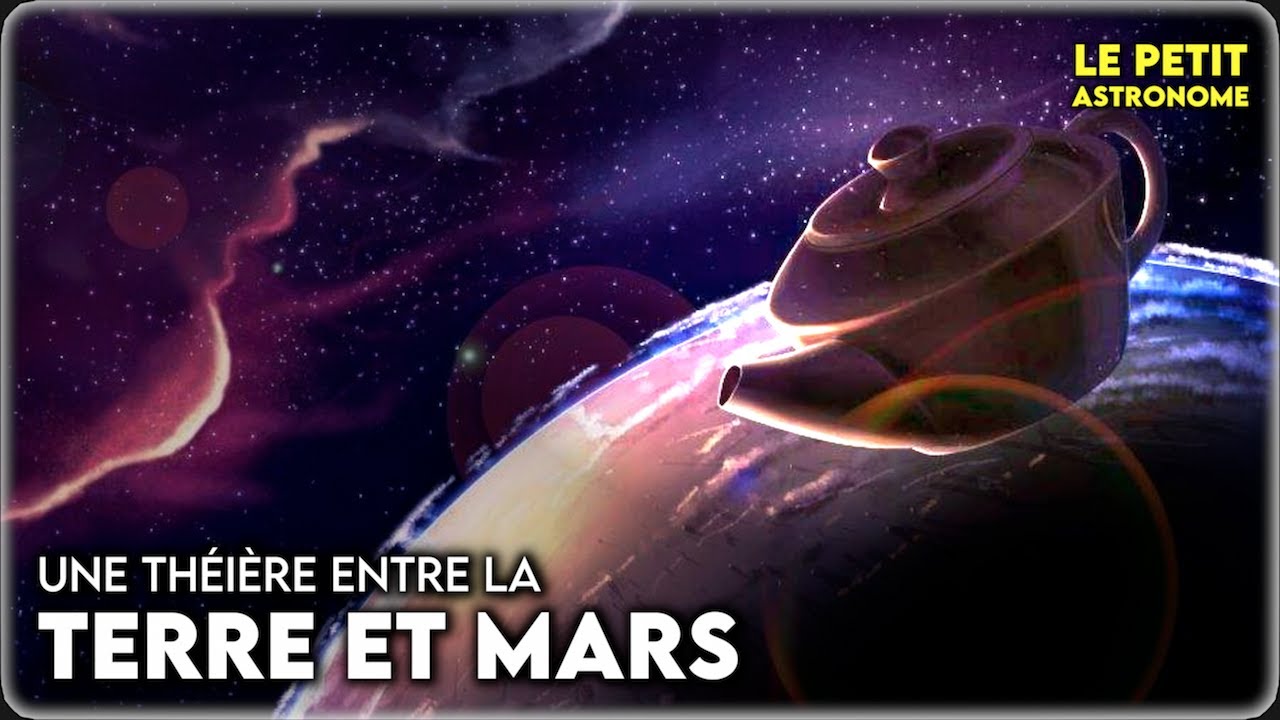
🛰 Une THÉIÈRE entre la TERRE et MARS
Keywords
Summary
166 words
Critical Evaluation
Value of the Information & Strength of the Argument
The video provides a clear and engaging explanation of a complex philosophical concept. It effectively uses historical context and concrete examples to illustrate the burden of proof. The argumentation is logical and well-structured, moving from the general principle to specific applications. The video does not simply present information but actively encourages critical thinking, making it valuable for a general audience interested in science and skepticism.
Scientific Rigor, Source Quality, Title Accuracy
The video demonstrates scientific rigor by referencing primary sources: Russell’s 1952 article ‘Is There a God?’ and Meslier’s testament, both linked in the description. The use of Wikipedia for background information is appropriate. The title accurately reflects the content, and the video stays on topic. The presentation is balanced, avoiding direct attacks on religion while clearly advocating for the principle of burden of proof.
144 words
Title / Content Match
The title is catchy and intriguing, accurately reflecting the central theme of Russell's teapot analogy.
Quality & Reliability
8/10
The video presents a well-structured historical and philosophical argument, accurately referencing Bertrand Russell's teapot analogy and Jean Meslier's testament. The sources provided are reliable (Wikipedia, original texts). The reasoning is sound and clearly explained, though it simplifies some philosophical nuances.
Key Moments
Markers derived by PSI from the transcript: the creator did not define chapters.
- Introduction to concordism and historical examples of linking celestial events to divine phenomena.
- Discussion of Jean Meslier and his atheistic testament.
- Introduction of Bertrand Russell and the teapot analogy.
- Explanation of the burden of proof and its application to conspiracy theories.
- Application of the teapot analogy to the search for extraterrestrial life.
- Conclusion and encouragement to think critically.
Cited Sources
- Le testament de Jean Meslier — Primary source for Meslier's ideas, mentioned in the video.
- Is There a God? by Bertrand Russell — Primary source for Russell's teapot analogy, quoted in the video.
- Russell's teapot - Wikipedia — Background information on the teapot analogy.
- Théière de Russell - Wikipédia — French Wikipedia article on the teapot analogy.
- Visualdon - End credits visuals — Credited for the end credits visuals.
Concurring Sources
- Russell's teapot - Wikipedia — Supports the explanation of the teapot analogy.
- Is There a God? by Bertrand Russell — Primary source confirming Russell's argument.
Contribution & Novelties
The video offers a fresh and accessible synthesis of a classic philosophical argument, connecting it to contemporary issues like conspiracy theories and the search for extraterrestrial life. It effectively bridges historical context (Meslier) with modern skepticism (Russell).
Pour aller plus loin :
- Russell’s teapot - Wikipedia — Comprehensive overview of the analogy and its philosophical implications.
- Burden of proof (philosophy) - Wikipedia — Explains the concept of burden of proof in argumentation and law.
- Fermi paradox - Wikipedia — Directly related to the discussion of extraterrestrial life and the lack of evidence.
92 words
Radar Profile
The radar profile shows high scores in information quantity, quality, and reliability, with a slightly lower technical level, reflecting the video's focus on philosophical concepts rather than technical detail. This indicates a well-balanced, accessible, and credible presentation.
💬 Très positif. Sur les 30 commentaires analysés, les spectateurs expriment un fort enthousiasme, saluant la clarté, la profondeur et l'humour de la vidéo, avec des références appréciées à Russell et Meslier.