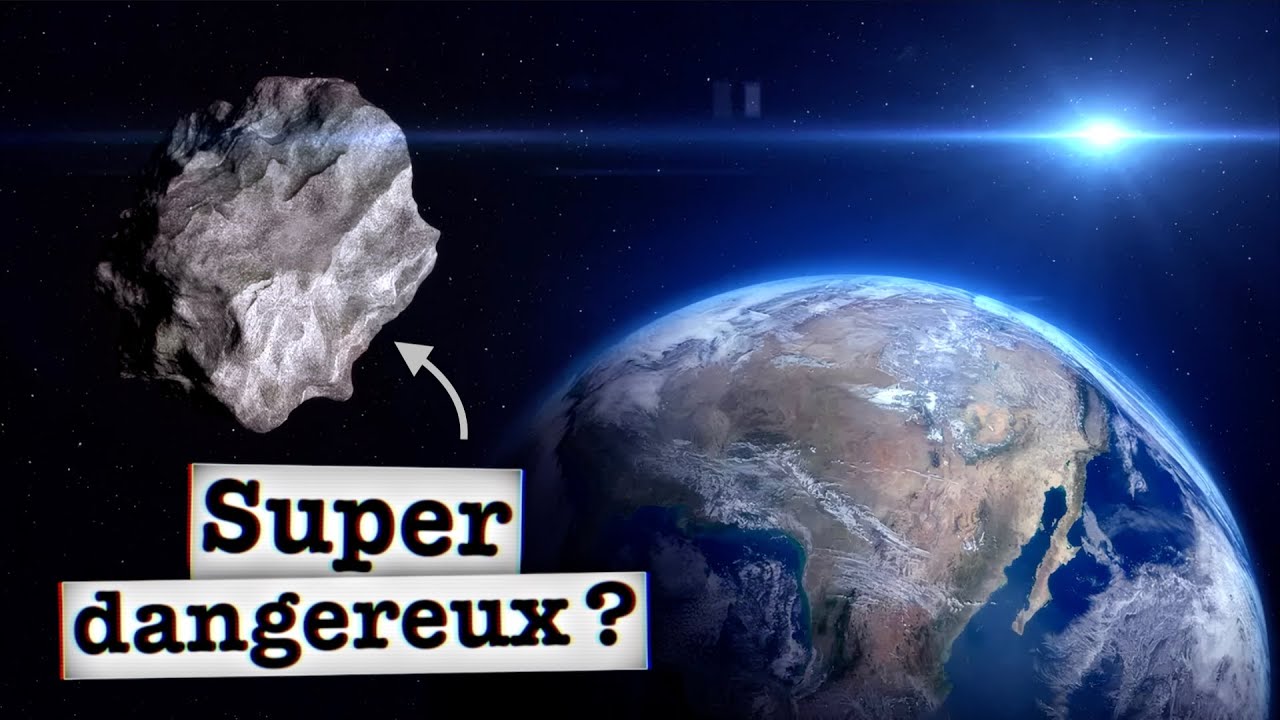
La vérité sur l'ASTÉROÏDE qui percutera la Terre en 2032
Keywords
Summary
214 words
Critical Evaluation
Value of the Information & Strength of the Argument
The video provides valuable information by clarifying the actual risk of 2024 YR4, correcting sensationalist media coverage. It explains the scientific process of assessing asteroid impact probabilities, using the Torino Scale and historical examples. The argumentation is solid: the creator builds a logical narrative from the discovery of 1950 DA to the latest ESA update, showing how initial estimates are refined with more data. He effectively communicates the concept of uncertainty and the low probability of impact, while also discussing potential mitigation strategies. The use of analogies (e.g., comparing the energy to nuclear bombs) makes the information accessible. The video is well-structured and the argumentation is persuasive, though it occasionally uses humor that might distract from the scientific content.
Scientific Rigor, Source Quality, Title Accuracy
The video demonstrates a high level of scientific rigor. The creator cites multiple credible sources, including ESA, NASA JPL, and major news outlets (NYT, Le Monde, Libération), and provides links in the description. He correctly explains the Torino Scale and the process of impact probability assessment. The title is somewhat sensationalist (‘La vérité sur…’) but the content delivers a factual debunking of the threat, so it is largely adequate. The video is based on up-to-date information (as of February 2025) and the creator is transparent about the uncertainties. The main weakness is the lack of direct citation of specific scientific papers, but the reliance on official space agency sources compensates for this.
246 words
Title / Content Match
The title is somewhat sensationalist ('La vérité sur...') but the content delivers a factual debunking of the threat, so it is largely adequate.
Quality & Reliability
8/10
The video provides a well-structured and accurate overview of the 2024 YR4 asteroid threat, correctly explaining the Torino Scale, the evolution of impact probabilities, and the role of planetary defense. It cites credible sources (ESA, NASA JPL, major news outlets) and distinguishes between fact and speculation. Minor simplifications and a humorous tone do not undermine the scientific accuracy.
Chapters
Cited Sources
- ESA blog: James Webb Space Telescope will study asteroid 2024 YR4 — Mentioned as a source for further information on JWST observations of the asteroid.
- NASA JPL Sentry: 2024 YR4 — Referenced as the official impact risk assessment page.
- Wikipedia: 2024 YR4 — General reference for the asteroid's characteristics and discovery.
- Euronews: L'astéroïde 2024 YR4 n'est plus une menace pour la Terre — Cited as a news source reporting the reduced impact probability.
- Wikipedia: Échelle de Turin — Reference for the Torino Scale, used to categorize impact hazard.
- Wikipedia: (29075) 1950 DA — Historical context on the previously most dangerous asteroid.
- Wikipedia: 2024 YR4 (French) — French Wikipedia page for the asteroid.
- NASA JPL Small-Body Database: 2024 YR4 — Reference for orbital data and physical parameters.
- ESA: ESA actively monitoring near-Earth asteroid 2024 YR4 — Official ESA page on the asteroid monitoring.
- Futura Sciences: NASA identifie un astéroïde dangereux — Cited as a source on asteroid hazard assessment.
- Le Monde: La probabilité que l'astéroïde 2024 YR4 percute la Terre est désormais proche de zéro — News article reporting the ESA update.
- Libération: Ce que l'on sait sur l'astéroïde YR4 — News article on the asteroid's risk assessment.
- NYT: Asteroid 2024 YR4 (January 29, 2025) — News article on the initial discovery and risk.
- NYT: Asteroid 2024 YR4 (February 8, 2025) — News article on the impact odds.
- NYT: Asteroid 2024 YR4 (February 18, 2025) — News article on the impact probability update.
- Le Fond Vidéo (YouTube) — Referenced as the background video used in the production.
Concurring Sources
- ESA: ESA actively monitoring near-Earth asteroid 2024 YR4 — Confirms the monitoring and the reduced risk.
- NASA JPL Sentry: 2024 YR4 — Provides the official impact risk assessment, consistent with the video's data.
- Le Monde: La probabilité que l'astéroïde 2024 YR4 percute la Terre est désormais proche de zéro — News article reporting the same ESA update.
Dissenting Sources
- NYT: Asteroid 2024 YR4 (February 8, 2025) — This article, published before the ESA update, reported a higher impact probability (3.1%), which the video addresses as a temporary peak.
Contribution & Novelties
The video provides a clear and up-to-date synthesis of the 2024 YR4 asteroid threat, emphasizing the recent ESA update that reduced the impact probability to near zero. It adds value by contextualizing the event within the history of asteroid hazard assessment (1950 DA, Torino Scale) and by explaining the scientific process of refining orbital predictions. The creator also discusses the potential for a lunar impact and the feasibility of planetary defense missions like DART.
Pour aller plus loin :
- NASA Planetary Defense — Official NASA page on planetary defense activities.
- Torino Scale (Wikipedia) — Detailed explanation of the Torino Scale.
- DART Mission (NASA) — Information on the Double Asteroid Redirection Test mission.
- ESA Planetary Defence Office — ESA’s page on planetary defense.
- 2024 YR4 (JPL Small-Body Database) — Orbital data and physical parameters.
133 words
Radar Profile
The radar profile shows high scores in information quantity and quality, reflecting the video's comprehensive and accurate coverage. The technical level is also high, indicating a good balance between accessibility and scientific depth. The overall reliability is strong, supported by credible sources and a clear presentation of uncertainties.
💬 Très positif. Sur les 30 commentaires analysés, les spectateurs expriment un enthousiasme marqué pour la vidéo, saluant la qualité des explications, l'humour et la clarté du propos. Plusieurs mentionnent leur appréciation du retour de l'actualité spatiale sur la chaîne et la confiance qu'ils accordent au créateur.