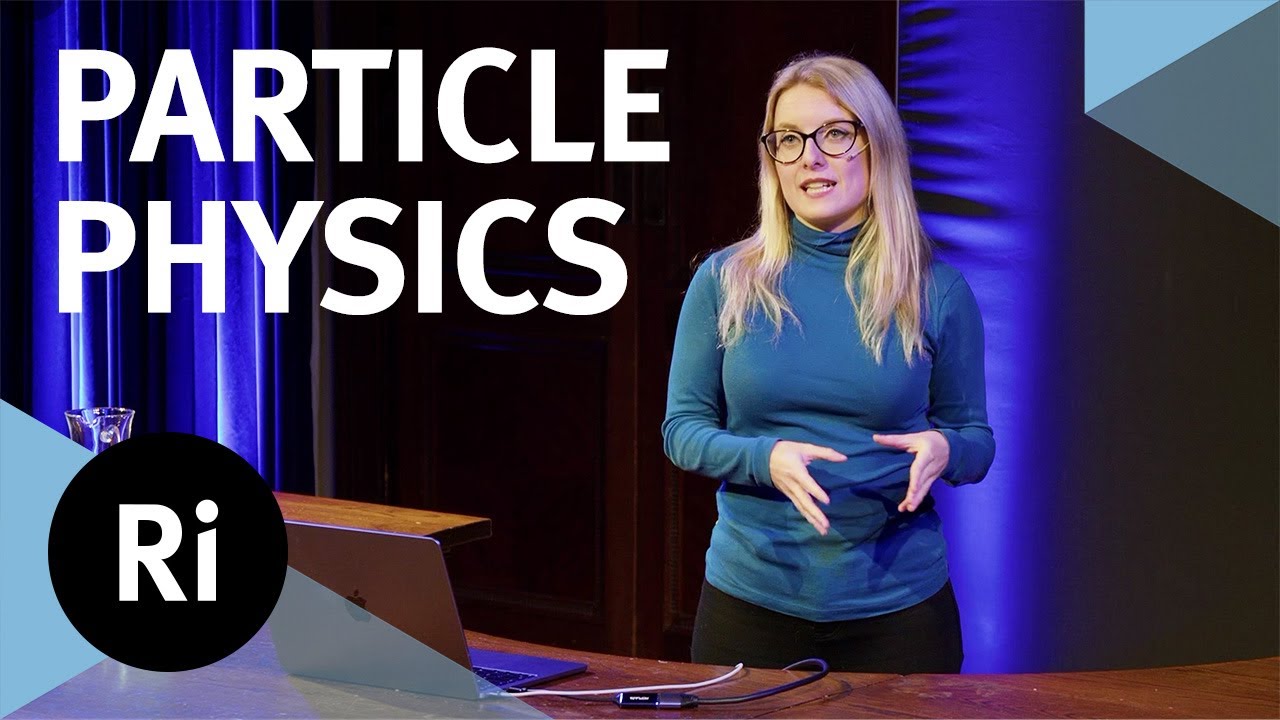
Particle physics and the CMS experiment at CERN - with Kathryn Coldham
Keywords
Summary
172 words
Critical Evaluation
The lecture by Kathryn Coldham provides a solid introduction to particle physics and the CMS experiment, aimed at a general audience. The content is scientifically accurate and well-structured, progressing from fundamental concepts to the specifics of the CMS detector. Coldham’s expertise is evident, as she draws on her direct experience working on the experiment, which adds credibility. The use of analogies, such as comparing the detector’s size to double-decker buses and its weight to the Eiffel Tower, effectively makes the scale tangible. The explanation of the Standard Model and the accelerator complex is clear and concise, though it lacks depth for those seeking advanced technical details. The discussion of the detector’s layers and particle detection mechanisms is particularly informative, providing a good overview of how CMS operates. However, the lecture does not delve into the latest research findings or the current status of the LHC’s high-luminosity upgrade, which could have enhanced its relevance. The speaker’s delivery is engaging, though occasionally nervous, which does not detract from the overall quality. The title accurately reflects the content, and the lecture fulfills its promise of exploring the CMS experiment. While the presentation is primarily educational, it successfully communicates the excitement and importance of particle physics research. The lack of citations or references to specific papers is a minor drawback, but the information presented aligns with established scientific knowledge. Overall, this is a valuable resource for anyone interested in understanding the CMS experiment and the fundamental questions it addresses.
245 words
Title / Content Match
The title accurately reflects the content, which focuses on particle physics and the CMS experiment at CERN.
Quality & Reliability
8/10
The lecture is delivered by a physicist with direct experience on the CMS experiment, providing accurate and up-to-date information. The content aligns with established knowledge in particle physics, and the speaker effectively communicates complex concepts. However, the presentation is primarily educational and lacks in-depth technical details or citations, which slightly limits its scientific depth.
Key Moments
Markers derived by PSI from the transcript: the creator did not define chapters.
- Introduction and personal background
- Explanation of CERN's history and purpose
- Zoom-in visualization from human hair to elementary particles
- Introduction to the Standard Model and fundamental forces
- Overview of the CERN accelerator complex and proton acceleration
- Description of the CMS detector's dimensions and weight
- Construction and assembly of the CMS detector
- How the detector identifies different particles
- Comparison of particle paths and detection methods
- Future prospects and concluding remarks
Cited Sources
- Ri Science Podcast — Mentioned as a resource for further science content from the Royal Institution.
- Royal Institution Editing Policy — Referenced in the video description regarding comment moderation.
- Donate to the Royal Institution — Mentioned as a way to support the institution.
Concurring Sources
- CMS Experiment Official Website — Provides detailed information about the CMS detector, its components, and research findings, consistent with the lecture's content.
- CERN Official Website — Offers general information about CERN, its accelerators, and experiments, aligning with the lecture's descriptions.
Contribution & Novelties
The lecture provides an accessible and engaging overview of the CMS experiment, making complex particle physics concepts understandable to a general audience. It offers a unique perspective from a physicist who has worked directly on the experiment, adding personal insights and practical knowledge. The use of relatable analogies and clear visualizations enhances comprehension. While the content is not groundbreaking for experts, it serves as an excellent educational resource.
Pour aller plus loin :
- CMS Experiment Official Website — Official source for detailed information on the CMS detector and its research.
- Standard Model on Wikipedia — Comprehensive overview of the Standard Model of particle physics.
- Large Hadron Collider on Wikipedia — Detailed information about the LHC and its operation.
118 words
Radar Profile
The radar profile shows high scores in quantity and quality of information, reflecting the lecture's comprehensive and accurate content. The technical level is moderate, suitable for a general audience, while reliability is strong due to the speaker's expertise. The overall balance indicates a well-rounded educational presentation.
💬 Très positif. Sur les 30 commentaires analysés, la grande majorité exprime une appréciation pour la clarté et l'accessibilité de l'explication, avec des éloges pour la visualisation et la présentation.