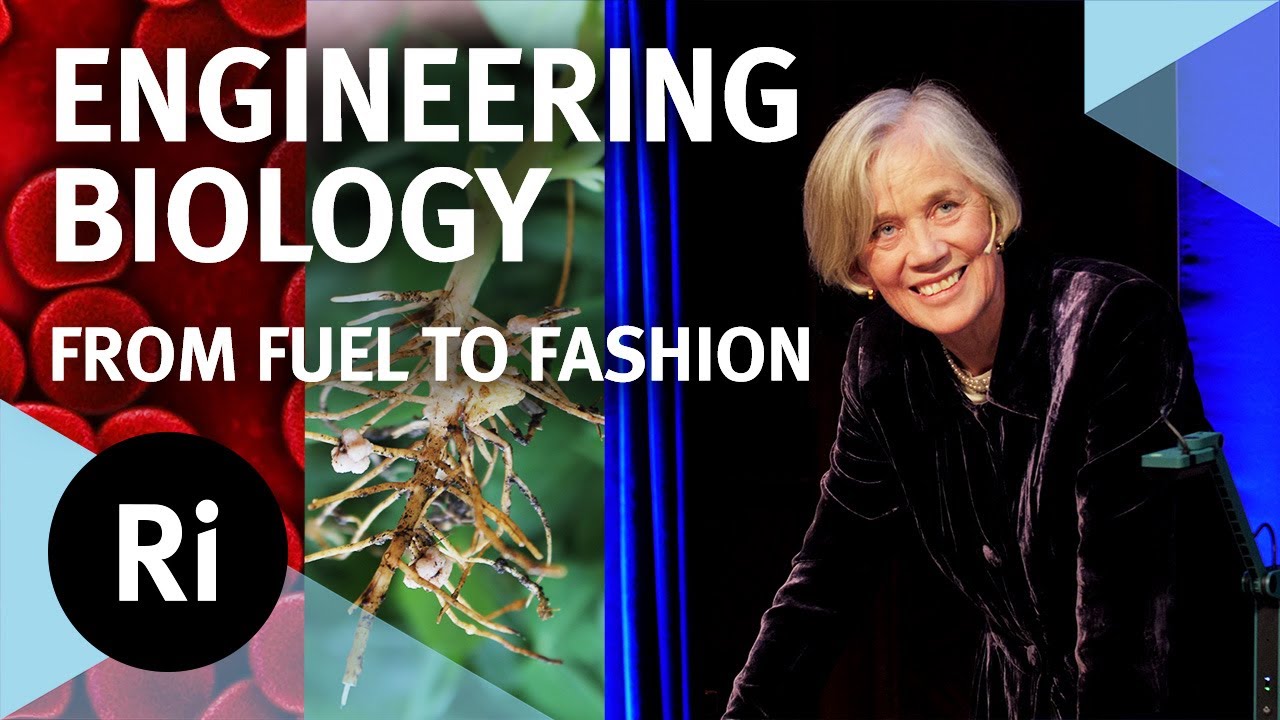
The future of engineering biology - with Angela McLean
Keywords
Summary
147 words
Critical Evaluation
The talk is delivered by a highly credible authority, the UK Government Chief Scientific Adviser, which lends significant weight to the information presented. The content is well-structured, starting with a tangible example (battery recycling) that makes the abstract concept of engineering biology accessible. The speaker demonstrates a clear understanding of the field, despite her background in mathematical biology, and she effectively communicates the scientific principles and potential applications. The argumentation is solid, building a case for the importance of engineering biology by linking it to pressing global challenges such as resource scarcity, health, and climate change. She acknowledges risks and ethical concerns, which adds to the credibility of the presentation. However, the talk is primarily an overview and does not delve deeply into technical details, which may be a limitation for a specialized audience. The sources cited are mostly institutional (Royal Institution, Faraday Institution) and specific research groups, but no peer-reviewed papers are explicitly referenced. The adéquation between title and content is excellent, as the talk indeed focuses on the future of engineering biology. The speaker’s enthusiasm is evident, but she maintains a balanced perspective, noting that many applications are still in development. Overall, the talk is informative and persuasive, suitable for a general audience with an interest in science and policy.
212 words
Title / Content Match
The title accurately reflects the content, which focuses on the future potential and applications of engineering biology.
Quality & Reliability
8/10
The speaker is the UK Government Chief Scientific Adviser, a highly credible expert. The talk is based on her 'Year of Engineering Biology' and includes specific examples and references to UK research projects. However, it is a public lecture with no formal peer review, and some claims are forward-looking.
Key Moments
Markers derived by PSI from the transcript: the creator did not define chapters.
- Introduction: How did you get here? Lithium-ion batteries and the problem of metal extraction.
- Example of bacteria extracting metals from batteries (Shewanella, Desulfovibrio).
- Definition of engineering biology and the design-build-test-learn cycle.
- History of DNA discovery and the ability to read, edit, and write DNA.
- Applications in medicine: mRNA vaccines, gene therapy, and diagnostics.
- Applications in materials and agriculture: spider silk, mycelium, nitrogen fixation.
- Risks, ethics, and the need for responsible innovation and public dialogue.
- Conclusion: Call for national strategy and investment in engineering biology.
Cited Sources
- Ri Science Podcast — Mentioned as a resource for further exploration of science topics.
- Editing Ri talks and moderating comments — Referenced in the description for guidelines on comments.
- History of Friday Evening Discourse — Provides background on the Discourse series.
- Donate to the Ri — Mentioned as a way to support the Royal Institution.
- Q&A session (subscribers only) — The Q&A following the Discourse, available to subscribers.
Concurring Sources
- Royal Institution — The host institution, known for public science engagement.
Contribution & Novelties
This talk provides an authoritative overview of engineering biology from the perspective of the UK’s Chief Scientific Adviser, highlighting its potential to address societal challenges. It emphasizes the importance of a circular economy and presents concrete examples of current research. The talk is particularly valuable for its policy-oriented viewpoint and its call for strategic investment.
Pour aller plus loin :
- Engineering Biology — Overview of the field.
- Synthetic Biology — Related discipline.
- Design–build–test–learn cycle — Explanation of the DBTL cycle.
- Shewanella oneidensis — The bacterium mentioned for metal extraction.
- Faraday Institution — UK battery research institute.
96 words
Radar Profile
The radar profile shows high scores in quantity and quality of information, reflecting the speaker's expertise and the comprehensive coverage of the topic. The technical level is moderate, suitable for a general audience, while reliability is high due to the authoritative source.
💬 No comments were provided for analysis.