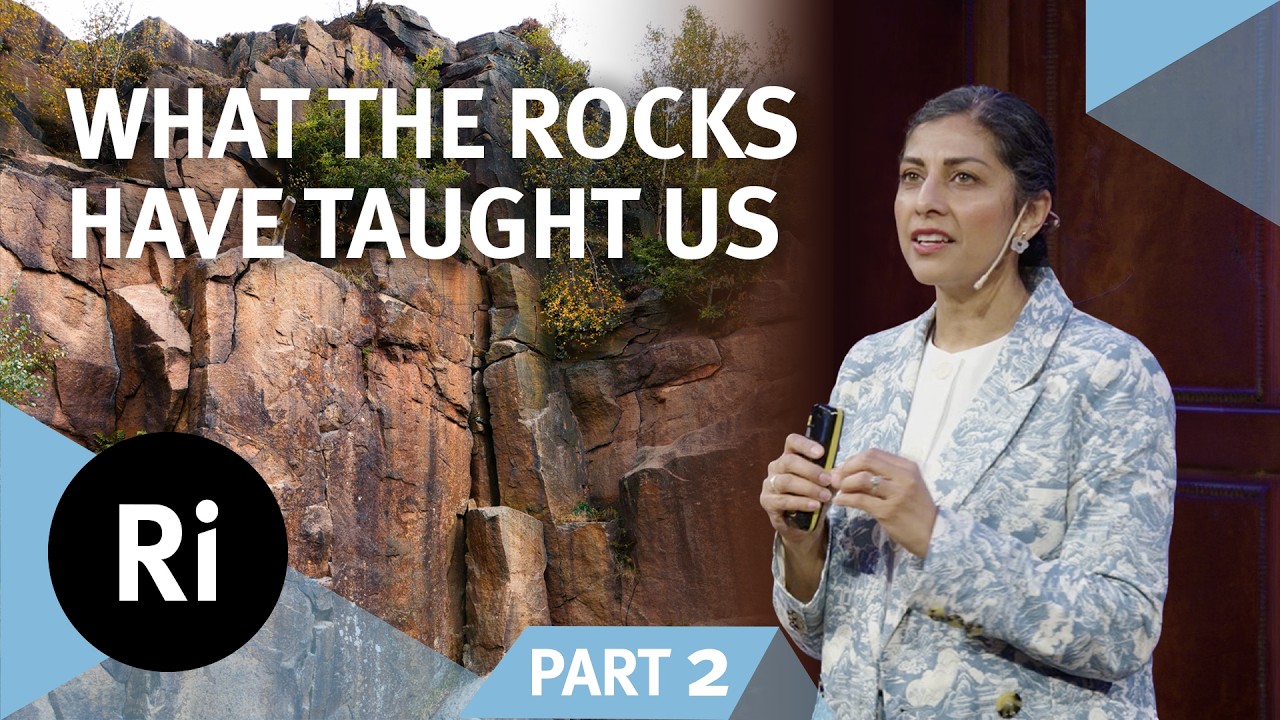
How geology built civilisation | with Anjana Khatwa | Part 2
Keywords
Summary
263 words
Critical Evaluation
The lecture offers a compelling and nuanced perspective on geology, intertwining scientific explanations with indigenous oral traditions. Khatwa’s scientific credibility is well-established, and her explanations of hotspot volcanism, subduction, and metamorphism are accurate and accessible. The use of visual aids, such as maps and diagrams, effectively illustrates the geological processes. The strength of the lecture lies in its respectful and insightful treatment of indigenous knowledge. Khatwa does not simply present myths as allegories for geology but demonstrates how these stories encode empirical observations about the landscape, such as the varying volcanic activity along the Hawaiian chain. This approach aligns with a growing body of scholarship that recognizes the value of traditional ecological knowledge. The collaboration with Māori tribes in retelling the pounamu story adds authenticity and depth. However, the lecture is not without limitations. While the scientific content is sound, it is presented at a relatively introductory level, and the lecture does not delve into the complexities of the geological processes or the debates within the scientific community. The transition from the uplifting stories of Hawaii and New Zealand to the darker narrative of the Black Hills is abrupt, and the latter section feels rushed, with less time devoted to the Lakota perspective than might be warranted. The lecture also touches on the exploitation of resources but does not fully explore the broader implications of colonialism and environmental degradation. The title suggests a comprehensive exploration of geology’s role in civilisation, but the lecture focuses on a few specific case studies, which may leave some viewers wanting more. The inclusion of the All Blacks’ mauri stone is a nice cultural touch but feels somewhat tangential. Overall, the lecture is a valuable contribution to science communication, effectively bridging geology and cultural heritage. It encourages viewers to see rocks not just as inert objects but as integral to human identity and history. The scientific accuracy is high, and the respectful treatment of indigenous knowledge is commendable. The main weaknesses are the uneven pacing and the lack of depth in certain areas, but these do not significantly detract from the overall quality.
348 words
Title / Content Match
The title accurately reflects the content: it explores how geology has shaped human civilisation through cultural stories and resource extraction.
Quality & Reliability
8/10
The speaker is an award-winning earth scientist with institutional credentials. The content combines established geological science (hotspot volcanism, subduction, metamorphism) with indigenous oral histories, presented with respect and collaboration with Māori tribes. The scientific explanations are accurate and well-illustrated. The oral histories are presented as cultural knowledge, not as scientific claims, and are clearly distinguished. The video is a public lecture, so it lacks peer-reviewed citations, but the scientific content aligns with established geology.
Key Moments
Markers derived by PSI from the transcript: the creator did not define chapters.
- Introduction to Hawaii and hotspot volcanism
- The goddess Pele and the oral history map
- Why the myth predates scientific understanding
- Introduction to Aotearoa New Zealand and pounamu
- The sacred green rock of the Māori
- The story of Poutini and Waitiki
- Pounamu and the All Blacks
- Extraction and exploitation: the Black Hills
- The Black Hills of South Dakota and Lakota sacredness
Cited Sources
- The Whispers of Rock: Stories from the Earth — Anjana Khatwa's book, which expands on the themes of the lecture, including the stories of Pele, pounamu, and the Black Hills.
- Ri Science Podcast — The Royal Institution's podcast, which may feature related discussions on geology and culture.
- Editing Ri talks and moderating comments — Information about how the Royal Institution edits talks and moderates comments, relevant to the video's production.
- Support the Ri — General support page for the Royal Institution, mentioned in the video description.
- Donate to the Ri — Donation page for the Royal Institution, mentioned in the video description.
- Part 1 of the lecture — The first part of Anjana Khatwa's lecture, referenced at the beginning of this video.
Concurring Sources
- Hotspot (geology) - Wikipedia — Confirms the scientific explanation of hotspot volcanism as described in the lecture.
- Pounamu - Wikipedia — Supports the geological and cultural information about pounamu presented in the lecture.
- Black Hills - Wikipedia — Provides background on the Black Hills' geology and their significance to the Lakota.
Dissenting Sources
- No discordant sources found — The lecture's scientific content aligns with established geology, and the oral histories are presented as cultural narratives, not scientific claims, so no contradictions were identified.
Contribution & Novelties
This lecture provides a unique perspective by integrating indigenous oral histories with geological science, demonstrating how traditional knowledge can complement and even predate scientific understanding. It highlights the cultural significance of geological formations and resources, offering a more holistic view of Earth science. The collaboration with Māori tribes adds authenticity and depth to the retelling of the pounamu story.
Pour aller plus loin :
- Hotspot volcanism — Provides a scientific overview of hotspot volcanism, the process explained in the lecture.
- Pounamu — Detailed information about the greenstone, its cultural significance, and geological formation.
- Black Hills — Overview of the Black Hills’ geology and their sacred status to the Lakota people.
- Traditional ecological knowledge — Concept relevant to the lecture’s theme of indigenous knowledge and science.
125 words
Radar Profile
The radar profile shows high scores in information quantity, quality, and reliability, with a slightly lower score in technical level, reflecting the accessible nature of the lecture. This indicates a well-balanced presentation that is both informative and trustworthy, suitable for a general audience interested in geology and cultural heritage.
💬 No comments were provided for analysis.