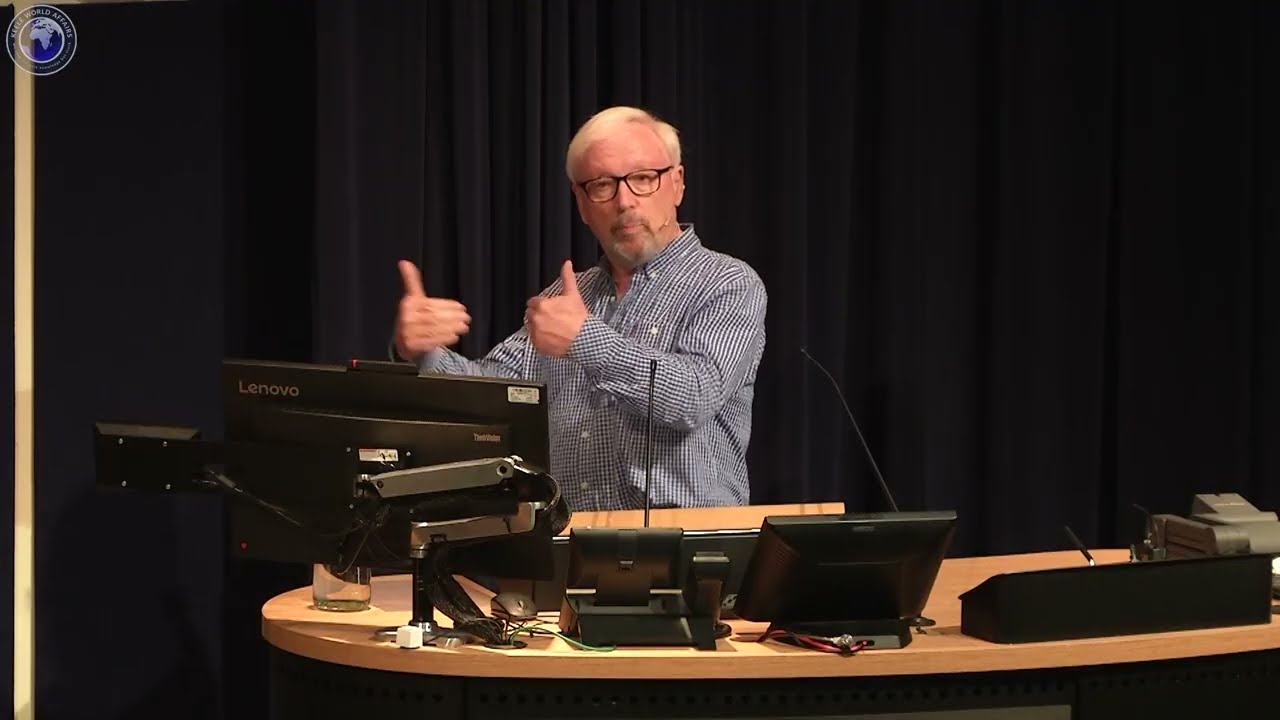
Needing a Better Song to Sing: Seeking a New Economic Narrative
Keywords
Summary
142 words
Critical Evaluation
Value of the Information & Strength of the Argument
The lecture offers a compelling critique of neoliberal economics, presenting a clear alternative vision. Murphy’s argument is structured and persuasive, using personal anecdotes and historical references to support his points. He effectively deconstructs common economic myths, particularly around money creation and taxation, providing a simplified but accurate explanation of how government spending works. However, the argumentation is largely ideological and lacks empirical evidence or engagement with counterarguments. The proposal for a ‘politics of care’ is ethically appealing but lacks detailed implementation strategies.
Scientific Rigor, Source Quality, Title Accuracy
The speaker demonstrates expertise through his professional background, but the lecture is an opinion piece rather than a rigorous academic presentation. He references his own work and a few historical figures (e.g., J.K. Galbraith, David Graeber) but provides no formal citations or sources. The title is metaphorical and accurately reflects the content’s call for a new economic narrative. The lecture is well-structured and the speaker’s credibility is established through his experience, but the lack of verifiable sources limits its scientific rigor.
178 words
Title / Content Match
The title is metaphorical and accurately reflects the content, which argues for a new economic narrative.
Quality & Reliability
7/10
The speaker is an experienced accountant and academic, but the content is largely opinion and advocacy, with some factual claims about money creation that are accurate but presented in a simplified manner. No formal citations are provided.
Key Moments
Markers derived by PSI from the transcript: the creator did not define chapters.
- Introduction and theme: need for a better economic narrative.
- Critique of neoliberalism as antisocialism.
- Explanation of how money is created by the government.
- Discussion on taxation and its purpose.
- Proposal for democratic reforms.
- Vision for a politics of care and well-being.
- Conclusion: call for a new economic story.
Cited Sources
- Funding the Future blog — Speaker's blog where he regularly posts on economics and tax.
Concurring Sources
- Modern Monetary Theory — Supports the idea that governments create money and taxation controls inflation.
Dissenting Sources
- Neoclassical economics — The lecture criticizes neoclassical assumptions, which are still dominant in mainstream economics.
Contribution & Novelties
The lecture offers a fresh perspective on economics by framing it as a narrative that can be changed. It demystifies money creation and taxation, making complex concepts accessible. The ‘politics of care’ is a novel framing that integrates social and environmental concerns. The lecture is original in its synthesis of ideas from various sources, but it does not present new empirical research.
Pour aller plus loin :
- Modern Monetary Theory — A macroeconomic theory that aligns with Murphy’s explanation of money creation.
- Tax Justice Network — Organization co-founded by Murphy, focusing on tax avoidance and havens.
- Doughnut Economics — A model that balances social needs and planetary boundaries, relevant to Murphy’s call for ecological limits.
115 words
Radar Profile
The radar profile shows high scores in quantity of information and quality of information, reflecting the lecture's rich content and clear presentation. The technical level is moderate, making it accessible to a general audience. The global reliability is moderate, as the content is opinion-based and lacks formal citations.
💬 No comments were provided for analysis.