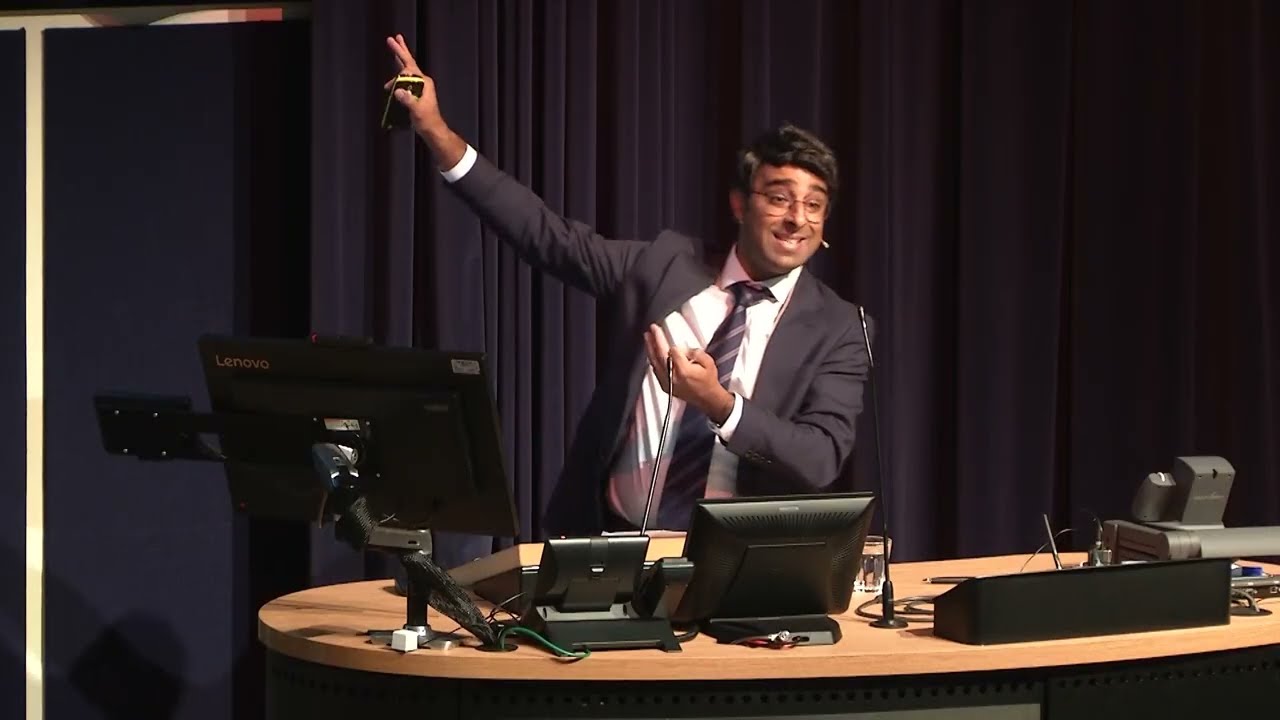
India and her Neighbours: Friends and Foes - Dr Avinash Paliwal
Keywords
Summary
140 words
Critical Evaluation
Value of the Information & Strength of the Argument
The lecture provides valuable insights into India’s foreign policy priorities, offering a clear analytical framework (the ’threshold principle’) that is not commonly articulated in mainstream discourse. The argumentation is solid, grounded in historical context and current events, and the speaker demonstrates deep expertise. He effectively explains the rationale behind India’s seemingly contradictory actions, such as supporting Sheikh Hasina despite her authoritarian turn, by linking them to national security concerns. The talk is persuasive and well-reasoned, though it represents the speaker’s expert opinion rather than a neutral overview.
Scientific Rigor, Source Quality, Title Accuracy
The speaker is a credible academic with relevant expertise, and the talk is rigorous in its use of historical and contemporary examples. However, no formal sources are cited during the lecture, and the description provides only the speaker’s biography and book reference. The title accurately reflects the content, which is a geopolitical analysis of India’s relations with its neighbours. The talk is not heavily reliant on external sources, but the speaker’s authority and the coherence of the argument lend it credibility.
183 words
Title / Content Match
The title accurately reflects the content, which focuses on India's relations with its neighbors, categorizing them as friends or foes.
Quality & Reliability
8/10
The speaker is a recognized academic with a PhD in International Relations from King's College London, author of a recent book on India's near east, and has practical experience in the UK Foreign Office. The talk is well-structured, draws on historical context and current events, and avoids unsupported claims. However, it is an opinion-based lecture without formal citations or peer-reviewed references.
Key Moments
Markers derived by PSI from the transcript: the creator did not define chapters.
- Introduction: Why care about South Asia? Global, regional, and national stakes.
- Discussion of the India-China rivalry and its implications for Asia.
- Introduction of the 'threshold principle' for India's neighbourhood policy.
- Application of the threshold principle to Pakistan and China.
- Analysis of Bangladesh's transition and India's dilemma regarding Sheikh Hasina.
- Discussion of Myanmar's instability and its impact on India's northeast.
- Future outlook: connectivity, economic integration, and the role of BRICS.
Cited Sources
- India's Near East – A New History (2024) — Mentioned as the speaker's recent book on India's relations with its eastern neighbours.
Concurring Sources
- India's Near East – A New History (2024) — The speaker's book aligns with the talk's themes on India's neighbourhood policy.
Contribution & Novelties
The talk offers a clear and original framework (’threshold principle’) for understanding India’s foreign policy towards its neighbours, prioritizing state stability and national security over economic ties. It provides a nuanced analysis of India’s relationships, challenging simplistic friend/foe dichotomies. The speaker’s insider perspective from the UK Foreign Office adds practical insight.
Pour aller plus loin :
- India’s Act East Policy — Provides background on India’s policy towards Southeast Asia.
- Kashmir conflict — Essential context for understanding India-Pakistan relations.
- BRICS — Overview of the grouping India is part of, relevant to the talk’s discussion of non-Western powers.
96 words
Radar Profile
The radar profile shows high scores across all dimensions, indicating a well-rounded and reliable presentation. The talk is information-dense, technically sound, and credible, with a slight emphasis on qualitative analysis over quantitative data.