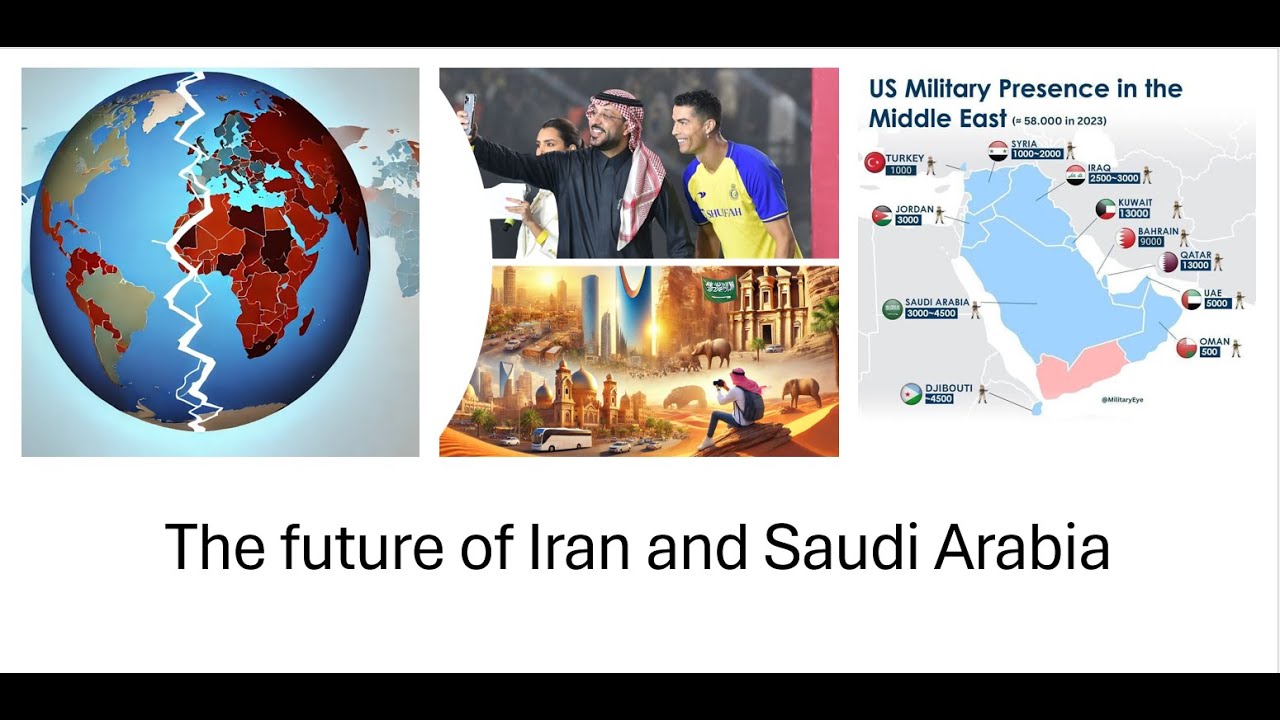
What future for Iran, Saudi, and the Gulf States? - Michael Stephens
Keywords
Summary
150 words
Critical Evaluation
Value of the Information & Strength of the Argument
The talk provides valuable insights into the current geopolitical landscape of the Middle East, drawing on the speaker’s expertise and recent events. The argumentation is coherent, with a clear narrative linking global trends to regional dynamics. He supports his points with specific examples, such as the Israeli airstrike on Doha and the economic pressures on Gulf states. However, some claims are presented without detailed evidence, and the analysis is inherently subjective, reflecting the speaker’s perspective.
Scientific Rigor, Source Quality, Title Accuracy
The speaker demonstrates a strong command of the subject, referencing his own research and publications. He mentions specific events and operations, but does not cite external sources in the talk. The title accurately reflects the content, which is a forward-looking analysis of the region. The talk is based on expert opinion rather than peer-reviewed research, which is appropriate for a forum discussion.
152 words
Title / Content Match
The title accurately reflects the content, which focuses on the future of Iran, Saudi Arabia, and the Gulf States in the context of regional and global shifts.
Quality & Reliability
8/10
The speaker is a recognized expert in Middle East geopolitics, with affiliations to FPRI and RAND Europe. The talk is based on his professional analysis and experience, but it is an opinion piece rather than a peer-reviewed study. He provides specific examples and historical context, but some claims are unverifiable in the talk.
Key Moments
Markers derived by PSI from the transcript: the creator did not define chapters.
- Introduction and overview of the talk's themes.
- Discussion of the impact of October 7, 2023, and the transformation of the region.
- Analysis of Iran's weakened position and its implications.
- The Israeli airstrike on Doha and its consequences for Gulf states' perceptions.
- Economic motivations for Gulf states to seek stability and diversify.
- The role of China in brokering Saudi-Iran talks and the current state of relations.
- Conclusion and outlook on the future of the region.
Cited Sources
- What next for Britain in the Middle East? Security, Trade and Foreign Policy after Brexit — Co-authored by Michael Stephens and Christopher Phillips, mentioned as a relevant publication.
Concurring Sources
- Iran–Saudi Arabia relations — Provides background on the historical rivalry and recent talks.
Dissenting Sources
- No discordant sources found — The talk is an opinion piece, and no specific conflicting sources were mentioned.
Contribution & Novelties
The talk offers a unique perspective on the evolving relationship between Iran and Saudi Arabia, emphasizing the role of economic diversification and global shifts. It provides a nuanced analysis of how Gulf states are reassessing their security alliances in light of Israeli actions.
Pour aller plus loin :
- Iran–Saudi Arabia relations — Background on the historical rivalry and recent rapprochement.
- Gulf Cooperation Council — Context on the Gulf states’ collective security and economic cooperation.
- Iran–Israel proxy conflict — Overview of the broader conflict dynamics.
84 words
Radar Profile
The radar profile shows high scores in information quantity and quality, reflecting the speaker's expertise and the depth of the talk. The technical level is moderate, making it accessible to a general audience. The overall reliability is high, though it is based on expert opinion rather than empirical data.
💬 No comments were provided for analysis.