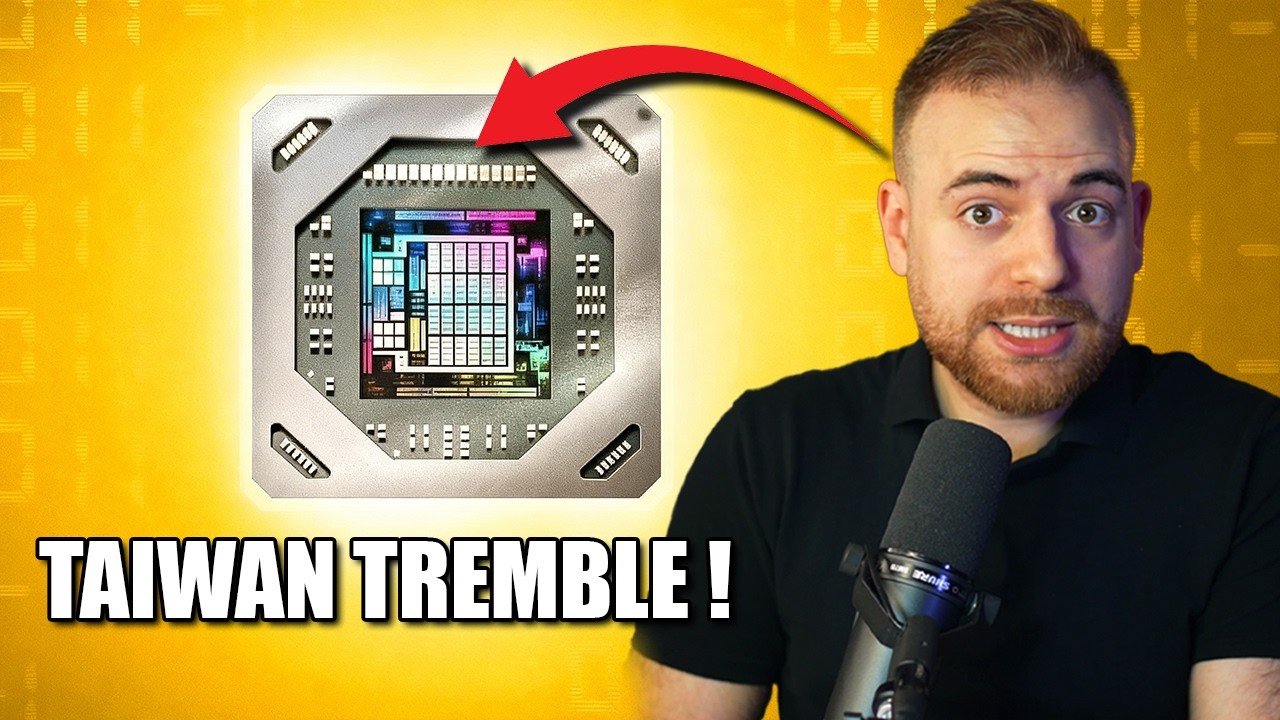
Cette nouvelle technologie pourrait tuer TSMC et ASML
Keywords
Summary
134 words
Critical Evaluation
The video provides a compelling narrative about a potential technological breakthrough in semiconductor manufacturing, but it suffers from several weaknesses. Firstly, it relies heavily on sensationalism and speculative claims without providing concrete evidence or peer-reviewed sources. The presenter mentions that Substrate has printed 12nm features with 0.25nm precision, but these are unverified claims from the company itself. The video does not critically examine the feasibility of these numbers or the physical challenges of X-ray lithography, such as the need for new photoresists and optics. Secondly, the video oversimplifies the complexity of semiconductor manufacturing, reducing it to the lithography step, while ignoring other critical aspects like deposition, etching, and packaging. Thirdly, the comparison to SpaceX is misleading; while SpaceX disrupted launch costs, the semiconductor industry has high barriers to entry and requires decades of process knowledge. The video also fails to mention that ASML and TSMC are already investing heavily in next-generation technologies, and they are unlikely to be caught off guard. The presenter’s lack of technical depth is evident in the vague explanations of the X-ray source and the challenges involved. Despite these criticisms, the video does raise interesting points about the potential for cost reduction and the strategic importance of semiconductor manufacturing. The inclusion of investor information, such as In-Q-Tel’s involvement, adds some credibility, but the overall presentation is more hype than substance. The video would benefit from more rigorous sourcing and a more balanced perspective on the likelihood of success.
242 words
Title / Content Match
The title is clickbait, exaggerating the immediate threat to TSMC and ASML, while the video is more balanced, acknowledging skepticism and challenges.
Quality & Reliability
6/10
The video presents a speculative but plausible scenario about a startup (Substrate) using X-ray lithography to disrupt the semiconductor industry. It mixes factual claims (costs, company names, investments) with unverified assertions and lacks detailed technical depth. The tone is sensationalist, and the title overstates the potential impact. The video does not provide direct sources for its claims, relying on general knowledge and the creator's interpretation.
Key Moments
Markers derived by PSI from the transcript: the creator did not define chapters.
- Introduction: The video sets up the scenario of a Chinese invasion of Taiwan and the dominance of TSMC and ASML.
- Explanation of the high cost of EUV lithography machines and the economic burden on chipmakers.
- Introduction of Substrate, a startup with a new X-ray lithography technology.
- Details on how Substrate's technology works, using a miniaturized particle accelerator.
- Claims of 12nm features and 0.25nm precision, with cost estimates of $50 million per machine.
- Substrate's funding and government connections, including In-Q-Tel.
- Substrate's plan to build its own fabs and become a foundry, aiming to reduce wafer costs.
- Skepticism and challenges: technical hurdles, lack of experience, and comparisons to Terranos.
- Conclusion: The potential impact on geopolitics and the need for proof of concept.
Cited Sources
- Vision IA Newsletter — Mentioned as a way to stay updated on AI and technology news.
- Vision IA Training — Promoted as a course to learn AI.
Concurring Sources
- ASML official website — Provides information on EUV technology and market position.
- TSMC official website — Details on TSMC's manufacturing capabilities and investments.
Dissenting Sources
- Semiconductor Engineering article on X-ray lithography challenges
Contribution & Novelties
The video brings attention to a relatively unknown startup (Substrate) and its potential to disrupt the semiconductor industry with X-ray lithography. It synthesizes information about the current state of EUV lithography and the economic pressures on chipmakers, presenting a speculative but thought-provoking scenario. The video also highlights the strategic importance of semiconductor manufacturing and the involvement of government-linked investors.
Pour aller plus loin :
- EUV lithography — Provides background on the current technology and its limitations.
- X-ray lithography — Historical context and challenges of using X-rays for lithography.
- Synchrotron light source — Explains the large-scale accelerators traditionally used for X-ray generation.
101 words
Radar Profile
The radar profile shows moderate scores across all dimensions, with a slight peak in quantity of information and a dip in reliability, reflecting the video's informative but speculative nature.
💬 The comments are predominantly positive, with viewers expressing interest and appreciation for the content, though some raise critical points about the feasibility and the use of AI-generated images. Overall, the sentiment is balanced, with a mix of enthusiasm and skepticism.