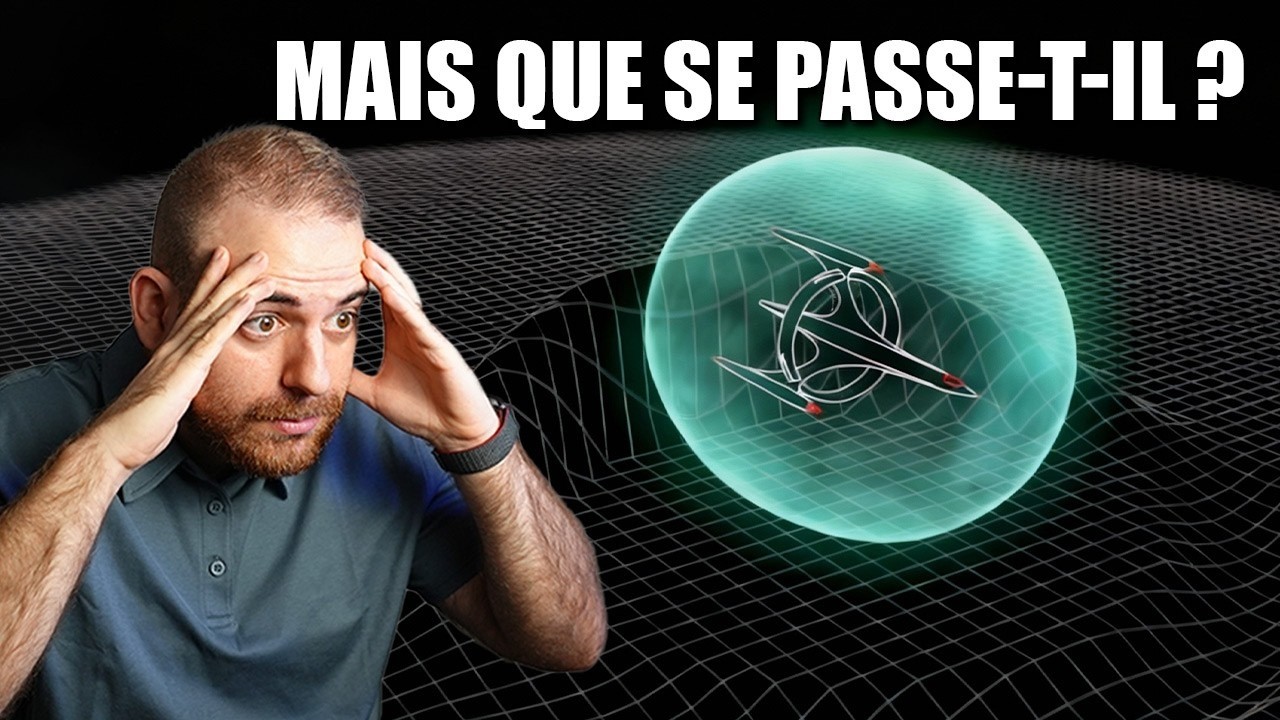
L'obscurité a officiellement battu la vitesse de la lumière
Keywords
Summary
151 words
Critical Evaluation
The video provides a clear and engaging explanation of a complex physics topic, making it accessible to a general audience. The presenter accurately describes the key concepts of optical vortices and the experimental method, and correctly emphasizes that the observed superluminal motion does not violate relativity because the vortices are not physical entities. The explanation of the analogy with a laser pointer on the Moon is effective in illustrating the distinction between pattern speed and actual motion. However, the video lacks specific citations to the original paper, and the presenter does not mention the exact title or DOI, which would enhance credibility. The sensationalized title and opening may mislead viewers into thinking that the speed of light limit has been broken, but the content clarifies this. The discussion of applications is somewhat speculative but grounded in existing technologies. Overall, the video is informative and scientifically sound, but it could benefit from more precise references and a more measured tone.
159 words
Title / Content Match
The title is catchy but somewhat misleading; the video clarifies that it's about optical vortices, not literal darkness.
Quality & Reliability
7/10
The video reports on a real scientific study published in Nature, but the presentation is sensationalized and lacks precise citations. The core physics is accurately explained, but some simplifications may mislead.
Key Moments
Markers derived by PSI from the transcript: the creator did not define chapters.
- Introduction to the surprising discovery of dark spots moving faster than light.
- Explanation of why the speed of light is the universal limit, including mass-energy and causality.
- Introduction to optical vortices and the historical prediction by Berry and Nye.
- Description of the ultrafast electron microscope and the use of hexagonal boron nitride to slow light.
- Presentation of the results: vortices exceeding light speed by 4% and the divergence of velocities.
- Discussion of why this doesn't violate relativity, using the laser pointer on the Moon analogy.
- Implications for physics: breakdown of the particle analogy for vortices.
- Potential applications in astronomy, microscopy, and future technologies.
Cited Sources
- Vision IA Newsletter — Mentioned as a way to stay updated on AI topics.
- Vision IA Training — Promoted as a resource for learning AI.
Concurring Sources
- Nature (journal) — The study was published in Nature, a prestigious scientific journal.
Dissenting Sources
- No direct discordant sources found — The video's claims align with established physics; no conflicting sources were identified.
Contribution & Novelties
The video presents a recent experimental confirmation of a 50-year-old theoretical prediction, providing a tangible example of superluminal motion in optical vortices. It explains the significance of the result for fundamental physics and highlights the development of ultrafast microscopy as a new tool. The video also connects the discovery to potential applications in astronomy and medical imaging.
Pour aller plus loin :
- Optical vortex — Overview of optical vortices and their properties.
- Speed of light — Fundamental limit in physics.
- Hexagonal boron nitride — Material used to slow light in the experiment.
92 words
Radar Profile
The radar profile shows high scores in information quantity and quality, moderate technical level, and good reliability. This indicates a well-rounded video that is informative and credible, though it could benefit from more technical depth.
💬 Positive: The comments are overwhelmingly positive, with viewers expressing appreciation for the clear explanation and the fascinating topic. Many also engage with the physics concepts, showing a high level of interest and understanding.