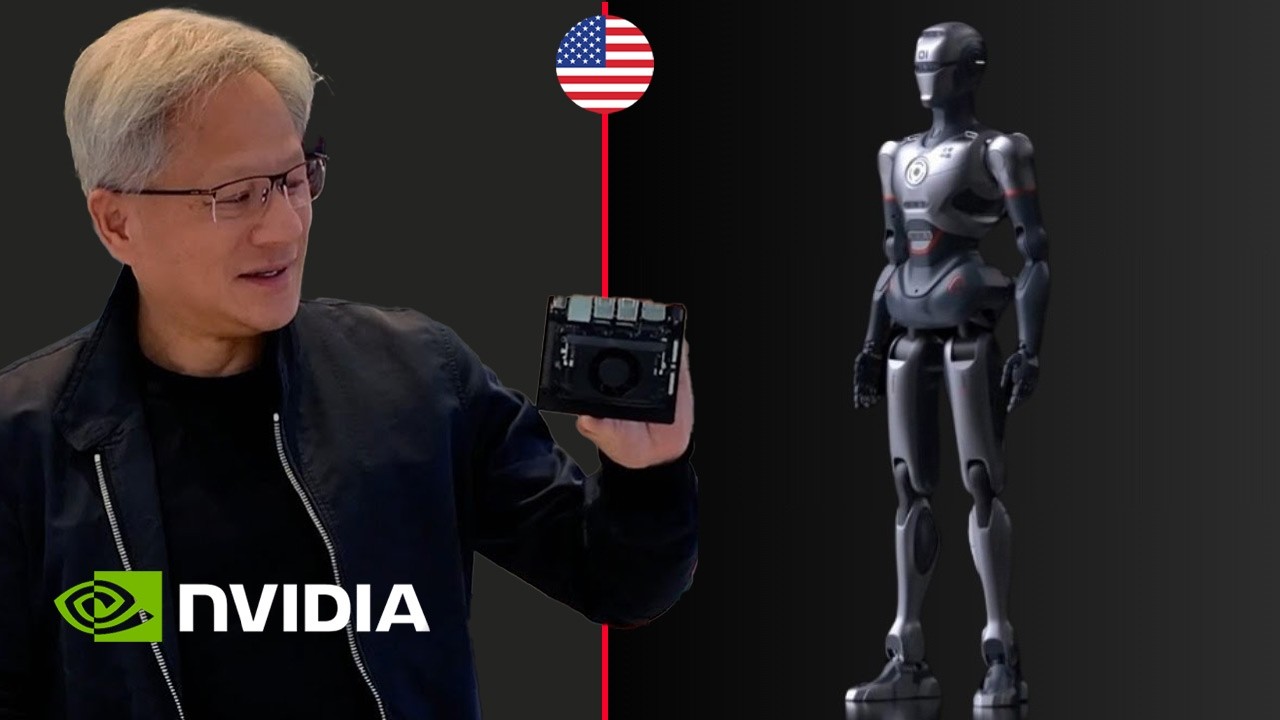
l'IA va s'échapper du réseau grâce à ce nano-ordinateur révélé par NVIDIA (249$)
Keywords
Summary
163 words
Critical Evaluation
Value of the Information & Strength of the Argument
The video provides a clear overview of the NVIDIA Jetson Orin Nano Super, explaining its significance in enabling local AI processing. The argumentation is coherent, emphasizing the benefits of edge computing: privacy, reduced latency, and independence from cloud services. The presenter supports claims with specific technical specifications and practical examples, such as robotics and smart home applications. However, the argumentation is somewhat one-sided, as it does not critically examine potential drawbacks beyond memory limitations, nor does it compare the device with competing products in depth. The value lies in its accessible explanation of a complex topic, making it useful for a general audience interested in AI hardware.
Scientific Rigor, Source Quality, Title Accuracy
The video relies primarily on NVIDIA’s official announcement and the presenter’s own commentary. It does not cite external sources or provide links to technical documentation, which limits its scientific rigor. The title is somewhat sensationalist but accurately reflects the content. The video includes a promotional segment for the channel’s training course, which is clearly disclosed. The lack of independent sources and the promotional nature of the content slightly reduce its credibility, but the information presented is generally accurate and aligns with known facts about the device.
208 words
Title / Content Match
The title is somewhat sensationalist ('l'IA va s'échapper du réseau') but accurately reflects the video's focus on the Jetson Orin Nano Super and its edge AI capabilities.
Quality & Reliability
6/10
The video presents factual information about the NVIDIA Jetson Orin Nano Super, including specifications and applications, but lacks detailed technical depth and relies heavily on promotional language. The claims are plausible and align with known NVIDIA announcements, but the video does not provide independent verification or critical analysis.
Chapters
- Nvidia révolutionne l'IA avec son nano-ordinateur
- Une puissance de calcul inédite à petit prix
- Le traitement local : la fin de la dépendance au cloud
- Applications révolutionnaires en robotique
- La transformation de la domotique intelligente
- Solutions industrielles et contrôle qualité
- Caractéristiques techniques et performances
- L'avenir de l'IA embarquée
Cited Sources
- Vision IA Training — Promotional link for the channel's AI training course, mentioned in the video.
Concurring Sources
- NVIDIA Jetson Orin Nano Super product page — Official NVIDIA page confirming the device's specifications and capabilities.
External References
Contribution & Novelties
The video contributes by highlighting the practical implications of edge AI, particularly the Jetson Orin Nano Super’s role in enabling local processing for robotics and smart devices. It emphasizes privacy and latency benefits, which are often overlooked in mainstream AI discussions. The video also provides a cost-benefit analysis, noting that four units can be combined for $1000 to achieve 300 TOPS, making advanced AI more accessible.
Pour aller plus loin :
- NVIDIA Jetson Orin Nano Super official page — Official specifications and details.
- Edge computing on Wikipedia — Overview of edge computing concepts.
- Llama 3.1 model card — Information on the Llama 3.1 model mentioned in the video.
108 words
Radar Profile
The radar profile shows moderate scores across all dimensions, with slightly higher scores in information quantity and quality, reflecting a balanced but not deeply technical presentation. The video is informative for a general audience but lacks the depth and critical analysis that would elevate its scientific value.
💬 Positif — Sur les 30 commentaires analysés, la majorité exprime enthousiasme et curiosité pour les applications potentielles du nano-ordinateur, avec quelques interrogations techniques et comparaisons.