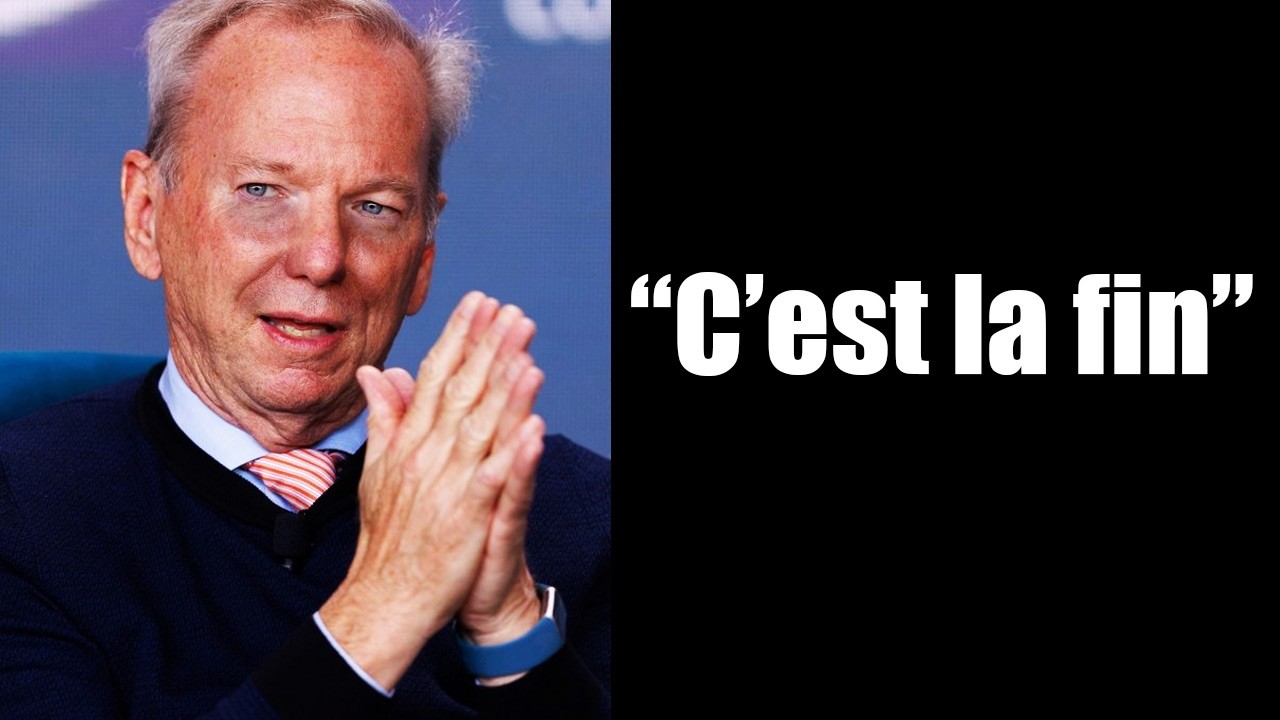
Les Robots de GUERRE sont déjà sur le champ de bataille - L'interview CHOC de l'ex-PDG de Google
Keywords
Summary
155 words
Critical Evaluation
Value of the Information & Strength of the Argument
The video provides valuable insights from a key figure in the tech industry, offering a unique perspective on AI’s geopolitical impact. Schmidt’s arguments are coherent and based on his extensive experience, but they are largely opinion-based rather than data-driven. He makes compelling points about the pace of innovation in Ukraine and the potential for drones to change warfare, but these are presented as observations rather than rigorous analysis. The discussion on Saudi Arabia’s potential is interesting but speculative.
Scientific Rigor, Source Quality, Title Accuracy
The video lacks rigorous sourcing; no specific studies or reports are cited. The title is somewhat clickbait, but the content does address the topic of military robots. The interview format provides credibility through the guest’s background, but the lack of verifiable sources and the promotional segment for the channel’s training reduce the overall scientific rigor.
148 words
Title / Content Match
The title is somewhat sensationalist but accurately reflects the interview's focus on military AI and drones.
Quality & Reliability
6/10
The video presents an expert opinion from a former Google CEO, but the content is largely anecdotal and lacks verifiable data or citations. The channel's focus on AI news and the promotional segment reduce the overall reliability.
Chapters
- L'IA et le nouvel ordre géopolitique
- Les hyperscalers américains et leur domination
- La course mondiale entre USA et Chine
- La question cruciale de l'énergie et des infrastructures
- Le scénario d'une AGI chinoise
- Les militaires face au défi de l'innovation
- La guerre en Ukraine : un laboratoire d'innovation
- L'avenir des conflits : l'ère des drones
- L'Arabie Saoudite : potentiel leader de l'IA
- Entre optimisme et inquiétude : l'avenir de l'IA
Cited Sources
- Vision IA Training — Promotional link for the channel's AI training course.
- Related video: China's Quantum Teleportation Project — Mentioned as a popular video on the channel.
- Related video: Chinese 'Eye of Sauron' — Mentioned as a popular video on the channel.
- Related video: Man Cryogenized Alive — Mentioned as a popular video on the channel.
- Related video: Robots or Humans? — Mentioned as a popular video on the channel.
Concurring Sources
- AI and the Future of Warfare — RAND report on AI in military applications, aligns with the video's discussion on drones and autonomous systems.
Dissenting Sources
- The Impact of AI on Geopolitics
Contribution & Novelties
The video offers a high-level expert perspective on AI geopolitics, particularly the military dimension, which is not commonly discussed in mainstream media. It provides a unique viewpoint on the war in Ukraine as a testing ground for AI-driven warfare.
Pour aller plus loin :
- Artificial general intelligence — Relevant for understanding the concept of AGI discussed in the video.
- Drone warfare — Provides background on the use of drones in modern conflicts.
- Saudi Arabia’s Vision 2030 — Context for Saudi Arabia’s ambitions in technology and AI.
86 words
Radar Profile
The radar profile shows moderate scores across all dimensions, with a slight peak in quantity of information and a dip in technical level. This reflects the video's broad but non-technical discussion of AI geopolitics.
💬 No comments were provided for analysis.