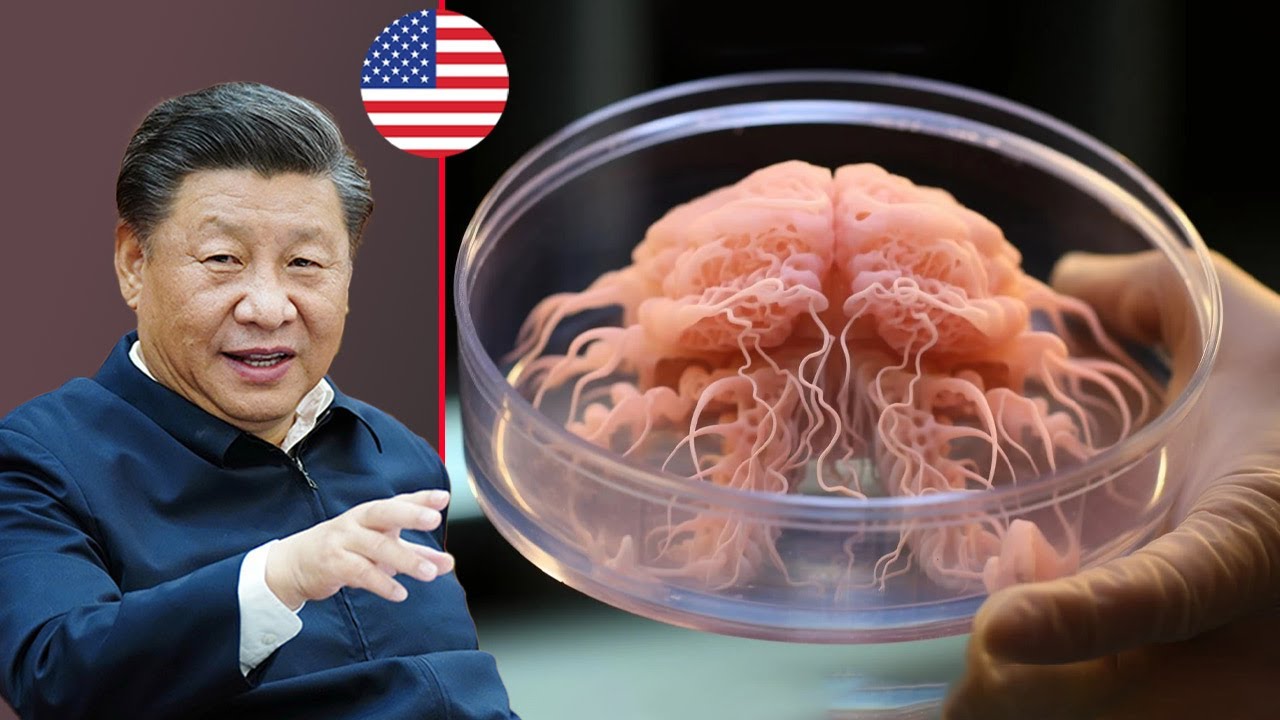
Ce Cerveau Humain va servir d'ordinateur, la CHINE sous le CHOC !
Keywords
Summary
106 words
Critical Evaluation
Value of the Information & Strength of the Argument
The video provides a high-level overview of several emerging technologies, but the argumentation is largely superficial. The central claim about biocomputers is presented with enthusiasm but lacks critical analysis of the technical challenges and ethical implications. The comparison between brain energy efficiency and silicon chips is oversimplified, ignoring the vast differences in architecture and function. The other segments are even more cursory, offering little beyond basic descriptions. The video’s value lies in raising awareness of these topics, but it does not provide substantial scientific depth.
Scientific Rigor, Source Quality, Title Accuracy
The video does not cite specific sources within the narration, and the description only contains links to other videos from the same channel, which are not relevant to the content. The claims about Final Spark and the use of organoids are plausible but unverified. The title is misleading as it focuses on the ‘biocomputer’ segment while the video covers multiple topics. The overall scientific rigor is low, with a tendency towards sensationalism and lack of critical evaluation.
177 words
Title / Content Match
The title is sensationalist and focuses on the 'biocomputer' segment, which is only one of four topics covered. It does not accurately represent the full content of the video.
Quality & Reliability
4/10
The video presents a mix of news items with varying degrees of verification. The central claim about 'biocomputers' is based on a real startup (Final Spark) and mentions credible institutions, but lacks detailed sourcing and contains sensationalist framing. Other segments (modular aircraft, lunar bricks, Fukushima) are plausible but presented without specific references. Overall, the information is a simplified overview rather than a rigorous scientific analysis.
Chapters
Cited Sources
- La Chine dévoile son projet de Téléportation Quantique ! — Video from the same channel, not directly related to the content.
- "L'Oeil de Sauron" Chinois : L'Arme Secrète Qui Secoue les USA — Video from the same channel, not directly related to the content.
- Un homme se fait Cryogéniser vivant, c'est le choc aux USA ! — Video from the same channel, not directly related to the content.
- Les Drones Tueurs Chinois font leur apparition — Video from the same channel, not directly related to the content.
- Le "Dragon de Feu", l'Arme Ultime du Royaume-Uni — Video from the same channel, not directly related to the content.
- Robots ou humains ? Vous n'arriverez plus à faire la différence. Je vous dis tout ! — Video from the same channel, not directly related to the content.
Concurring Sources
- Final Spark — Official website of the startup mentioned in the video, providing details on their biocomputing platform.
Contribution & Novelties
The video’s main contribution is to popularize the concept of biocomputers using human brain organoids, a topic that is relatively new to the public. It highlights the potential energy efficiency of biological computing compared to traditional silicon-based systems. However, the presentation lacks depth and fails to address the significant technical and ethical hurdles.
Pour aller plus loin :
- Brain organoid — Provides background on organoids and their uses.
- Neuromorphic computing — Related field exploring brain-inspired computing architectures.
- Final Spark — The startup mentioned in the video, offering biocomputing services.
89 words
Radar Profile
The radar profile shows low scores across all dimensions, indicating a video that is light on information, technical depth, and reliability. The only relatively higher score is in 'quantite_information' (5), reflecting the coverage of multiple topics, but the overall quality and rigor are lacking.
💬 The comments are predominantly positive and enthusiastic about the potential of biocomputers, with some expressing ethical concerns. A few comments are skeptical or humorous. Overall, the sentiment is balanced with a slight positive tilt, as many viewers are fascinated by the technology while acknowledging its dystopian aspects.