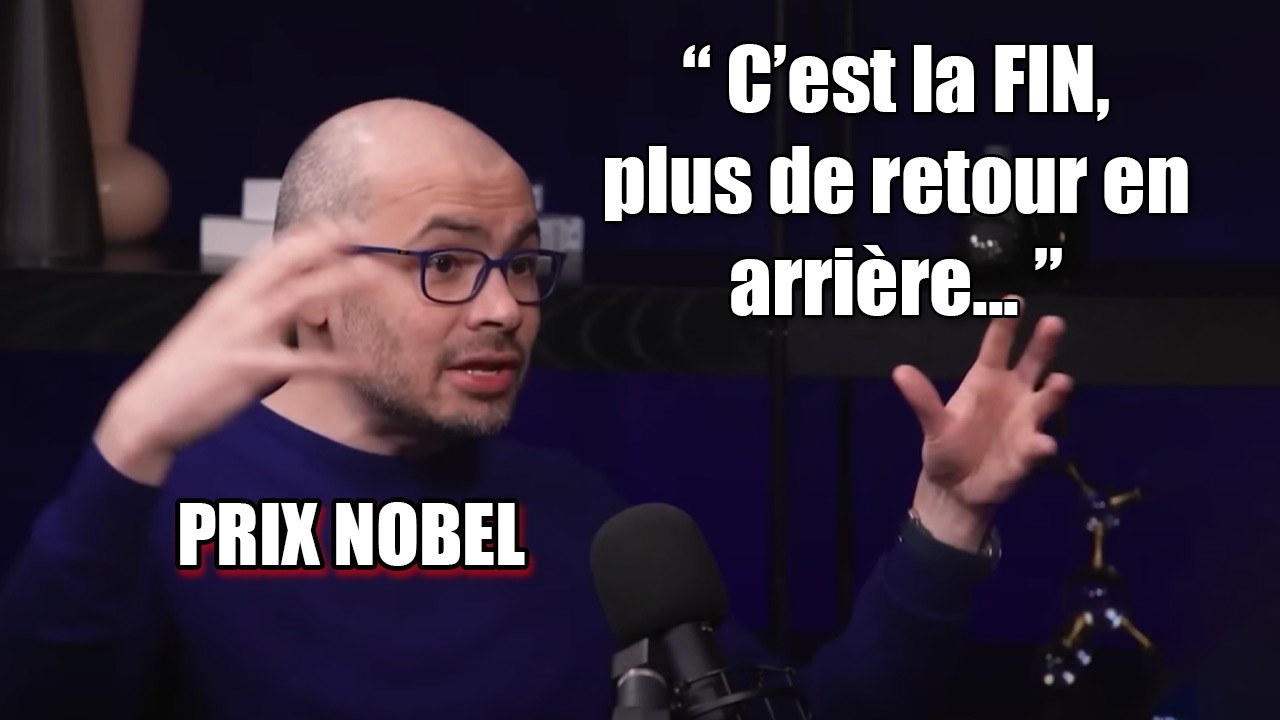
Nouvelle Interview CHOC du Patron de Google : il Prédit l’Avenir de l’IA, Préparez-vous !
Keywords
Summary
150 words
Critical Evaluation
Value of the Information & Strength of the Argument
The video provides substantial value by distilling a dense interview into key insights, making it accessible to a broader audience. The argumentation is solid, as it relies on direct quotes from Hassabis and contextualizes them within the broader AI landscape. The host does not introduce significant original analysis but effectively highlights the most impactful statements, such as the AGI timeline and the critique of marketing hype. The discussion of creativity, with the distinction between interpolation, extrapolation, and invention, is particularly insightful and well-explained.
Scientific Rigor, Source Quality, Title Accuracy
The scientific rigor is moderate. The primary source is the interview itself, which is not linked in the description, but the host references specific projects (AlphaGo, AlphaProof, Veo 2) that are verifiable. The description includes links to the channel’s own content and a promotional course, but no direct references to the interview or related research. The title is somewhat clickbait but accurately reflects the content. The video does not cite external sources beyond the interview, and the host’s commentary is not critically evaluated against other perspectives.
184 words
Title / Content Match
The title is somewhat sensationalist ('CHOC', 'Préparez-vous') but accurately reflects the interview content about AI future predictions.
Quality & Reliability
7/10
The video presents a high-level interview with Demis Hassabis, CEO of Google DeepMind, discussing AGI timelines, limitations of current models, and future directions. The content is largely opinion and forward-looking statements from a leading expert, with some references to specific projects (e.g., AlphaGo, AlphaProof, Veo 2). The channel is a French AI news channel with a promotional segment, which slightly reduces reliability. The information is not peer-reviewed but comes from a credible source.
Chapters
Cited Sources
- Vision IA Formation — Promotional link for the channel's AI training course, mentioned during the video.
- La Chine dévoile son projet de Téléportation Quantique ! — Related video on the channel, linked in the description.
- "L'Oeil de Sauron" Chinois : L'Arme Secrète Qui Secoue les USA — Related video on the channel, linked in the description.
- Un homme se fait Cryogéniser vivant, c'est le choc aux USA ! — Related video on the channel, linked in the description.
- Robots ou humains ? Vous n'arriverez plus à faire la différence. Je vous dis tout ! — Related video on the channel, linked in the description.
Concurring Sources
- Demis Hassabis interview on AGI — The interview itself, which is the primary source, is not directly linked but is referenced throughout the video.
Contribution & Novelties
The video’s main contribution is the dissemination of Demis Hassabis’s expert opinions on AGI to a French-speaking audience, with added context and emphasis. It highlights his nuanced view on AGI timelines, the importance of planning and world models, and the distinction between different levels of creativity. The video does not present new research but serves as a commentary and summary.
Pour aller plus loin :
- Artificial general intelligence - Wikipedia — Provides a comprehensive overview of AGI concepts and debates.
- AlphaGo - Wikipedia — Details the AlphaGo system and the significance of Move 37.
- AlphaFold - Wikipedia — Explains the protein structure prediction system, an example of AI extrapolation in science.
- Large language model - Wikipedia — Background on LLMs and their capabilities and limitations.
125 words
Radar Profile
The radar profile shows high scores in information quantity and technical level, reflecting the dense content and expert insights. The quality and reliability scores are slightly lower due to the promotional segment and lack of external citations. Overall, the video is a valuable summary of an expert interview but not a primary research source.
💬 No comments were provided for analysis.