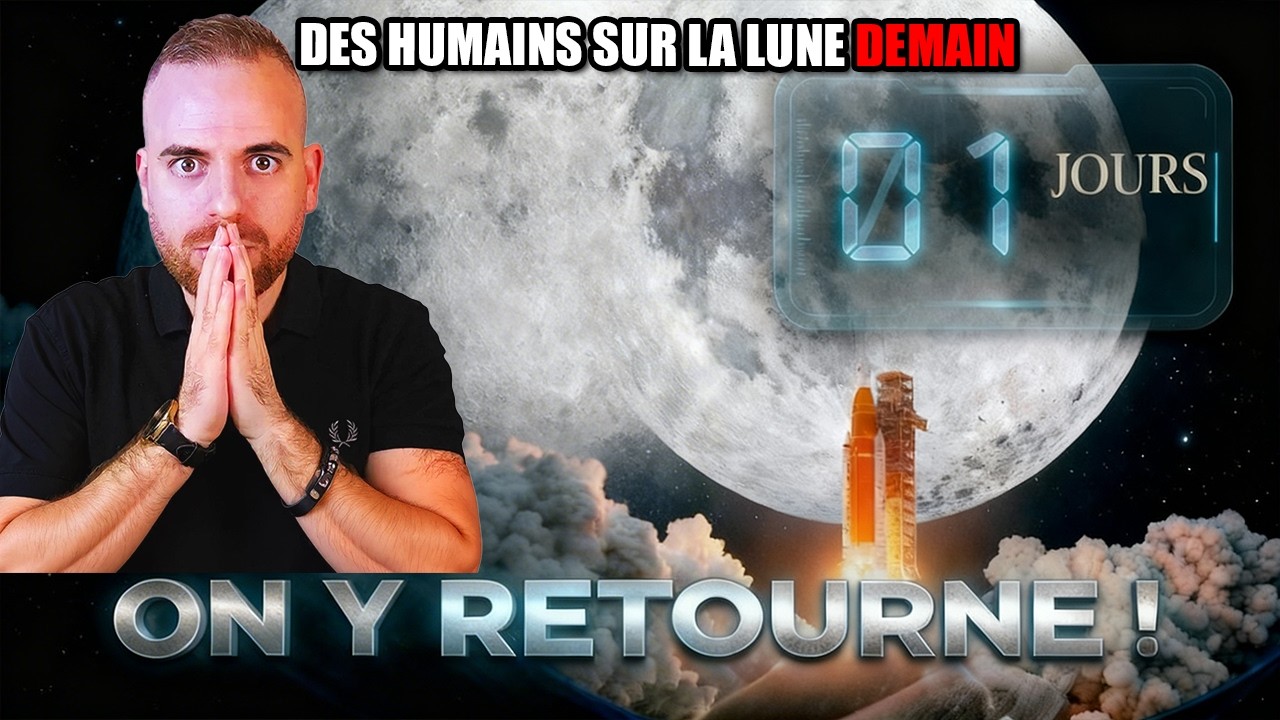
54 ans que personne n'y est allé. La vraie raison du retour change TOUT.
Keywords
Summary
135 words
Critical Evaluation
Value of the Information & Strength of the Argument
The video provides a valuable synthesis of the Artemis 2 mission, connecting technical details with broader geopolitical and economic stakes. It effectively argues that the Moon is now a strategic territory, with resources like water ice and helium-3 driving competition. The argumentation is coherent, moving from the ‘why now’ question to the specifics of the mission and its implications. However, the video relies heavily on the narrator’s interpretation and lacks in-depth analysis of counterarguments or alternative perspectives. The promotional segment for the AI training course is a clear deviation from the scientific content, but it is brief and does not undermine the core message.
Scientific Rigor, Source Quality, Title Accuracy
The video does not cite specific sources for most of its claims, which limits its scientific rigor. It mentions NASA, the Lunar Reconnaissance Orbiter, and Chandrayaan-1 for water ice estimates, but without direct references. The description provides links to the channel’s newsletter and training, but no external scientific sources. The title is somewhat clickbait, but the content does address the ‘real reason’ (geopolitics) as promised. The video’s accuracy on technical details appears generally sound, but the lack of citations makes it difficult to verify. The comments section shows a mix of enthusiasm and skepticism, with some viewers correcting technical points, indicating a generally engaged audience.
224 words
Title / Content Match
The title is somewhat sensationalist ('the real reason changes EVERYTHING') but the content does focus on the geopolitical and resource-driven motivations behind the return to the Moon, which aligns with the title's promise.
Quality & Reliability
6/10
The video provides a broad overview of the Artemis 2 mission, mixing factual data (crew, rocket specs, trajectory) with geopolitical analysis. However, it lacks detailed citations for many claims, and the promotional segment for the channel's AI training course reduces the overall scientific rigor.
Key Moments
Markers derived by PSI from the transcript: the creator did not define chapters.
- Introduction: The question of why return to the Moon now, after 54 years.
- China's lunar achievements and the race to the South Pole.
- Lunar resources: water ice and helium-3, and their strategic value.
- Artemis 2 crew introduction and their significance.
- The Artemis Accords and the geopolitical divide with China.
- Technical details of the SLS rocket and Orion capsule.
- Mission profile: free-return trajectory and safety measures.
- Experiments and life aboard Orion.
- Re-entry and the heat shield issue from Artemis 1.
- Conclusion: The mission as a geopolitical signal and the future of lunar exploration.
Cited Sources
- Vision IA Newsletter — Mentioned as a way to stay updated, not a scientific source.
- Vision IA Training — Promotional link for the channel's AI course, not a scientific source.
Concurring Sources
- NASA Artemis — Official NASA page for the Artemis program, confirming mission details and objectives.
Dissenting Sources
- Space.com - Artemis 2 — Space.com provides detailed coverage of Artemis 2, but may emphasize scientific goals over geopolitical ones, offering a different perspective.
Contribution & Novelties
The video’s original contribution lies in framing the Artemis 2 mission as a geopolitical chess move rather than a purely scientific endeavor, highlighting the strategic importance of lunar resources and the competition with China. It synthesizes technical details with political context, making it accessible to a broad audience.
Pour aller plus loin :
- Artemis Accords — Official NASA page on the Artemis Accords, detailing the principles for lunar exploration.
- Lunar water ice — Wikipedia article on lunar water, providing scientific background on the presence and potential extraction of water ice.
- Helium-3 on the Moon — Wikipedia article on helium-3, explaining its potential as a fusion fuel and its presence on the Moon.
- International Lunar Research Station — Wikipedia article on the ILRS, the Chinese-led lunar station project.
127 words
Radar Profile
The radar profile shows a balanced performance across information quantity, quality, and technical level, with a slightly lower score for reliability due to lack of citations. The video is informative but not deeply technical, and its reliability is moderate.
💬 The overall sentiment is positive, with viewers expressing enthusiasm for the mission and appreciation for the video's quality. Some comments are skeptical about the Moon landings or the timing, but the majority are supportive and engaged.